
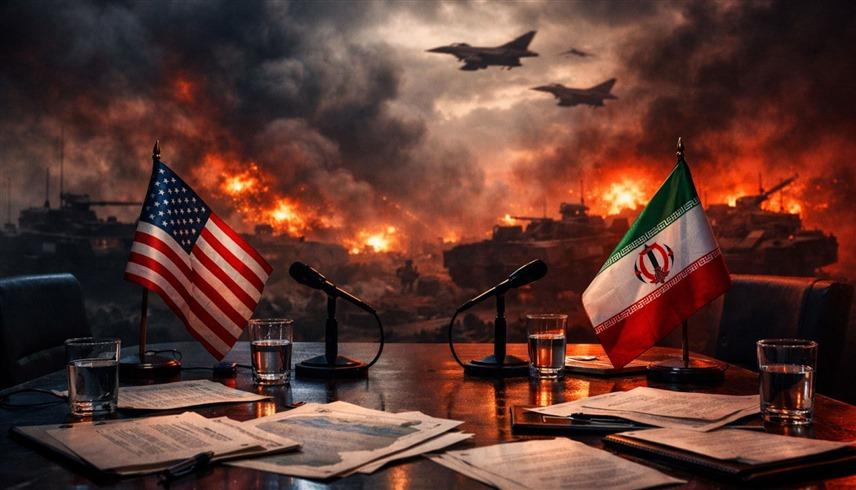
U.S. Self-Defense Strikes Iran After Iranian Actions Near Strait of Hormuz, Iran Threatens Retaliation
Key Takeaways
- U.S. launches self-defense strikes on southern Iran near the Strait of Hormuz to protect troops.
- Iran vows a far more severe regional retaliation after U.S. strikes.
- Pakistan mediates ongoing Iran-US talks to end the war.
Strikes amid talks
The United States carried out “self-defense strikes” against Iranian boats and launch sites after American forces observed Iranian actions near the Strait of Hormuz, with Capt. Tim Hawkins saying the strikes were meant “to protect our troops from threats posed by Iranian forces.”
The New York Times reported that Iran deployed mine-laying boats in the Strait of Hormuz and flew attack drones near American ships, and that Iran’s Islamic Revolutionary Guards Corps promised a “decisive reciprocal response” to any cease-fire violations.
The New York Times also said Iran’s supreme leader, Mojtaba Khamenei, warned in a written statement on Tuesday that the war with the United States had shown American military bases in the Middle East are no longer safe.
In parallel, the New York Times reported that President Trump and his administration offered conflicting signals on peace talks, with Secretary of State Marco Rubio saying talks to end the war could take “a few days” and Trump saying there was no hurry and the result would be either “great and meaningful” or “no deal” at all.
The Guardian added that a proposed peace agreement between Iran and the US seemed to remain on the table on Tuesday despite US bombings of Iranian targets, and that the Iranian foreign ministry denounced the attack as “a definitive violation of the ceasefire.”
Accusations and rebuttals
CBS News said Iran accused the U.S. Tuesday of a “grave violation” of the two countries’ ceasefire, after the U.S. military said it carried out “self-defense strikes” overnight targeting Iranian forces with “restraint.”
CBS News also reported that Secretary of State Marco Rubio said a deal was still possible and that President Trump wanted to either “make a good deal,” or no deal at all.

Al Jazeera reported that Navy Captain Tim Hawkins told it in a statement late on Monday that “Targets included missile launch sites and Iranian boats attempting to emplace mines,” while also saying “US Central Command continues to defend our forces while using restraint during the ongoing ceasefire.”
Al Jazeera further said Iran’s Ministry of Foreign Affairs spokesperson Esmaeil Baghaei told reporters that a “large portion” of issues with the US had been resolved but that a deal was “not imminent.”
Euronews reported that Iranian army spokesperson Abolfazl Shekarchi told Fars news agency on Tuesday that any new attack on Iran will generate a “far more severe” response beyond the region and will be heavier than before.
What’s at stake next
The Guardian said the first US strikes since the 8 April ceasefire were aimed at missile launchers and efforts to lay fresh mines in the strait of Hormuz, and it reported that the attack “killed four Iranian soldiers.”
The Guardian also described a 60-day period set aside to negotiate fresh constraints on Iran’s nuclear programme, with a separate 30-day timeframe for the US to lift the blockade of Iranian oil ports and for Iran to allow commercial shipping through the strait of Hormuz, restoring maritime traffic to levels from before Israel and the US started the war on 28 February.
The Guardian reported that Iran’s parliamentary speaker and chief negotiator Mohammad Bagher Ghalibaf remained in Doha for a second day on Tuesday trying to agree the means by which more than $12bn (£9bn) in frozen Iranian assets could be unlocked and sent to an Iranian account.
NPR reported that the ceasefire was negotiated to allow Iran and the U.S. to negotiate an end to the U.S.-Israel war in Iran, while Trump said negotiations were “proceeding nicely!” and warned it would be “a Great Deal for all or, no Deal at all.”
The New York Times added that Iran’s stockpile of highly enriched uranium and U.S. sanctions on Iran remained largely unresolved issues, even as Iran’s lead negotiators returned home on Tuesday from peace talks in Qatar, indicating at least a temporary pause in discussions.
More on Iran

Donald Trump Moves Cabinet Meeting From Camp David To White House Amid Iran Talks
11 sources compared
U.S. Strikes Hormozgan, IRGC Threatens Retaliation After Rubio Says Deal Possible
13 sources compared

U.S. Military Launches Self-Defense Strikes In Southern Iran, Targeting Missile Sites And Mine-Laying Boats
15 sources compared

Ayatollah Mojtaba Khamenei Warns Gulf Countries Won’t Shield US Bases After Iran Strikes
13 sources compared