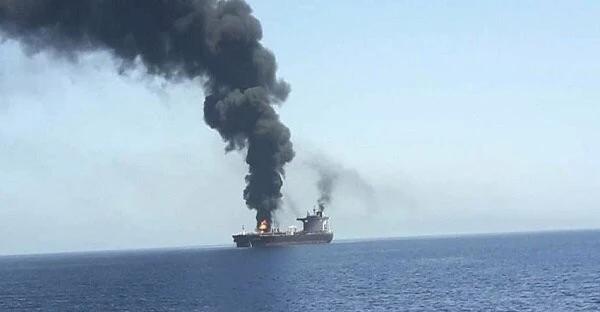
U.S. Sinks Six Iranian Boats, Shoots Down Missiles and Drones in Strait of Hormuz
Key Takeaways
- U.S. forces fired on Iranian boats near the Strait of Hormuz.
- Iranian missiles and drones targeted ships in the Strait of Hormuz.
- U.S.-Iran ceasefire strained as attacks extend to UAE and maritime traffic.
Project Freedom Meets Fire
The United States moved to reopen the Strait of Hormuz on Monday as Iran and U.S. forces exchanged fire, with the U.S. military saying it sank six small boats and shot down missiles and drones while guiding ships through the waterway.
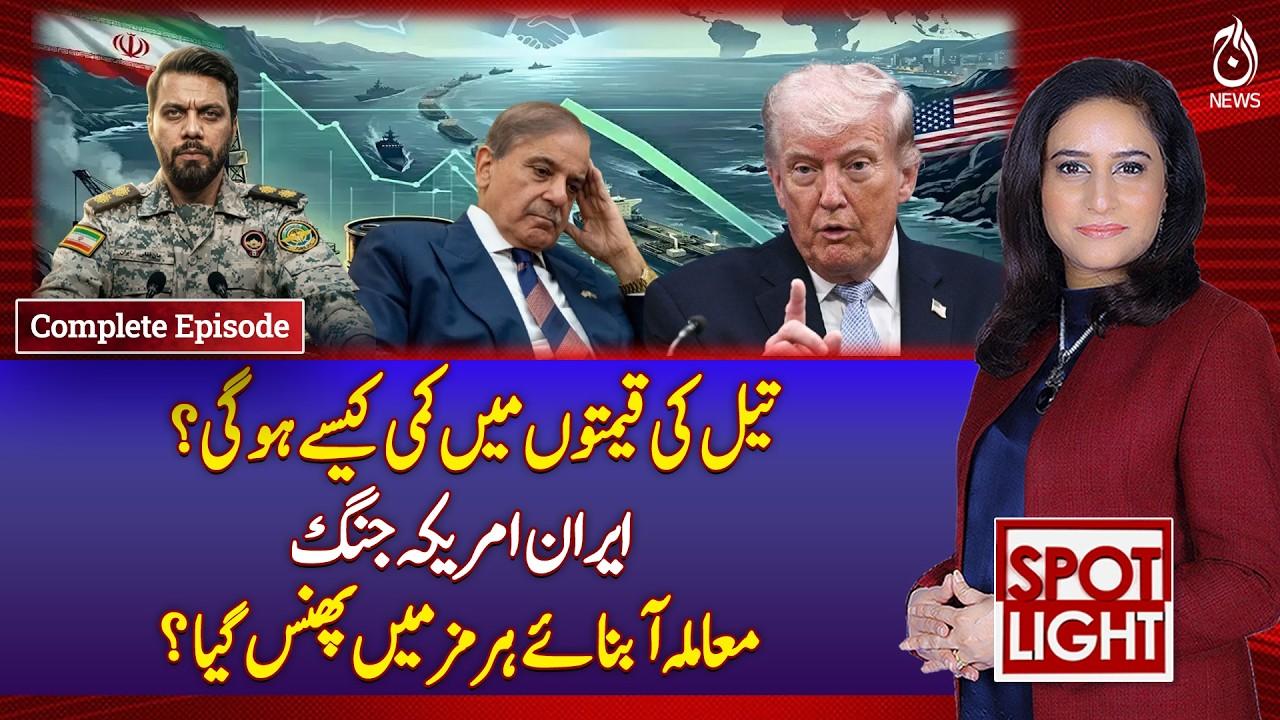
“Videos Oil Prices Drop | Iran US Tensions | Strait of Hormuz Crisis | Fuel Market Impact - SPOTLIGHT Published 6 hours ago 0 min read Published 6 hours ago 0 min read Heatwave in Karachi kills nine as temperatures cross 44°C Mohsin Naqvi vows crackdown in landmark housing scandal As Formula One evolves, AI becomes part of the race Oil Prices Drop | Iran US Tensions | Strait of Hormuz Crisis | Fuel Market Impact - SPOTLIGHT Live TV Popular Rs750 prize bond winners for April 15, 2026 announced, check here full list IRGC: US must choose between ‘bad deal or impossible war' Jemima Goldsmith reported engaged to financier Cameron O'Reilly Trump to review Iran’s new proposal, signals likely rejection Iran says 'ball in US court', but ready for talks or war Taiwan’s Lai says no country can block global engagement Latest Trump threatens retaliation if Iran targets US ships Iran fires warning shot at US warship near Hormuz Fujairah oil zone hit by fire after drone attack as UAE says it intercepted Iran missiles Pakistan Navy aids foreign crew stranded in Arabian Sea Trump’s war gamble meets the politics of $4”
NBC News reported that Iran fired cruise missiles and drones and launched small boats to target U.S.-flagged ships in the Strait of Hormuz, but that “no vessels have been hit and no one was injured,” according to the commander of U.S. Central Command, Adm. Brad Cooper.
AP said the U.S. military “fired on Iranian forces and sank six small boats targeting civilian ships” as it moved to reopen the strait, and it added that two American-flagged merchant ships had successfully transited the strait on Monday as part of a new initiative.
The New York Times similarly described that “U.S. warships shot down missiles and drones aimed at ships the Navy was guiding through the Strait of Hormuz,” while the Emirati authorities blamed Iran for a drone attack that caused a fire in the Fujairah Oil Industry Zone.
The Guardian reported that Trump threatened Iran would be “blown off the face of the earth” if it attacks US vessels trying to reopen a route through the strait of Hormuz, as the U.S. launched “Project Freedom” to help hundreds of ships trapped with their crews in the Gulf.
In the same reporting stream, Reuters-like details were echoed across outlets: the U.S. said it was acting defensively and that its helicopters and destroyers were intercepting threats, while Iran and the UAE described their own versions of what happened.
Across the accounts, the central point of contention remained whether the Monday exchanges signaled the fragile ceasefire’s collapse or a continuation of limited operations under disputed terms.
Ceasefire, Then Escalation
The Monday operation unfolded against a ceasefire backdrop that multiple outlets described as fragile and time-limited, with Iran and the U.S. each denying damage while disputing whether the truce had ended.
NBC News said Cooper “would not address whether this meant the U.S.-Iran ceasefire that began April 8 was now over,” and it reported that Iran and the U.S. “each denied there had been any damage done to their vessels.”

AP framed the UAE attack as “a test of Iran truce,” saying the UAE said it had come under attack from Iran “for the first time since a fragile ceasefire took hold in early April.”
The New York Times reported that “It remains unclear whether the attacks Monday indicated that the cease-fire had collapsed and that the war had resumed,” while it also noted that “Iran did not officially confirm or deny that it had resumed attacks.”
The Hill described the ceasefire as “under threat of falling apart” after Trump declared the U.S. would “guide” vessels through the Strait of Hormuz under “Project Freedom,” and it said Iran’s armed forces opened fire on Monday.
CBS News added that Iran’s first missile and drone attack on the United Arab Emirates since a ceasefire with the U.S. took effect on April 8 was part of the renewed violence, and it stated that Iran fired two drones at a ship in the Strait of Hormuz.
Meanwhile, the dispute over coordination and authorization became a recurring theme: Axios reported that Iran threatened to fire on ships that did not coordinate with its military, and the U.S. said it was opening a lane “free of Iranian mines.”
Voices: Trump, Cooper, Araghchi
The sources place President Donald Trump, Adm. Brad Cooper, and Iran’s foreign minister Abbas Araghchi at the center of the public messaging around Monday’s fighting, while also including statements from UAE officials and U.S. diplomatic figures.
“Paris — French President Emmanuel Macron on Monday questioned the United States' plans to reopen the Strait of Hormuz, saying he does not understand what the 'Freedom Project' initiative launched by President Donald Trump entails, and asserting that coordinated efforts between Iran and the United States are the only way to ensure the waterway is reopened safely and sustainably”
NBC News quoted Cooper saying, “I think the key thing is for us is we’re merely there as a defensive force,” and it also reported Cooper’s assessment that Iran was “initiating aggressive behavior.”
In the same reporting, Trump wrote on Truth Social that “We’ve shot down seven small Boats or, as they like to call them, “fast” Boats,” and he added, “Other than the South Korean Ship, there has been, at this moment, no damage going through the Strait,” according to NBC News.
The Guardian reported Trump’s warning that Iran will be “blown off the face of the earth” if it attacks US vessels trying to reopen the strait, tying the threat directly to the operation.
On the Iranian side, Abbas Araghchi told audiences that “Events in Hormuz make clear that there's no military solution to a political crisis,” and he posted that “Project Freedom is Project Deadlock,” according to The New York Times and CBS News.
AP also quoted Araghchi on X warning that both the U.S. and the UAE “should be wary of being dragged back into quagmire.”
The UAE’s Foreign Ministry condemned what it called “renewed treacherous Iranian aggression,” and it said in a statement on X that “These attacks represent a dangerous escalation and an unacceptable violation,” according to AP.
Competing Frames of the Same Day
While the operational core—missiles, drones, small boats, and a U.S. effort to guide shipping—appears across outlets, the framing and emphasis diverge sharply, especially around claims of ceasefire status, the scale of attacks, and the meaning of the UAE incident.
NBC News focused on the U.S. position that “no vessels have been hit and no one was injured,” and it reported that Cooper said the U.S. used attack helicopters to blow up the small boats and intercept the drones.
AP, by contrast, emphasized the UAE as a key ally coming under attack “for the first time since a fragile ceasefire took hold in early April,” and it described a drone sparking a fire at a key oil facility in Fujairah and wounding three Indian nationals.
The New York Times similarly centered the Fujairah Oil Industry Zone fire, calling it “the largest oil storage area in the Emirates,” and it reported that the Emirati authorities blamed Iran for a drone attack.
The Guardian highlighted Trump’s threat and the broader risk of war, stating that the ceasefire was “abruptly facing its most perilous moment” after the U.S. began trying to open the strait for stranded commercial ships.
Axios framed the U.S. as using “force” alongside diplomacy in New York, and it described the U.S. as trying to break Tehran’s chokehold while Iran threatened to fire on ships that did not coordinate with its military.
Shafaq News reported a separate incident detail: “a fire broke out Monday on a vessel 14 nautical miles west of Khor Fakkan,” and it cited UK Maritime Trade Operations advising ships to consider routing through Omani territorial waters.
What Comes Next
The sources describe immediate next steps in the Strait of Hormuz operation while also laying out diplomatic and operational constraints that could shape whether the situation stabilizes or escalates further.
“The US fights to reopen the Strait of Hormuz as the UAE comes under attack in a test of Iran truce The US fights to reopen the Strait of Hormuz as the UAE comes under attack in a test of Iran truce DUBAI, United Arab Emirates (AP) — The U”
NBC News said Trump announced that beginning on Monday the U.S. military would help free ships that have been “locked up” and unable to pass through the key trade route, and it reported that Cooper said multiple Navy-guided missile destroyers were operating in the Gulf to help commercial shipping and provide air defenses with helicopters.

AP said the U.S.-led Joint Maritime Information Center advised ships Monday to cross the strait in Oman’s waters, saying it had set up an “enhanced security area,” and it reported that Iran issued a statement telling ships to coordinate with Iranian officials.
The Hill reported that Cooper “strongly advised” Iran to steer clear of U.S. military assets and that the U.S. naval blockade will remain in effect, while it also said the U.S. military had redirected 50 commercial vessels attempting to bypass U.S. warships.
CBS News added that CENTCOM described aircraft and helicopters used to support “Project Freedom,” including U.S. Navy F/A-18 Super Hornets launching from USS Abraham Lincoln and U.S. Army AH-64 Apache helicopters, and it quoted Cooper saying, “Over the last 12 hours, we've reached out to dozens of ships and shipping companies to encourage traffic flow through the [Strait of Hormuz].”
On the diplomatic front, CBS News reported that U.S. Ambassador to the U.N. Mike Waltz said the U.S. would co-draft a Security Council resolution with Bahrain and its Gulf allies to “hold Iran to account,” and it described demands including stopping sea mines and halting “tolling efforts.”
Meanwhile, the sources also show that Iran and the UAE were issuing warnings and counter-claims that could affect compliance by shipping companies and insurers, with AP noting that shipping companies, and their insurers, are unlikely to take such a risk given that Iran has fired on ships in the waterway and vowed to keep doing so.
More on USA

Trump Signs Iran MOU, Lifts Blockade, Reopens Strait of Hormuz for 60-Day Talks
14 sources compared

Supreme Court Rules Federal Gun Ban Unconstitutional for Texas Man Using Marijuana
11 sources compared

Trump Administration Compares Lincoln Memorial Reflecting Pool Algae Cleanup to Destroyed Iran’s Navy
10 sources compared
US Lifts Naval Blockade of Iranian Ports as JD Vance Says Oil Flows Through Strait of Hormuz
18 sources compared