US Strikes Near Strait of Hormuz Damage Iran Drinking-Water Reservoirs, Cutting 20,000 Residents
Key Takeaways
- U.S.-launched strikes damaged two drinking-water facilities in southern Iran near Hormuz.
- Satellite imagery and independent analysis corroborate damage to Iran's water infrastructure.
- Outlets frame the event as part of broader U.S.-Iran escalation in the Gulf.
Water tanks hit near Hormuz
US strikes near the Strait of Hormuz reportedly damaged an Iranian drinking-water reservoir in the Bamani area, with Mehr News Agency citing a local official saying water was cut off to about 20,000 residents of nearby towns and villages.
“With the widening scope of the military escalation between Washington and Tehran near the Strait of Hormuz, the effects of the U”
Mehr also posted images of destroyed drinking water reservoirs and munition fragments, and CNN reported that experts identified components as appearing to be from a US GBU-39 series bomb.

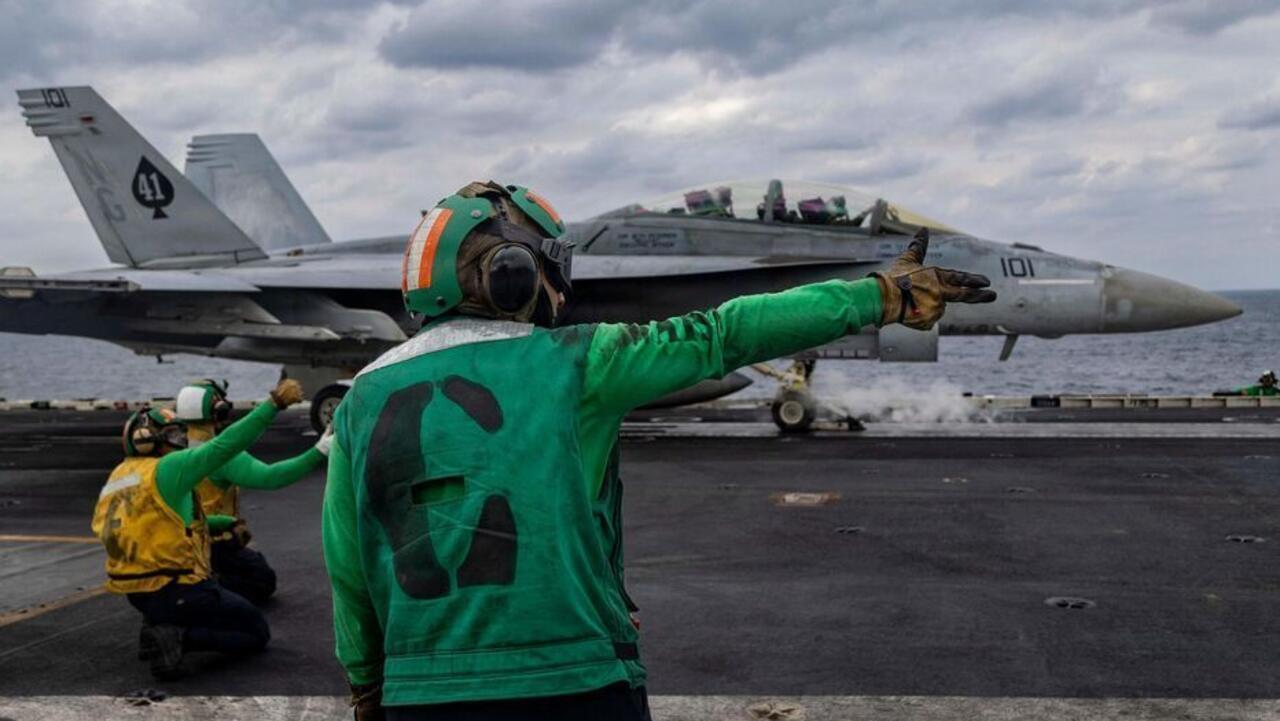
CENTCOM said it conducted strikes near the strait with “precision munitions from the US Air Force and Navy fighter jets,” and CNN reported that the US began striking Iran on Tuesday following the downing of a US Apache helicopter.
A New York Times report cited by Mehr said “Two concrete water-storage reservoirs with a combined capacity of 2,500 cubic meters in the Bamani district were struck by missiles and completely taken out of service,” while CNN said it was unclear whether the water tanks were hit in those attacks.
War crime debate grows
CNN said water facilities are protected under the Geneva Convention and reported that Defense Secretary Pete Hegseth was asked about targeting civilian infrastructure in Iran, responding that it was a “disingenuous question” and that the US would hit targets “that improve the environment for us to operate in.”
The Guardian reported that military strikes that damaged two water storage facilities in southern Iran may constitute a war crime, quoting Brian Finucane saying, “It’s either a military objective or it’s a civilian object: attacking one is lawful, attacking the other is a war crime.”

The Guardian said it was unclear if the strikes deliberately targeted the district’s water tanks or unintentionally destroyed a key reservoir for about 20,000 people living nearby, while also noting that Iran’s state broadcaster said the strikes were carried out by the US military.
In parallel, the Guardian reported that Donald Trump warned Iran will “pay the price” for stalling negotiations and boasted on Wednesday that “we hit them hard yesterday and we’re going to hit them hard again today.”
Response, disruption, and next moves
Iranian state media and local officials said the strikes targeted water storage buildings and that water supplies were cut for more than 20,000 people as temperatures rose above 100 degrees Fahrenheit, according to a New York Times report summarized by Al Jazeera.
The New York Times analysis described emergency teams supplying residents with water via mobile tankers until a replacement line could be built to bypass the damage, which the report said was accomplished in about 12 hours.
In the wider escalation, the BBC reported that Iran’s Foreign Ministry said the ceasefire with the United States has become practically unworkable, and it said the United States and Iran exchanged airstrikes for the second day in a row on Thursday.
The BBC also reported conflicting reports about the Strait of Hormuz, including that the Iranian maritime authority confirmed the complete closure of the Strait of Hormuz and that the headquarters of Khatam al-Anbiya announced the closure of the Strait of Hormuz to movement of all types of vessels, including oil tankers and commercial ships.
More on Iran

United Arab Emirates Denies Releasing $10 Billion Frozen Iranian Assets After Reuters Report
15 sources compared
Trump Says U.S. And Iran Near Agreement To Reopen Strait Of Hormuz And Extend Ceasefire
10 sources compared
White House Confidence Rises to 85% for US-Iran Agreement, Trump Says Not 100%
25 sources compared

Iran Says It Agreed With Washington on Guiding Principles After Geneva Talks
18 sources compared