
U.S. Supreme Court Invalidates Louisiana Electoral Map, Weakening Voting Rights Act in 6-3 Ruling
Key Takeaways
- Supreme Court struck down Louisiana's 2024 electoral map in a 6-3 ruling.
- Second Black-majority district creation was invalidated under the Voting Rights Act.
- Louisiana must redraw a new map before 2026 elections; prompts redistricting in other states.
Callais reshapes voting rights
The U.S. Supreme Court invalidated Louisiana’s electoral map in Louisiana v. Callais by a vote of 6-3, striking down a majority-Black, Democrat-held district and weakening Section 2 of the Voting Rights Act. The decision came after the court’s April 29 ruling, which by six votes to three invalidated a map adopted by the Louisiana Legislature in 2024 that created two majority-Black districts. Justice Samuel Alito wrote that Section 2 “was written 'to enforce the Constitution, not to run afoul of it.'” Justice Elena Kagan, in dissent, said the court’s project to destroy the Voting Rights Act “has been consumed,” and the consequences would be “profound and grave,” according to the dissenting framing quoted by La Libre.be. The ruling also set off immediate procedural conflict as the court granted a request to finalize its opinion immediately to allow Louisiana to draw a new map in time for the 2026 elections.
“Skip to main content 4 hours ago - Politics What a weakened federal Voting Rights Act means for California Nadia Lopez email (opens in new window) sms (opens in new window) facebook (opens in new window) twitter (opens in new window) linkedin (opens in new window) bluesky (opens in new window) nextdoor (opens in new window) Add Axios as your preferred source to see more of our stories on Google”
Alito vs. Jackson
The decision triggered sharp criticism inside the court, with Justice Ketanji Brown Jackson arguing that the ruling “has spawned chaos in the State of Louisiana.” In a concurring response, Justice Samuel Alito, joined by Clarence Thomas and Neil Gorsuch, countered that Jackson’s rhetoric “lacks restraint.” Outside the court, House Minority Leader Hakeem Jeffries said Democrats would not “unilaterally disarm,” adding, “This is just the beginning. Across the nation, we will sue, we will redraw and we will win.” The dispute also played out in timing and procedure, as SCOTUSblog reported that the Supreme Court’s clerk normally waits 32 days after a decision is issued before sending the opinion and judgment to the lower court, but the court wrote it was acting because the Black voters defending the map “have not expressed any intent to ask this Court to reconsider its judgment.” CNN described the exchange as an “explosive exchange” between conservative justices and Justice Ketanji Brown Jackson, with Jackson accusing the court of rolling over its “principles” to influence the November election.
Redistricting arms race ahead
The ruling’s immediate effect is that Louisiana can draw a new map for the 2026 elections, after the Supreme Court allowed its decision to take effect immediately rather than after a normal 32-day period. Politico reported that the decision slashing a key Voting Rights Act protection has led to a renewed redistricting arms race, with “Eight states” enacting new maps ahead of the midterms while legal challenges remain pending in some states. In Louisiana, Gov. Jeff Landry delayed the state’s House primary elections on Thursday to redraw the state’s map, and Politico said his party plans to erase one or two Black-majority House seats that have favored Democrats. In New York, House Minority Leader Hakeem Jeffries announced he was deploying Rep. Joe Morelle to meet with Gov. Kathy Hochul and state legislators about mid-decade redistricting, framing it as a response to the Supreme Court’s decision weakening a section of the Voting Rights Act. The stakes described across the coverage are explicit: the decision could foreclose “nearly all federal voting-rights claims aimed at ensuring minority political participation through fair districting,” and it is also described as “poised to collapse Black representation across the South” over successive redistricting cycles.
“The November election is still a long way off, but patience is already running thin at the Supreme Court”
More on USA

Trump Pauses Project Freedom To Guide Ships Through Strait of Hormuz Amid Iran Talks
47 sources compared

US Navy Launches Project Freedom To Secure Commercial Shipping Through Blockaded Strait of Hormuz
25 sources compared

Border Czar Tom Homan Threatens ICE Surge in New York and Phoenix
11 sources compared
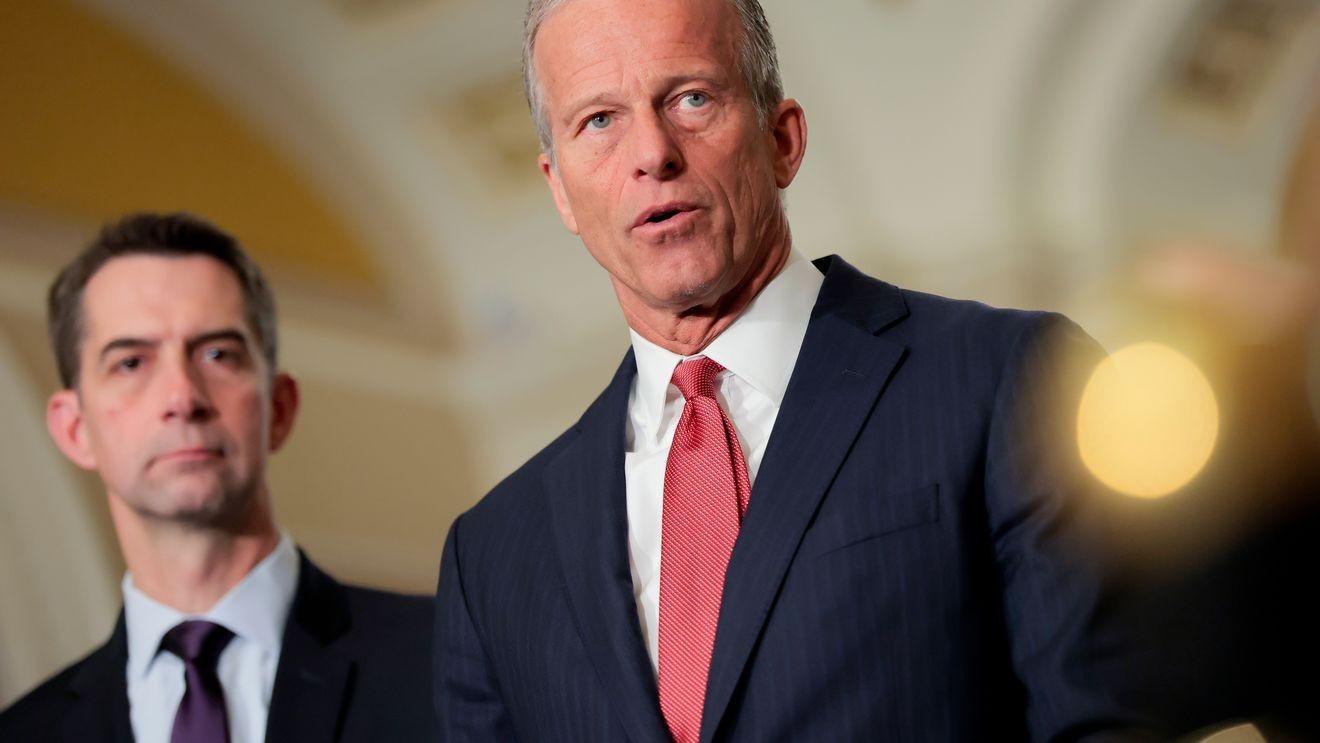
Senate Republicans Propose $1 Billion for White House Security Upgrades for Trump Ballroom
13 sources compared