
U.S. Supreme Court Lets Alabama Eliminate Black U.S. House District Before May 19 Primaries
Key Takeaways
- Supreme Court allows Alabama to eliminate a Black U.S. House district before primaries.
- Ruling spurs GOP redistricting across the South, threatening historic Black representation in Congress.
- Voter confusion rises as rushed map changes approach Alabama primaries.
Alabama map fight
The U.S. Supreme Court on Monday set the stage for Alabama to eliminate one of two largely Black congressional districts before this year’s midterm elections, overturning a judicial order that had required Alabama to use a court-imposed House map until after the 2030 census.
“Voter confusion and headaches for election officials follow hasty GOP push to redraw US House seats Posted May 11, 2026 07:32:43 AM”
The decision followed the Supreme Court’s April ruling that struck down a majority-Black U.S. House district in Louisiana as an unconstitutional racial gerrymander and significantly weakened a provision of the federal Voting Rights Act.
Alabama Attorney General Steve Marshall said in a video statement, "Today, the Supreme Court vindicated the state's long-held position," and he added that his job was "to put the legislature in the best possible legal position to draw a congressional map that favors Republicans seven-to-zero."
In a dissent to Monday’s brief ruling, Justice Sonia Sotomayor said the Louisiana case had reversed only one of the grounds on which the Alabama case had been decided, leaving open the possibility that a lower court could still find Alabama intentionally discriminated against Black voters in violation of the 14th Amendment.
NAACP National President Derrick Johnson said, "We are witnessing a return to Jim Crow," as the decision created a week-ahead-of-the May 19 primaries scenario for voters.
Voter confusion spreads
In Louisiana, thousands of voters had already cast early ballots for congressional candidates in what could soon be the wrong districts as Alabama’s primaries were a week away and the state planned a do-over for voting on U.S. House races.
The AP reported that Sallie Davis, a 66-year-old New Orleans resident, voted early last week for Democratic U.S. Rep. Troy Carter, but at her polling booth a sign showed his race crossed off with a ballpoint pen, leaving her worried that "my entire ballot will not be counted."
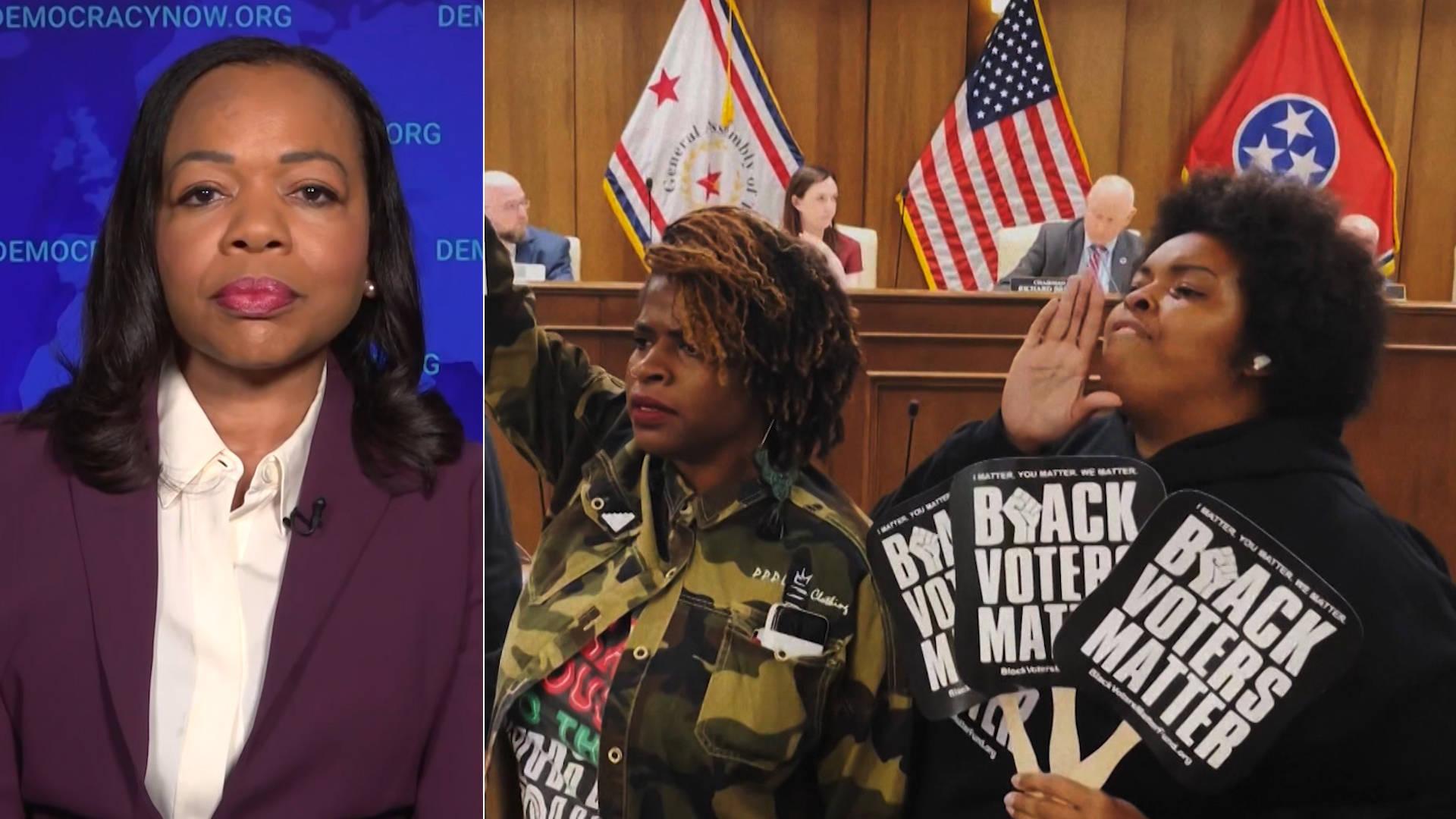
Democracy Now! framed the broader shift as a rush to redraw districts after the Voting Rights Act was gutted, with Amy Goodman saying Republican lawmakers across the South were "racing to redraw their congressional maps" and that the move was expected to lead to a "historic drop" in Black representatives.
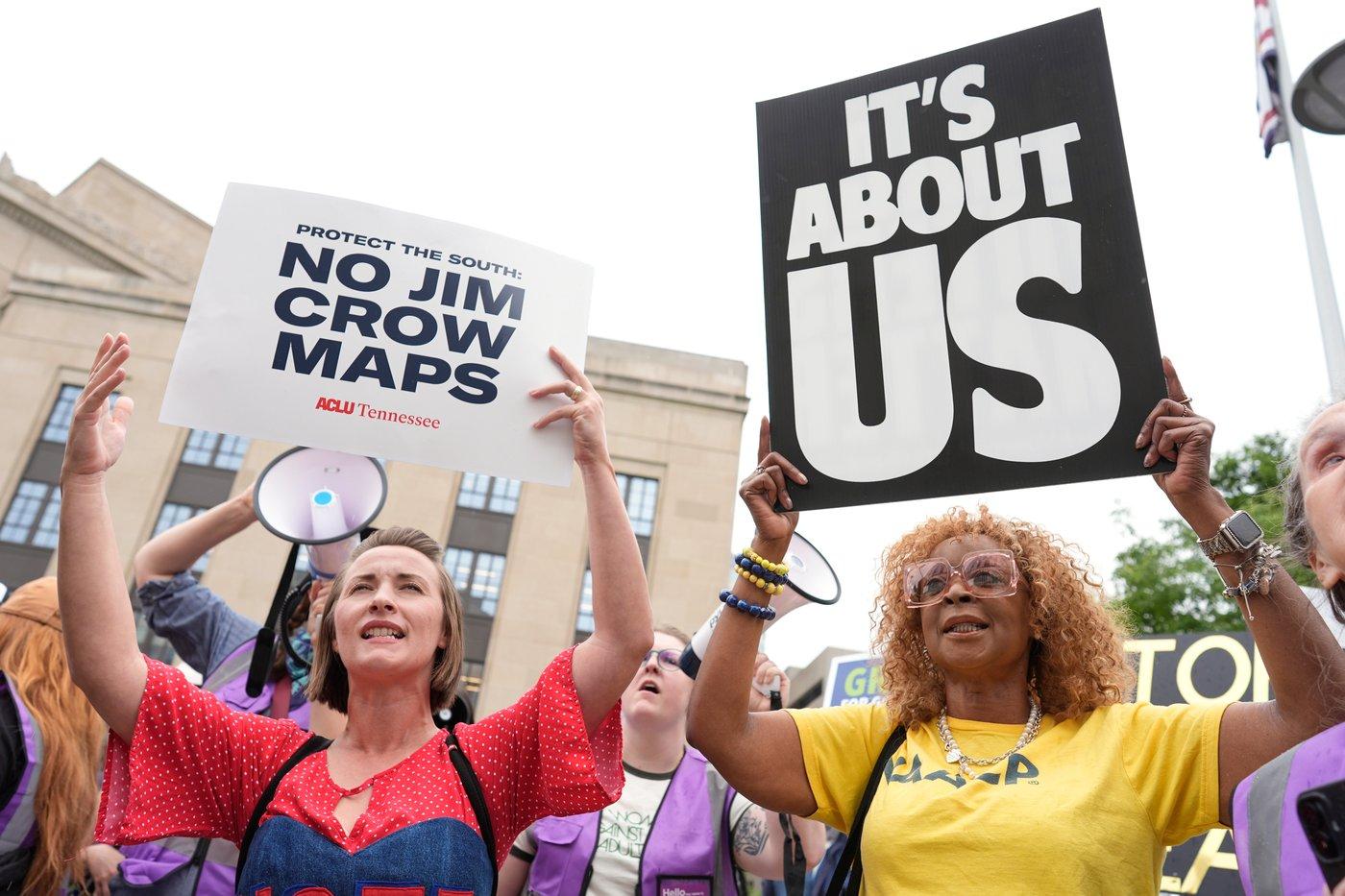
In Tennessee, Democracy Now! said hundreds of protesters marched on Wednesday to the State Capitol in Nashville as lawmakers unveiled a manipulated electoral map that could allow Republicans to take control of Tennessee’s nine seats in the U.S. House of Representatives.
Ari Berman, national voting rights correspondent for Mother Jones, told Democracy Now! that the redistricting measure would split Memphis, where 63% of the population is Black, into three electoral districts to dilute Black voters’ electoral power.
What’s at stake next
The Supreme Court’s Monday action in Alabama came as the state had already enacted a law allowing it to void the results of a May 19 primary for some congressional districts and instead hold a new primary under revised district boundaries.
Alabama lawmakers approved legislation to allow special primaries in four impacted congressional districts if the state could switch maps, with the special elections set by the governor, while Alabama Secretary of State Wes Allen called the decision a "historic win for Alabama voters."
Democracy Now! linked the Alabama and Louisiana developments to a wider effort to reduce Black electoral power, with Kristen Clarke saying the Supreme Court’s decision in the Louisiana v. Callais case has "really turned our country upside down."
Clarke also described the Voting Rights Act as "the one tool that has helped to open the doors of democracy" by giving Black voters a fair opportunity to elect candidates of their choice, and she said it was "unsurprising" to see lawmakers "race at lightning speed" to eradicate gains made over decades.
In the AP’s account of the fallout, the changes were described as creating logistical headaches for local election officials while primary season was in progress, with Louisiana’s primary set for Saturday and a week of early voting beginning May 2.
More on USA

Gavin Newsom Calls For National Billionaires’ Tax After Opposing California 5% Wealth Measure
15 sources compared

U.S. Strikes Iran After Drone Attack on Cargo Ship in Strait of Hormuz
32 sources compared

Pete Buttigieg Says Anonymous CPS Hoax Forced Four-Year-Old Twins Into Forensic Interviews
17 sources compared
Texas Republican State Board Approves Bible Passages for Over 5 Million Students
18 sources compared