Supreme Court Strikes Down Louisiana 2024 Congressional Map, Limiting Voting Rights Act Section 2
Key Takeaways
- Louisiana's 2024 congressional map was declared an unconstitutional racial gerrymander and voided.
- The ruling narrows the Voting Rights Act's Section 2 enforcement, limiting race-based redistricting challenges.
- A 6-3 conservative ruling could boost GOP odds in the House.
Louisiana map struck down
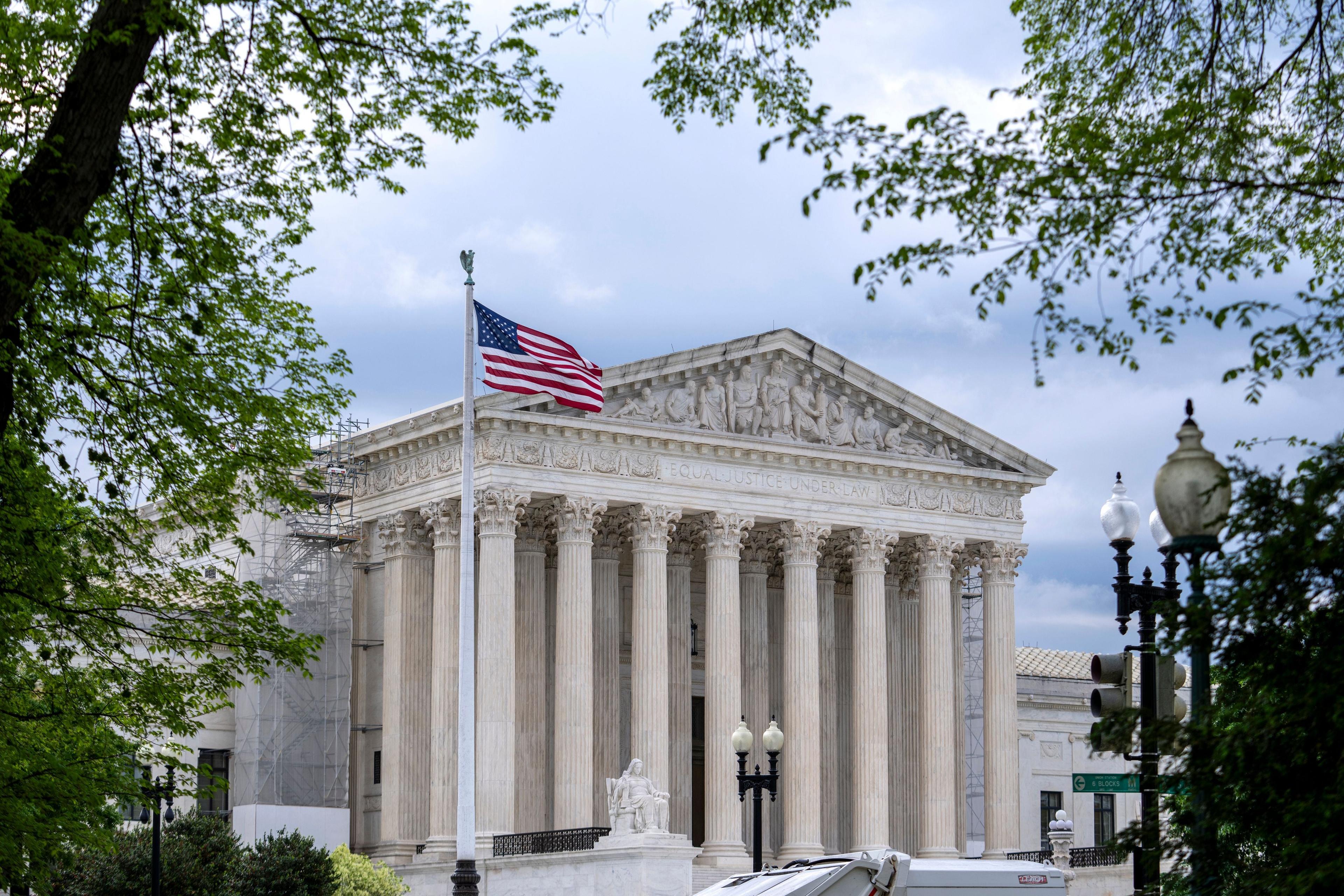
The U.S. Supreme Court on Wednesday issued a 6-3 ruling that struck down Louisiana’s 2024 congressional map as “an unconstitutional racial gerrymander,” even though the map was drawn to comply with Section 2 of the Voting Rights Act of 1965.
The decision in Louisiana v. Callais found that the Louisiana district represented by Democrat Cleo Fields relied too heavily on race, with the court’s conservative majority concluding the state’s use of race was not justified.

Chief Justice John Roberts described the 6th Congressional District as a “snake” that stretches more than 200 miles (320 kilometers) to link parts of Shreveport, Alexandria, Lafayette and Baton Rouge.
Justice Samuel Alito wrote for the six conservatives that “That map is an unconstitutional gerrymander,” and he added that “Correctly understood, Section 2 does not impose liability at odds with the Constitution.”
Multiple outlets reported that the ruling means Louisiana will need to redraw its map, with NBC News stating, “The decision means Louisiana will need to redraw its map.”
NBC News also reported that Louisiana’s primary is May 16, just two weeks away, and that “there is little time this year with primaries underway ahead of November’s midterm congressional elections.”
The Supreme Court’s action left Section 2 in place but sharply limited how it can be used, with NPR saying the decision “all but guts the landmark law” while keeping Section 2 intact.
How Section 2 was narrowed
The ruling’s core effect, as described across outlets, was to narrow the test for when states can use race to comply with Section 2 of the Voting Rights Act.
AP reported that the court “weakens a landmark Civil Rights-era law” by striking down the majority-Black district and opening “the door for more redistricting across the country that could aid Republican efforts to control the House.”

Axios said the Louisiana v. Callais ruling “does not erase Section 2 of the Voting Rights Act, but it effectively neuters it,” explaining that the court rewrote the test so Section 2 can take effect only as long as protected seats don’t infringe on the right of state lawmakers to draw partisan gerrymanders.
Fox News similarly described the majority’s reasoning: “Compliance with Section 2 thus could not justify the State's use of race-based redistricting here,” and it said the ruling “is likely to narrow how minority representation influences multiple states' congressional maps.”
NBC News reported that the justices told states they can “almost never consider race when drawing maps to comply with Section 2,” and it quoted Alito’s framing that “allowing race to play any part in government decision-making represents a departure from the constitutional rule that applies in almost any other context.”
The Washington Post emphasized that the court “created a higher bar for the law’s powerful provision,” and it quoted Alito’s statement that “Section 2 of the Voting Rights Act … was designed to enforce the Constitution — not collide with it.”
In the dissent, Justice Elena Kagan argued the decision would make Section 2 “all but a dead letter,” and AP quoted her warning that “Today’s decision renders Section 2 all but a dead letter.”
POLITICO added that the case turned on Congress’s 1982 change to the Voting Rights Act, describing how lawmakers passed an “effects” test after a 1980 Supreme Court decision made proof of actual racial discrimination difficult.
POLITICO also reported that Kagan read portions of her dissent “from the bench,” signaling “profound disagreement with the majority.”
Reactions from court and parties
Reactions to the ruling broke sharply along partisan lines, with outlets quoting both supporters and critics of the Supreme Court’s decision.
AP reported that White House spokeswoman Abigail Jackson wrote in an email, “This is a complete and total victory for American voters. The color of one’s skin should not dictate which congressional district you belong in.”
AP also said the chair of the Democratic Congressional Campaign Committee called the decision “appalling,” and it quoted Rep. Suzan DelBene of Washington state saying Democrats remained poised to regain the House majority in November “despite this corrupt and targeted assault on the voting rights of Black and Brown Americans from the Supreme Court.”
NBC News quoted Louisiana’s Republican Attorney General Liz Murrill calling the decision “seismic” and saying, “I vigorously defended our first map and said then that the only way to draw a second majority-minority district was to expressly take race into account,” before adding, “It is gratifying that the Supreme Court has finally vindicated our original position.”
NBC News also quoted Derrick Johnson, president of the NAACP, saying, “The Supreme Court betrayed Black voters, they betrayed America, and they betrayed our democracy,” and it added, “This ruling is a major setback for our nation and threatens to erode the hard-won victories we’ve fought, bled and died for.”
The Washington Post included a similar Johnson statement, calling it “a major strike to minority political power,” and it quoted him again: “Today’s decision is a devastating blow to what remains of the Voting Rights Act, and a license for corrupt politicians who want to rig the system by silencing entire communities.”
In dissent, Kagan delivered a warning that the decision’s consequences would be “far-reaching and grave,” and AP quoted her line that “Today’s decision renders Section 2 all but a dead letter.”
POLITICO described Kagan’s dissent as reading “from the bench,” and it quoted her saying the majority’s approach “eviscerate[s] the law” and amounts to the “demolition of the Voting Rights Act.”
Different outlets, different emphasis
While all outlets described the same 6-3 outcome and the Louisiana map’s invalidation, they diverged in how they framed what the ruling changes and how quickly it will matter.
AP emphasized the nationwide redistricting implications and timing, saying the effect “may be felt more strongly in 2028 because most filing deadlines for this year’s congressional races have passed,” and it quoted Kagan that “The consequences are likely to be far-reaching and grave. Today’s decision renders Section 2 all but a dead letter.”

Axios focused on the House control math, saying the ruling “could boost the Republican majority in the House by an additional 19 seats when compared to 2024 maps,” and it described the decision as “handing a loss to civil rights groups.”
Fox News stressed the legal mechanics of compliance, writing that “Correctly understood, Section 2 does not impose liability at odds with the Constitution,” and it added that the ruling “trigger a new wave of legal challenges over congressional boundaries.”
NBC News highlighted the immediate procedural constraint in Louisiana, reporting that “Louisiana's primary is May 16, just two weeks away,” and it framed the decision as requiring Louisiana to redraw its map while primaries were underway.
NPR framed the ruling as a near dismantling of the Voting Rights Act’s practical protection, saying the decision “all but guts the landmark law” even while Section 2 remained intact.
The Washington Post emphasized the symbolic and legal bar, describing how the court “sharply weakened a key provision” and quoting Alito that Section 2 was “designed to enforce the Constitution — not collide with it.”
POLITICO, meanwhile, placed the ruling in the statute’s history, describing the 1982 “effects” test and how the court’s new interpretation throws into question “exactly how states can utilize race in their mapmaking process.”
The Straits Times and CNBC TV18 both described the ruling as limiting race-based voting maps nationwide, but they differed in their portrayal of the impact on future elections, with the Straits Times saying “It was not immediately clear how much this ruling will impact the November elections for control of Congress.”
What comes next for elections
The ruling’s consequences, as described by the sources, include both immediate redistricting deadlines and longer-term shifts in how minority voters can be protected through mapmaking.
“Supreme Court weakens a landmark Civil Rights-era law and aids GOP efforts to control the House Supreme Court weakens a landmark Civil Rights-era law and aids GOP efforts to control the House WASHINGTON (AP) — The Supreme Court on Wednesday weakened a landmark Civil Rights-era law that has increased minority representation in Congress and elsewhere, striking down a majority Black congressional district in Louisiana and opening the door for more redistricting across the country that could aid Republican efforts to control the House”
AP said Louisiana “may have to change its redistricting plan to comply with the decision,” and it reported that it is unclear how much is left of Section 2’s provision, “the main way to challenge racially discriminatory election practices,” with Kagan writing that “Today’s decision renders Section 2 all but a dead letter.”
Axios framed the longer-term political stakes by saying the ruling “could reshape voting all across the South” and by tying it to House control, while Fox News said it would “trigger a new wave of legal challenges over congressional boundaries.”
NBC News added that “Other states could try to do so as well,” but it also stressed the limited time because “primaries are well underway in most states,” and it specified Louisiana’s May 16 primary as a near-term deadline.
SCOTUSblog reported that the Supreme Court left in place a federal court ruling barring Louisiana from using the 2024 map in future elections and that the decision did not strike down Section 2, even as Kagan suggested in dissent that the majority rendered the provision “all but a dead letter.”
The Washington Post described the case’s procedural history, including that the case began in 2022 when Black voters and civil rights groups sued Louisiana under Section 2, and it said a federal court ordered Louisiana to draw a new map with a second Black-majority district after the 2020 Census map had only one Black-majority district out of six.
It also reported that the 2024 map “created a Black-majority district that meandered across the state from Baton Rouge to Shreveport,” and that a group of “non-Black voter[s]” sued, arguing the map violated the equal protection clause.
Looking ahead, AP quoted election law expert Nicholas Stephanopoulos estimating that “Nearly 70 of the 435 congressional districts are protected by Section 2,” and it quoted Jonathan Cervas saying, “The Voting Rights Act as a means to protect minority voters from vote dilution is essentially dead.”
In the dissent and in multiple outlets’ reporting, Kagan warned of a decline in minority representation, with AP quoting her that “The consequences are likely to be far-reaching and grave,” and with POLITICO quoting her that the majority’s approach “eviscerate[s] the law” and amounts to the “demolition of the Voting Rights Act.”
More on USA

King Charles III Jokes With Trump at White House State Dinner, Says You’d Be Speaking French
16 sources compared

Trump Welcomes King Charles for White House State Dinner After Congress Address
14 sources compared
U.S. Supreme Court Hears Trump Administration Bid To Revoke Haitian And Syrian TPS Protections
18 sources compared

Trump Administration Sets First Trump-Class Battleship Cost Above $17 Billion, Axios Reports
20 sources compared