Iran · 12 May, 2026 · 2 min read
U.S. Treasury Orders Banks To Flag Suspected Iranian Money-Laundering Networks
US Treasury directs banks to flag customers suspected of Iranian money-laundering networks. Networks launder funds to smuggle sanctioned oil via shell companies and crypto networks.
Scope: U.S. bank monitoring notice vs. detailed London/crypto investigative scandal.
7 of 8 outlets skipped it: NTV report names crypto platforms Zedcex and Zedxion.
13outlets compared
Same story, two versions
tap a side to read it in full
Toronto Star
“effectively deputizes the global financial system to help disrupt Iran’s sanctions-evasion infrastructure”Read the original ↗
mojahedin.org
“complex, highly secret financial network run by the regime's Revolutionary Guards”Read the original ↗
One frames compliance monitoring; the other foregrounds a specific investigative narrative.
Banks told to watch
The U.S. Treasury Department told U.S. banks and other financial institutions to monitor for suspected Iranian money laundering networks that use their funds to smuggle sanctioned oil through shell companies and crypto networks, as the U.S. and Iran reached another impasse over how to end their war while their ceasefire has grown increasingly shaky.
President Donald Trump said the Iran ceasefire is on“life support” after he rejectedTehran’s latest proposalto end the war, and the Trump administration called on banks to flag customers who may launder funds for Iran’s Revolutionary Guard.
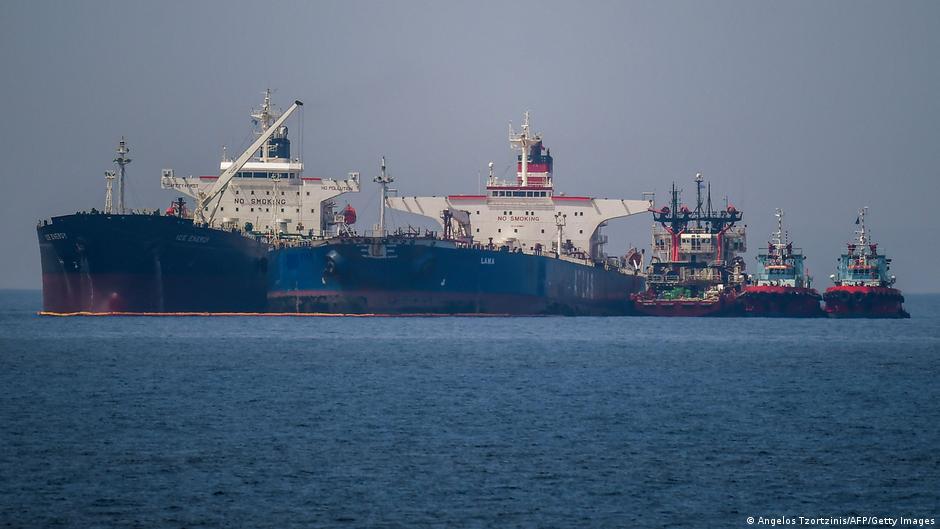
The Treasury initiative asks banks to watch for oil labeled as “Malaysian blend” to disguise its Iranian origin, missing or falsified shipping documents, or ship-to-ship oil transfers that obscure where cargo came from.
A Treasury Financial Crimes Enforcement Network report released Monday said oil firms linked to Iran conducted roughly $4 billion in transactions in 2024, and dozens of shipping companies based in Iraq, the United Arab Emirates and Hong Kong processed about $707 million through U.S. accounts in 2024.
Typologies and pressure
The Treasury’s call to banks centers on FinCEN typologies, including newly formed companies moving unusually high volumes, firms that route payments through multiple intermediaries, and transactions connected to Iranian crypto firms. In a separate framing of the same push, the Hoodline write-up said Treasury put U.S. banks on an Iran cash-smuggling watch and described the effort as part of a wider effort to squeeze Tehran’s weapons financing and oil revenues.
The Treasury also warned in April that it was prepared to hit institutions that facilitate Iranian transactions with secondary sanctions, threatening to levy secondary sanctions for doing business with Iran and accusing those countries of allowing Iranian illicit activities to flow through their financial institutions. The AP account tied the banking-monitoring move to an economic-focused effort aimed at choking Tehran into submission through sanctions and the threat of secondary sanctions on Iran’s allies.

Oil networks and rewards
Beyond bank monitoring, the U.S. Department of State’s Rewards for Justice program announced it will pay up to $15 million for information leading to disruption of the financial networks of the Islamic Revolutionary Guard Corps, including the Quds Force, or of the network linked to Wang Shaoyun.
The DW account said the FBI reported that Wang and her associates unlawfully used the U.S. financial system to process more than $100 million in transactions, and it described a cross-border scheme involving ship-to-ship transfers and fake or misleading documents about destination and ownership.
The DW report also stated that on January 25, 2024, the U.S. District Court for the District of Columbia issued an arrest warrant for Wang, with charges including violation of the International Emergency Economic Powers Act (IEEPA), violation of the Iran Transactions and Sanctions Regulations (ITSR), conspiracy to commit money laundering, and money laundering of financial instruments.
In parallel, the AP-linked Treasury approach emphasized choking Iran’s sanctions-evasion infrastructure by deputizing the financial system to help disrupt Iranian oil sales and related transfers through shell companies and crypto networks.