
Virginia Voters Decide Referendum Allowing Democratic-Controlled Redistricting Through 2030
Key Takeaways
- The referendum would authorize the Democratic-majority General Assembly to redraw Virginia's congressional maps.
- If approved, Democrats could gain as many as four U.S. House seats.
- Republicans campaign against it, calling the measure a power grab.
Virginia votes Tuesday
Virginia voters are deciding Tuesday whether to approve a referendum that would amend the state constitution to allow mid-decade redistricting using the Democratic-controlled Assembly’s redrawn congressional maps, a move that polls and multiple outlets describe as potentially giving Democrats a 10-1 advantage in Virginia’s congressional delegation.
CBS News reports that the referendum would give Democrats an advantage in all but one of the state’s 11 House seats, and that the maps would only be in place until the 2030 election, after which “the standard redistricting process will resume.”

NBC News similarly says the constitutional amendment would “temporarily bypass the state’s bipartisan redistricting commission” to enact a new congressional map for the rest of the decade, then return mapmaking duties to the commission after the 2030 census.
Politico frames the stakes as a potential “10-to-1 seat advantage in Virginia,” which it says amounts to a net pickup of “as many as four House seats.”
Fox News describes the Republican campaign’s goal as defeating the ballot measure, which it says could result in a “10-1 advantage for Democrats in Virginia’s congressional delegation, up from their current 6-5 edge.”
The voting timeline is also consistent across outlets: CBS News says polls will be open until 7 p.m. ET, and it notes early voting began on March 6, while Politico and NBC4 Washington both describe the referendum as an out-of-cycle April contest with heavy turnout interest.
How the fight escalated
The referendum is presented by outlets as the latest move in a broader mid-decade redistricting war that President Donald Trump urged in multiple states, with Virginia Democrats framing their effort as a response to GOP actions elsewhere.
Democracy Docket describes that the Tuesday special election will allow Virginia voters to decide how the state responds to GOP gerrymanders in “Texas, Missouri, North Carolina and — if Gov. Ron DeSantis (R) gets his way next week — Florida.”

NBC4 Washington and NBC News both describe the referendum as an escalation in a national arms race, with NBC4 Washington saying it is “the latest move in an escalating redistricting arms race” and NBC News calling it “the latest fight in the mid-decade redistricting war that has unfolded across the country.”
Fox News provides a timeline of Trump’s push, saying Trump last spring floated mid-decade redistricting and that when asked about adding Republican-leaning House seats, the president said, “Texas will be the biggest one. And that’ll be five.”
Democracy Docket adds that Democrats in both California and Virginia are required by law to put their redistricting plans to a statewide vote, and it notes that California voters approved a new map “to counter the GOP’s potential gains in the Lone Star State.”
Multiple outlets also emphasize that Virginia’s referendum is temporary and tied to the 2030 election, with CBS News saying the maps are only in place until 2030 and NBC News saying the plan would “return mapmaking duties to the commission after the 2030 census.”
Voices on both sides
The referendum has drawn prominent national and state figures, with Republicans and Democrats offering sharply different characterizations of the same ballot measure.
“Virginia voters are deciding Tuesday whether to approve a referendum to to favor Democrats by a 10-1 margin, the latest battle in the to increase their chances of winning control of the House”
Fox News quotes former Virginia Gov. Glenn Youngkin calling the Democrat-pushed map a “power grab” and saying it is the “most gerrymandered map in America. It's wrong. Virginians should stand up and vote no tomorrow.”
It also includes former state Attorney General Jason Miyares, who told a crowd that Democrats’ map is one that “you draw when you’re drunk with power,” and Miyares charged that “Democrats want to take away the voices of millions of Virginians and gerrymander the state.”
On the Democratic side, former President Barack Obama urged a “yes” vote in a video released Friday, saying, “By voting yes, you have the chance to do something important — not just for the Commonwealth, but for our entire country,” and he added, “By voting yes, you can take a temporary step to level the playing field. And we’re counting on you.”
CBS News reports that Eric Holder told CBS News on Sunday, “This is really a national fight,” and that it is “not a fight only about Virginia.”
NBC4 Washington quotes Spanberger saying, “I do believe that on Tuesday we will see that the yes vote is the winning vote,” while CBS News reports Trump posted on social media, “VOTE 'NO'TO SAVE YOUR COUNTRY!”
Different framings of the same vote
Outlets diverge in how they frame the referendum’s mechanics, the meaning of the “yes” and “no” campaigns, and the level of competitiveness.
Politico emphasizes the closeness of the race, quoting Democratic strategist Jared Leopold saying, “I always thought this campaign would be close [and] 24 hours out, I believe that to be the case,” and it adds that “Anytime you’re on the ‘yes’ side of a referendum, you’ve got the burden of proof.”

NBC News similarly describes the contest as “shaping up to be close,” and it cites a Washington Post/George Mason University poll released earlier this month showing “52% of likely voters said they supported the referendum and 47% opposed it.”
USA Today highlights the national scale and spending, saying the partisan sprint to redraw congressional lines is “the largest mid-decade flurry since the 1800s,” and it reports that “a total of roughly $100 million in spending from both sides” has been fueled mostly by secret donors.
Democracy Docket, by contrast, focuses on a legal challenge tied to voter ID rules, saying the Republican National Committee filed a lawsuit challenging voter identification in Fairfax County and asking the Circuit Court of Fairfax County to block the county from using its current DPC policy.
NBC4 Washington and NBC News both add that the state Supreme Court is considering whether the redistricting plan is illegal, with NBC4 Washington saying “The state Supreme Court is considering whether the redistricting plan is illegal in a case that could make the referendum results meaningless.”
What’s at stake next
The consequences described by outlets extend beyond Tuesday’s vote, because multiple reports say the referendum could be challenged in court and because the outcome could shift the balance of power in the U.S. House.
“As Virginians prepare to head to the polls on April 21 and vote on Virginia Democrats’ redistricting proposal, the Republican National Committee (RNC) has filed a lawsuit challenging voter identification in Fairfax County, a Democratic stronghold with a large immigrant population in the suburbs of Washington, D”
NBC4 Washington says the referendum “could still decide control of the closely divided U.S. House this fall,” and it adds that “Even if Democrats are successful Tuesday, the public vote may not be the final word” because the state Supreme Court is considering legality.
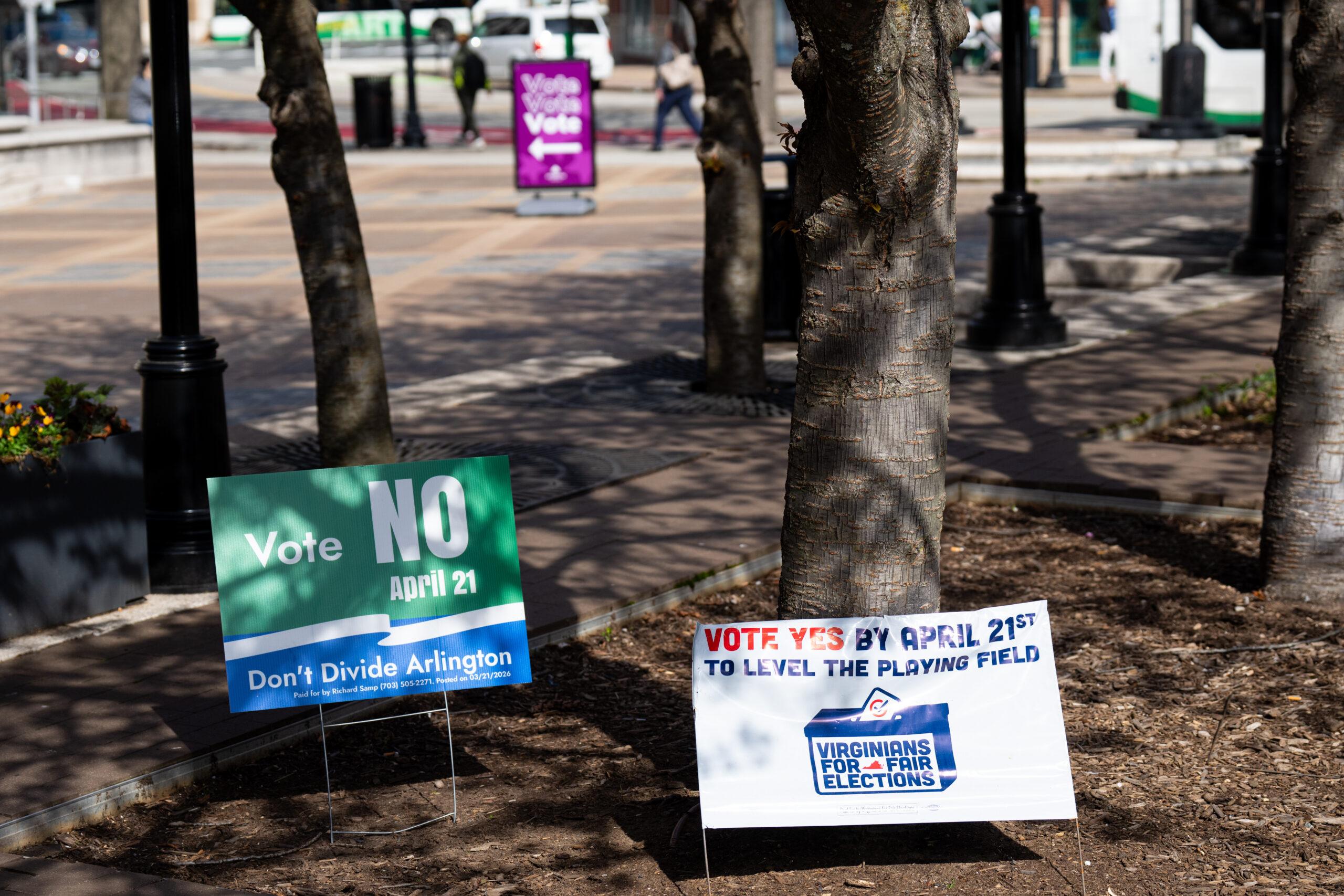
Democracy Docket similarly says that “the plan will still need to survive legal challenges,” and it notes that the Virginia Supreme Court ruled twice that the election can proceed while litigation remains pending.
Politico frames the stakes as a test for Democrats’ ability to “win back the House,” and it says that if the ballot referendum fails, it would be “an early embarrassment for Spanberger as governor and a high-profile loss for the Democratic Party.”
NBC News describes the referendum as a “constitutional amendment” that would temporarily bypass the bipartisan commission and then return duties after the 2030 census, emphasizing that the vote is part of the mid-decade redistricting war affecting the 2026 elections.
USA Today adds that the House is currently divided “217-to-213 in favor of the GOP,” and it reports that if approved, the measure could change the likely makeup of Virginia’s delegation “from a current six-to-five Democratic split, to as many as a 10 Democrats.”
More on USA

Donald Trump Says US Navy Disabled And Seized Iranian-Flagged Ship Touska In Gulf Of Oman
13 sources compared

Reuters/Ipsos Poll Finds 36% Approve Trump’s Job Performance Amid Iran War And Pope Feud
10 sources compared

Donald Trump Urges Iran To Release Eight Women Facing Execution Ahead Of Talks In Islamabad, Pakistan
12 sources compared
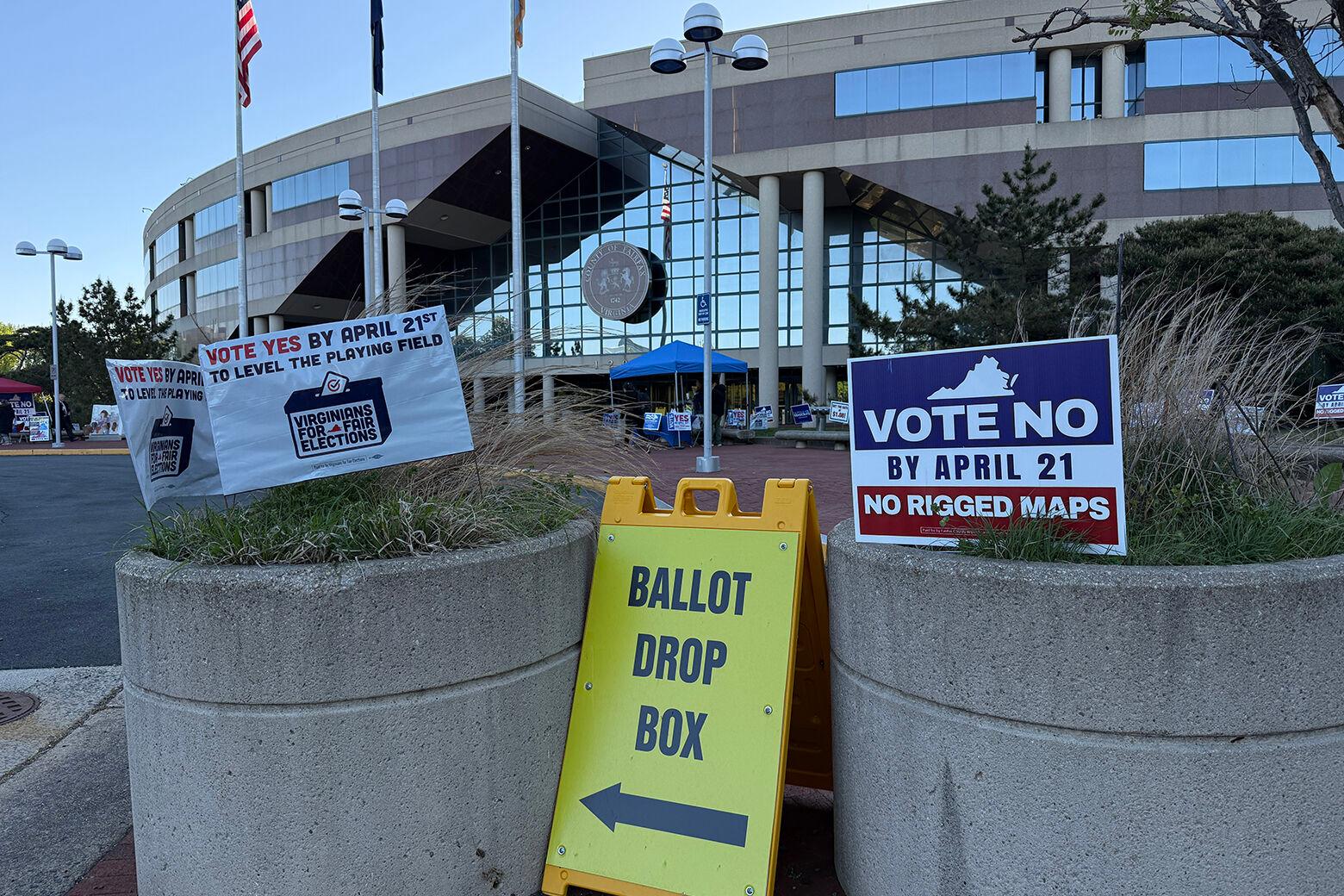
Virginia Voters Decide Tuesday On Redistricting Referendum That Could Boost Democrats’ House Seats
30 sources compared