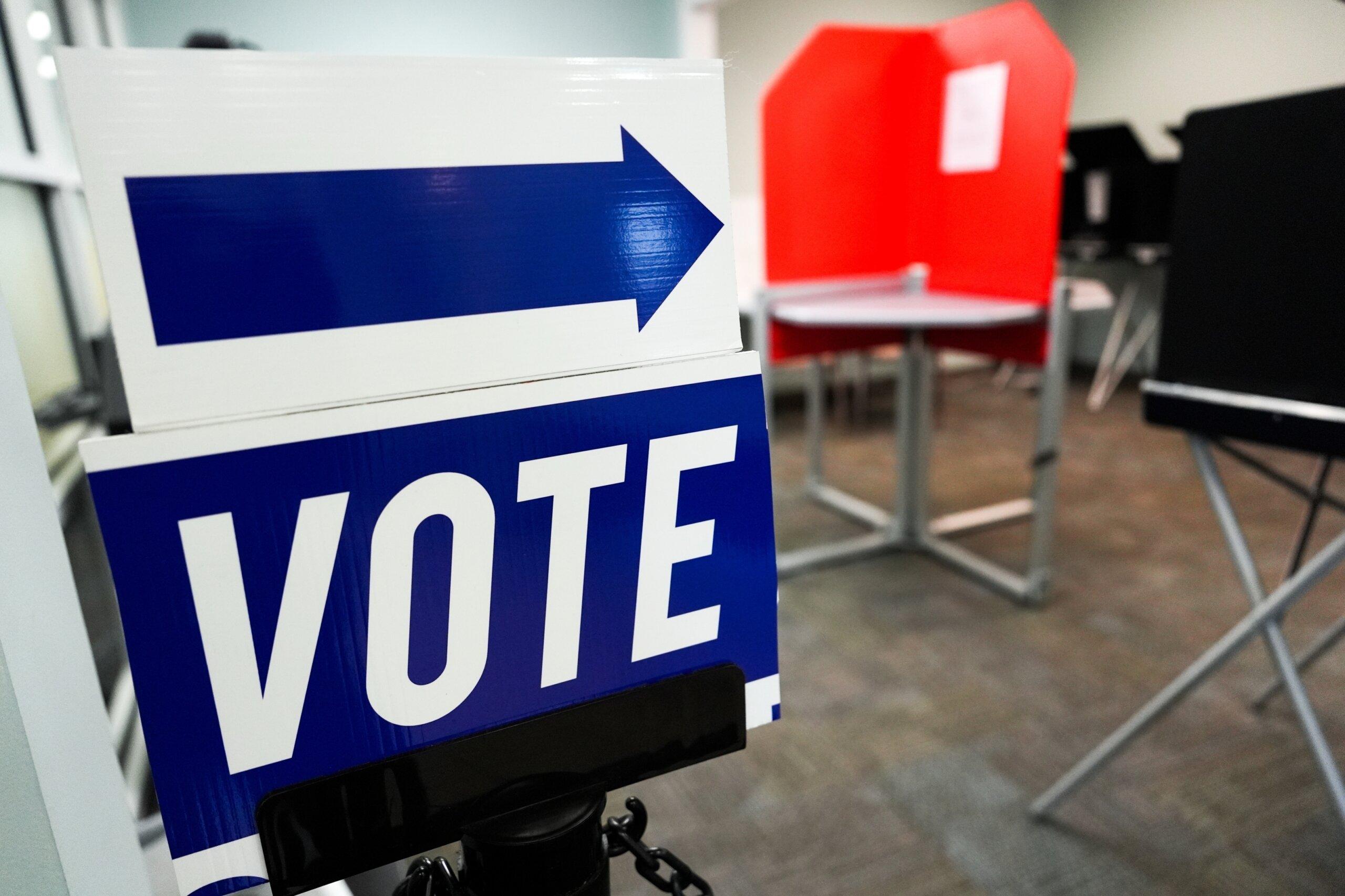
Virginia Voters Decide Tuesday On Constitutional Amendment To Redraw Congressional Districts Before 2026 Elections
Key Takeaways
- Voters will decide a constitutional amendment to redraw congressional districts ahead of the 2026 elections.
- Tens of millions flow from dark-money groups into Virginia’s redistricting fight.
- Constitutional amendment could have national implications for control of Congress.
A referendum with national reach
Virginia voters are set to decide Tuesday whether to approve a constitutional amendment that would allow the state legislature to redraw congressional districts ahead of the 2026 elections, temporarily overriding Virginia’s bipartisan redistricting process until after the 2030 census.
TIME reports that the referendum follows President Donald Trump’s push last year for mid-decade map changes in Republican-led states, and that Virginia is a “huge prize for Democrats attempting to take the House.”

TIME says the state currently hosts “a majority of six Democrats to five Republicans,” and that passing Tuesday’s referendum could lead to “a map with a 10-1 advantage.”
CNN describes the proposed map as one that would “flip four Republican House districts,” delivering “10 of 11 seats,” and frames it as a rework of sections of Virginia including “the Washington, DC, suburbs and around Richmond.”
Virginia Mercury says the standalone spring referendum will cap months of legal and political fights and that voters are weighing a proposed constitutional amendment that would allow Virginia to redraw its congressional districts ahead of the 2026 elections.
WTOP adds that the referendum could have a “seismic political impact” on congressional districts and says Democrats could gain a “10-1 advantage” with redrawn districts.
The Guardian reports that the question before voters is whether to “temporarily set aside Virginia’s congressional maps intended to advantage neither party” and replace them with a new version that could allow Democrats to win “all but one seat” in the November midterm elections.
How the fight escalated
The Virginia referendum is being framed as a response to a broader mid-decade redistricting push that began after President Donald Trump called on Texas to start a congressional redistricting process mid-decade rather than after the next census in 2030.
TIME says Trump’s push last year triggered similar efforts in other Republican-led states, including Ohio, North Carolina and Missouri, and that Virginia’s vote is “a closely watched test in the national battle over gerrymandering.”

WTOP similarly describes the referendum as part of a national fight sparked by Trump’s encouragement of Texas and other Republican-led states to redraw maps to benefit the GOP ahead of November elections.
Virginia Mercury says the referendum comes after months of legal and political fights and that lawmakers advanced the amendment on a party-line vote during a special session in late 2025, describing it as a defensive move in an “unprecedented” national redistricting environment.
It also says the proposal has prompted multiple court challenges, including disputes over whether the measure should appear on the ballot at all, and that a lower court initially struck down the amendment earlier this year before the Supreme Court of Virginia allowed the referendum to proceed.
CNN adds that the redistricting battle “kicked off last year” when Republicans redrew Texas’ map with the goal of flipping five Democratic seats, and that Virginia’s vote is the latest volley in that fight.
The Guardian places the referendum in a longer political arc, noting that Republican Glenn Youngkin warned conservative activists that they were in “the most important election” in Virginia’s “237-year history,” and that the question is being decided Tuesday when polls close.
Money, maps, and competing claims
The referendum’s stakes are being contested through both map design and campaign spending, with multiple outlets describing how dark money and committee contributions are shaping the fight.
TIME says “around 95% of the almost $100 million raised” has come from tax-exempt nonprofits “also known as501(c)(4) organizations,” and that Virginians for Fair Elections has received “$64 million” in contributions between December 2025 and April from these nonprofit organizations.
TIME adds that House Majority Forward accounted for “almost$40 million” of those donations and that Virginians for Fair Maps has funneled “at least $23 million” to the “no” side.
NPR reports that “Funding from dark-money groups, 501(c)(4)s structured so donors do not need to be disclosed, has made up the bulk of campaign contributions on both sides of the issue,” and it describes the Justice for Democracy PAC as having received “just shy of $10 million” from Per Aspera Policy Incorporated.
NPR also highlights voter confusion about messaging, quoting Randi Buerlein saying, “I'm looking at this booth, and it has a big picture of our governor saying, 'Don't be fooled,'” and adding that Spanberger is “on TV every day saying, 'Vote yes.' But they're making it look like she's saying, 'Vote no.'”
CNN provides a detailed description of the map’s geography, including a new 7th district that “stretches so far that it splits in half” and a “lobster” comparison, while WTOP quotes Stephen Farnsworth saying, “If the amendment passes, that’s a significant advantage for Democrats going into those November 2026 midterms.”
The Guardian adds a political framing from Glenn Youngkin, warning that Democrats are pushing “the most partisan, most gerrymandered map in America, worse than Illinois, worse than California,” and it quotes Mark Rozell saying, “Virginia remains a purplish state. It often swings from D to R and vice versa.”
How outlets frame the same vote
While all the coverage centers on Tuesday’s referendum, the outlets emphasize different angles: national power math, map mechanics, and voter messaging.
WTOP foregrounds the balance-of-power arithmetic, saying Republicans have a “razor thin” House advantage of “217-213, with one independent,” and that “When all 435 seats are filled, exactly 218 votes are needed to pass legislation.”
TIME focuses on the funding structure, describing “dark money” flowing into both sides and naming specific donors and groups, including Peter Thiel’s link to Justice for Democracy PAC and the role of 501(c)(4) organizations that “are not required to report their donations.”
NPR foregrounds voter experience and confusion, describing “contradictory direct mail campaigns” and “Even the names of the referendum committees are confusing voters,” while quoting Finn Lee saying, “Any confusion was created by defying court orders, misleading ballot language and the hypocrisy of politicians. This ad simply serves to educate voters.”
The Guardian foregrounds political mobilization and polling, quoting Mark Rozell that “This issue has energized the Republican base. That’s the danger for the Democrats,” and it reports a survey his school conducted with the Washington Post showing “52% of voters back the new maps and 47% are opposed.”
CNN emphasizes the map’s design, describing how Democrats “took a maximalist approach” and detailing the “pinwheel” northern Virginia districts and the “College towns” district running “alongside the Blue Ridge Parkway.”
Virginia Mercury emphasizes the legal and procedural mechanics, including that the amendment would “give the General Assembly retroactive authority to approve new maps mid-decade under specific conditions,” and it says courts allowed the ballot wording to stand after challenges.
What happens next
If the amendment is approved, the coverage describes immediate effects on Virginia’s congressional map and downstream implications for the 2026 midterm elections.
Virginia Mercury says, “Yes” new congressional maps would take effect immediately if voters approve it, and it adds that lawmakers have already passed revised district lines “contingent on the constitutional change.”

It also explains that the amendment would create a one-time exception to Virginia’s current redistricting framework tied to the decennial census, and that the referendum would make Virginia’s response legal retroactively because the “trigger” outlined in the amendment has effectively been met.
WTOP similarly frames the referendum as a decisive factor in which party controls Congress next year, quoting Stephen Farnsworth: “In many ways, what happens in Virginia, may very well be the deciding factor in terms of which party controls Congress next year.”
The Guardian reports that Democrats have characterized supporting Virginia’s referendum as a way to retaliate against Trump’s nationwide redistricting push, and it quotes Abigail Spanberger saying, “It is responsive, it is temporary, and a yes vote is our way to stand up and ensure that efforts in other states do not go unmatched.”
CNN adds that Virginia Democrats hope the new map will deliver “10 of 11 seats,” and it notes that the proposed map would create a new district along the Blue Ridge Mountains connecting towns from James Madison University in Harrisonburg to Charlottesville, to Lynchburg, to Roanoke, and to Blacksburg.
NPR warns that confusion could depress turnout, quoting J. Andrew Kuypers that “The cumulative effect of all of these tactics is really decision fatigue. People are going to experience that, and flat out, that's going to favor the side with superior resources and the turnout infrastructure.”
More on USA

Donald Trump Says US Navy Disabled And Seized Iranian-Flagged Ship Touska In Gulf Of Oman
13 sources compared

Reuters/Ipsos Poll Finds 36% Approve Trump’s Job Performance Amid Iran War And Pope Feud
10 sources compared
Donald Trump Urges Iran To Release Eight Women Facing Execution Ahead Of Talks In Islamabad, Pakistan
12 sources compared
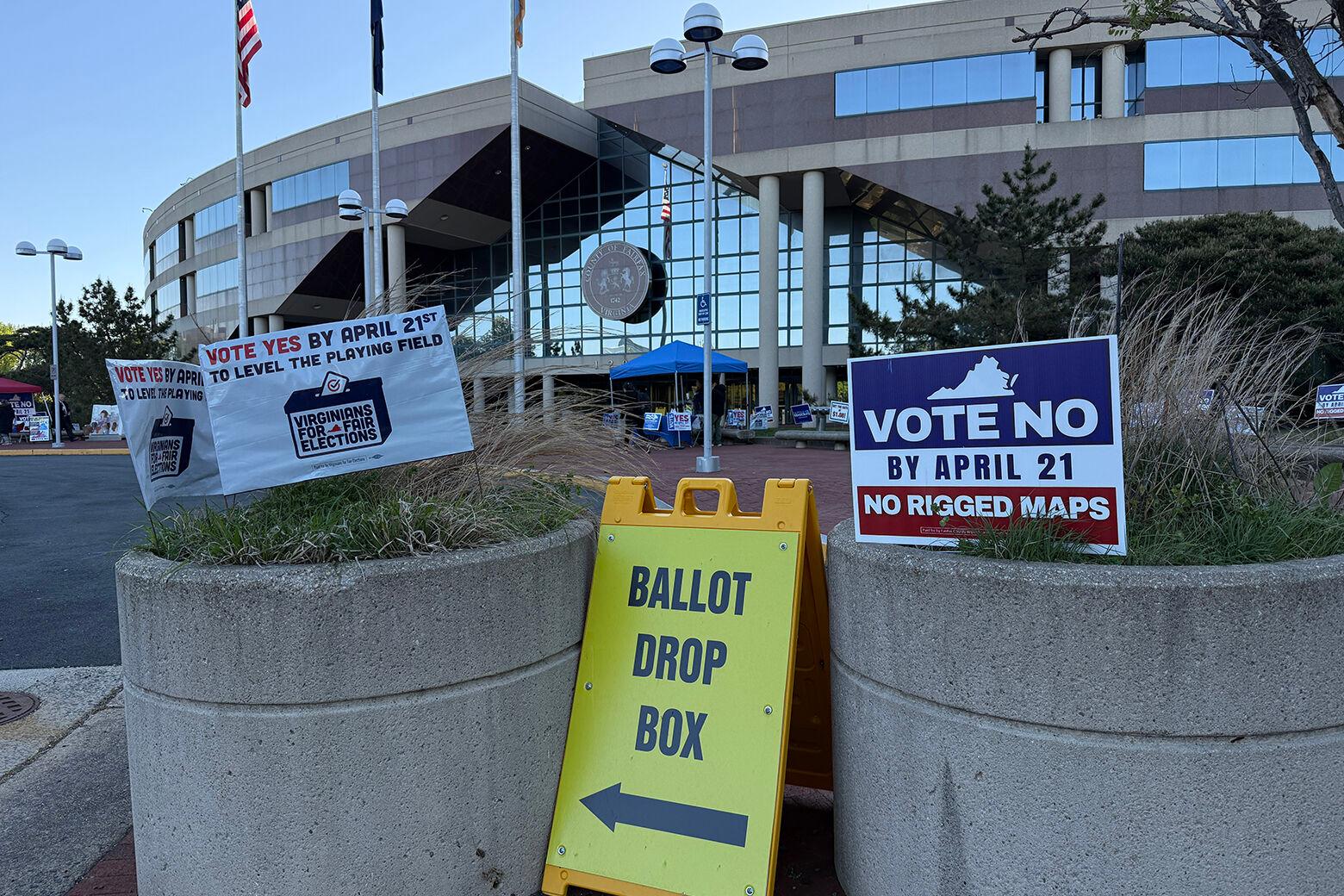
Virginia Voters Decide Tuesday On Redistricting Referendum That Could Boost Democrats’ House Seats
30 sources compared