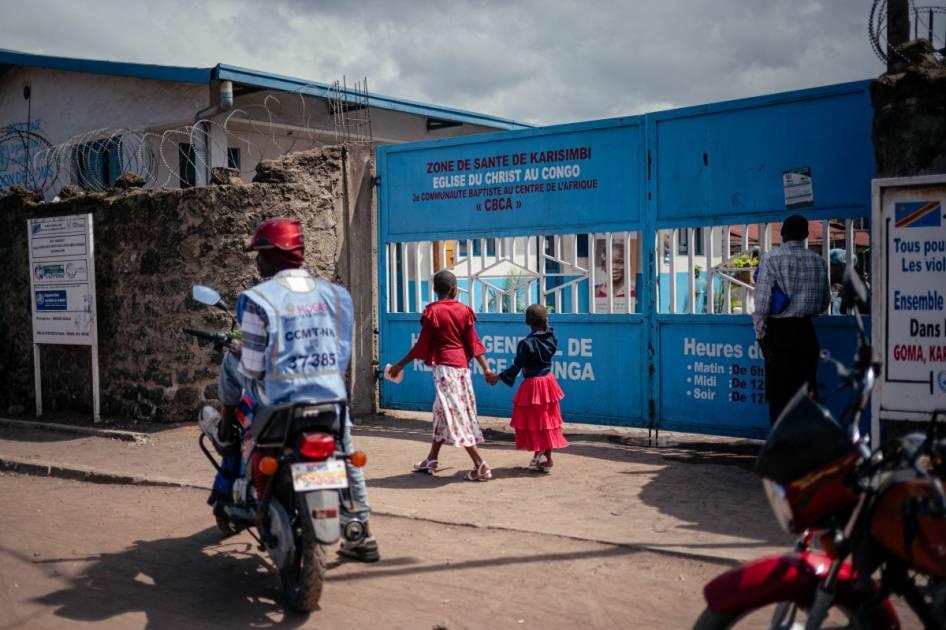
WHO Declares Ebola Public Health Emergency in Democratic Republic of Congo; U.S. Suspends Travel
Key Takeaways
- WHO declares Public Health Emergency of International Concern over Ebola outbreak in DRC and Uganda.
- Cross-border spread into Uganda reported as cases rise.
- U.S. imposes temporary travel restrictions amid WHO emergency.
Ebola Emergency and U.S. Moves
The World Health Organization declared an Ebola outbreak in the Democratic Republic of Congo a public health emergency of international concern, as the Bundibugyo virus strain spread and health systems faced mounting strain.
“CNN's Pamela Brown speaks to Dr”
The U.S. responded by implementing a 30-day travel suspension for all travellers arriving from the Democratic Republic of Congo (DRC), Uganda and South Sudan under Title 42, while the CDC said it would ramp up screening, monitoring, contact tracing, laboratory testing, and hospital readiness.

NBC News reported that a person from the U.S. tested positive for Ebola in connection to the outbreak after being exposed as part of their work in Congo, developing symptoms over the weekend and testing positive late Sunday, according to Dr. Satish Pillai, the CDC’s Ebola response incident manager.
The same NBC report said six other Americans were being moved for treatment or observation, and it described the WHO’s position that the risk of the outbreak causing a pandemic is extremely low but poses significant risk to the surrounding region.
In the Sunday Guardian’s account, Dr Satish Pillai said, “CDC has been working hand in hand with the Department of State to move Americans for treatment and care to Germany and other high-risk contacts to Germany for monitoring.”
Containment Strains and Competing Numbers
As the outbreak expanded across borders, the Sunday Guardian said the epicentre was localized in the Ituri Province of the DRC, where local health zones reported 10 laboratory-confirmed cases and 336 suspected cases, including 88 tragic deaths.
NBC News instead reported “More than 300 suspected cases and 88 suspected deaths” and said the outbreak was primarily in Congo but also in neighboring Uganda, where it said the WHO reported two cases in Kampala among individuals travelling from the DRC.

Jean Kaseya, director-general of the Africa CDC, told Sky News on Sunday that he was in “panic mode” due to a lack of medicines and vaccines as deaths rise, according to NBC News.
The Sunday Guardian also quoted a U.S. State Department spokesperson announcing that Washington is working closely with the governments of the DRC and Uganda to contain the virus, and it said the U.S. was working to rapidly mobilise support to international partner organisations with specialised expertise in viral hemorrhagic fevers.
NBC News added that the WHO said it will be difficult to fight the virus’ spread in a region that has recently seen conflict between the Congolese government and the rebel group M23, whose captured city of Goma has also confirmed one case, according to its local administration.
What’s at Risk Next
The Sunday Guardian said the CDC and federal partners were implementing proactive public health measures to help prevent the introduction of Ebola disease caused by Bundibugyo virus (BDBV) into the United States, including enhanced traveler screening and monitoring, coordination with airlines and emergency screening protocols at American airports.
“WHO has renewed the declaration of a public health emergency of international concern over an Ebola outbreak in the Democratic Republic of Congo, reviving fears that one of the world’s deadliest viruses could again threaten international health”
It also stated that there are currently no approved vaccines or specific therapeutics available to treat the Bundibugyo variant, leaving doctors dependent entirely on basic supportive care, and it described historical mortality rates ranging from 25% to 50% among infected groups.
Fox News reported that the WHO said the outbreak caused by the Bundibugyo virus does not meet the criteria for a pandemic emergency and that the WHO warned the outbreak could be larger than currently reported due to the high positivity rate among initial samples and the growing number of suspected cases.
Fox News also said the WHO did not recommend border closures or travel restrictions, even as it urged nations to activate emergency-management systems and implement cross-border screening measures.
In the Sunday Guardian’s framing, the WHO’s emergency declaration followed the outbreak claiming approximately 80 lives and spreading to neighboring Uganda, while the U.S. health agency said the risk to the American public remains low as it continues to closely monitor the situation.
More on Technology and Science
U.S. Jury Rejects Elon Musk’s Lawsuit Against OpenAI CEO Sam Altman and Greg Brockman
14 sources compared
.jpg&w=3840&q=75)
Google And Samsung Preview Android XR Audio Glasses With Warby Parker And Gentle Monster
18 sources compared
WHO Director-General Tedros Adhanom Ghebreyesus Warns Ebola Outbreak in Democratic Republic of Congo and Uganda
25 sources compared

Google Unveils Gemini 3.5 Flash-Powered Search Box With 24/7 Search Agents at I/O 2026
13 sources compared