
Why Iraq was attacked from all sides amid US-Israel war on Iran
Key Takeaways
- United States and Israel attacked Iran.
- Tehran-backed groups struck US assets in Iraq's Kurdistan region in retaliation.
- Pro-Iran groups and Iran's IGRC repeatedly attacked US assets across Iraq, expanding the regional conflict.
Iraq drawn into conflict
Within hours of the United States-Israeli attacks on Iran, US assets in Iraq’s Kurdistan region came under retaliatory attacks from Tehran-backed groups, dragging the country into the conflict that has since expanded across the Middle East and beyond.
“Within hours of the United States-Israeli attacks on Iran, US assets in Iraq’s Kurdistan region came under retaliatory attacks from Tehran-backed groups, dragging the country into the conflict that has since expanded across the Middle East and beyond”
Iraqi Foreign Minister Fuad Hussein said at a news conference in Baghdad that "Iraq has become one of the countries directly affected by the ongoing conflict" and that the country is facing attacks from "both sides of the conflict".
Iran has also carried out near-daily attacks on US assets in the energy-rich Gulf countries, causing a spike in oil prices and threatening the global economy.
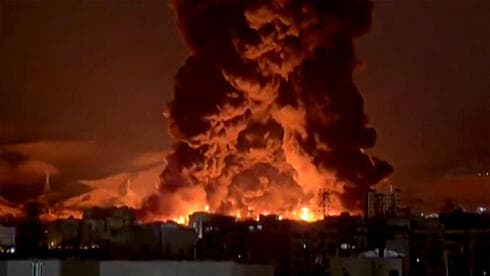
In the past 12 days, drone and rocket attacks have hit Baghdad International Airport, Erbil, and oilfields and facilities.
Recent attacks in Iraq
Multiple attacks have struck US facilities and other targets across Iraq in recent days.
On Wednesday, multiple news wires reported that a suicide drone was intercepted near the US Consulate in Erbil, quoting unnamed security and diplomatic sources, and loud explosions were heard in the area.
On the same day, a drone attack in Iraq’s semi-autonomous Kurdistan region killed a member of the Komala Party, which blamed Iran for the attack; Iran has not commented.
The Washington Post reported that a drone struck a US diplomatic support centre near Baghdad airport after six drones were launched toward the compound, one of which hit the facility while five were shot down, citing an unidentified security official and a US State Department alert.
Iran’s Revolutionary Guard Corps (IGRC) said they hit Al-Harir Air Base in the Kurdistan region with five missiles.
The Iran-backed Kataib Imam Ali group, affiliated with the Popular Mobilisation Forces (PMF), said four of its members were killed and 12 injured in air attacks in northern Iraq that it blamed on the US.
Overnight on March 4, local media reported Iraqi forces shot down a drone that attempted to attack Victoria airbase near Baghdad International Airport.
US military presence
The United States maintains a network of military facilities in Iraq that have been targeted or are vulnerable to attack.
“Within hours of the United States-Israeli attacks on Iran, US assets in Iraq’s Kurdistan region came under retaliatory attacks from Tehran-backed groups, dragging the country into the conflict that has since expanded across the Middle East and beyond”
The US presence includes Ain al-Asad Air Base in western Anbar province, Erbil Air Base in the Kurdistan region, Victoria Base (Camp Victoria) near Baghdad International Airport, and Harir Air Base northeast of Erbil.
Erbil Air Base serves as a hub for US and coalition forces conducting training, intelligence sharing, and logistical coordination in northern Iraq, the article says.
As of early 2026, about 2,500 US soldiers were in Iraq, though the article notes that since the US has withdrawn its troops from its bases in the Middle East it is unclear how many of these soldiers remain in the country.
The US maintains a limited number of military facilities across Iraq and the Kurdistan Region, far fewer than during the occupation years, and their exact number and size are not publicly disclosed.
Drivers of attacks
Experts and Iraqi officials say Iraq is being attacked from all sides because its politics and security landscape are fragmented and aligned with competing external powers.
Renad Mansour of Chatham House told Al Jazeera that different parts of Iraq align with competing external powers and that there is no single coherent foreign policy, and he said informal networks and militias play a major role in decision-making and security.
The article says Iran deepened its support for Shia political parties and armed groups after the 2003 US-led invasion, and that Shia armed groups that formed part of the Popular Mobilisation Forces (PMF) played a leading role in defeating ISIL between 2014 and 2017; thousands of members of pro-Iran armed groups have been absorbed into state security institutions, and groups such as Kataib Hezbollah and Asaib Ahl al‑Haq are aligned with Tehran’s interests.
Burcu Ozcelik of RUSI said pro-Iran armed groups under the banner of the 'Islamic Resistance in Iraq' have targeted US military assets through asymmetric attacks to pressure Washington and to undermine Iraqi Kurdistan’s reputation for stability, and she warned that because such groups are entrenched and in part folded into the country’s security architecture, Iraq is 'far more exposed than most, and highly likely to remain in the crossfire long after [US President Donald Trump] claims the war has ended.'
The article also notes Iranian attacks on Iranian Kurdish groups in Iraqi Kurdistan and conflicting statements about a potential cross-border operation, with one Kurdish leader telling Al Jazeera it is 'highly likely' while Babasheikh Hosseini said there was no operation 'at this point' even as the US had made contact with the group.
More on Iran
Trump Says U.S. Bombed Military Sites on Kharg Island, Iran's Oil Hub
14 sources compared
FBI Warns of Iranian Drone Plot Based on Unverified Tip; California Says No Credible Threat
10 sources compared

White House Demands ABC Retract Report Claiming Iran Sought To Launch Drone Attacks On California
11 sources compared

Iranian Proxy Claims It Shot Down US Refueling Plane in Iraq; US Military Says Otherwise
17 sources compared