Yale HRL: ‘RSF razed North Darfur farming communities to induce famine’
Key Takeaways
- RSF deliberately burned at least 41 farming communities north and west of El Fasher
- Burning destroyed key food sources that supplied El Fasher
- Humanitarian Research Lab at the Yale School of Public Health published the findings
Main finding
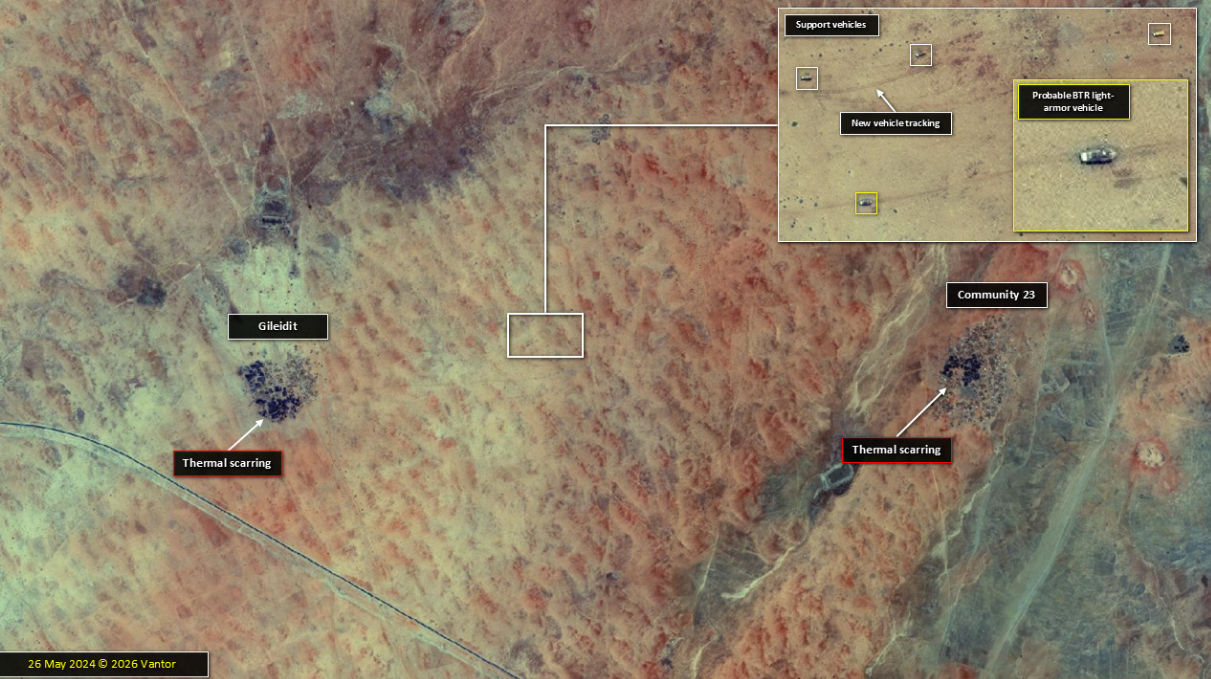
Researchers at Yale University say the paramilitary Rapid Support Forces (RSF) deliberately burned down at least 41 rural farming communities north and west of North Darfur’s capital of El Fasher between March 31 and June 12 2024, destroying key food sources supplying the city.
“Researchers at Yale University say the paramilitary Rapid Support Forces (RSF) deliberately burned down at least 41 rural farming communities north and west of North Darfur’s capital of El Fasher between March 31 and June 12 2024, destroying key food sources supplying the city”
The findings were published by the Humanitarian Research Lab at the Yale School of Public Health and support growing evidence that armed actors intentionally created famine conditions in North Darfur.
Scale of destruction
Satellite imagery shows that 68 per cent of the 41 destroyed villages now display no visible signs of human activity months after the attacks, with vegetation overtaking abandoned homes and indicating the absence of residents and livestock.
Another 12 per cent of the villages show only limited signs of life.
Fire activity in the area surged by more than 330 per cent in 2024 compared to the previous five years, and cultivated land within two kilometres of the destroyed communities collapsed by 82 per cent, shrinking from an average of 7.16 square kilometres to just 1.25 square kilometres.
Ten of the communities were attacked more than once, while one village was struck at least seven times during the study period.
Siege and warnings
The report notes the destruction began weeks before the RSF launched its siege of El Fasher in April 2024; the siege lasted around 18 months and ended with the RSF capturing the city in October 2025.
“Researchers at Yale University say the paramilitary Rapid Support Forces (RSF) deliberately burned down at least 41 rural farming communities north and west of North Darfur’s capital of El Fasher between March 31 and June 12 2024, destroying key food sources supplying the city”
The United Nations Independent International Fact-Finding Mission later reported mass killings in the area and warned of “indicators of a genocidal path”.
Researchers also noted that the RSF emerged from the Janjaweed militias that targeted many of the same communities during the Darfur conflict in the early 2000s, and the Yale report states the pattern of attacks “supports reports of intentional starvation”.
The Famine Early Warning Systems Network had already warned of famine conditions in El Fasher in June 2024.
Methods and implications
Because humanitarian access to North Darfur remains severely restricted, Yale researchers relied on satellite thermal data from NASA, vegetation indices, and high-resolution imagery from commercial providers, using NASA’s VIIRS and MODIS sensors and Sentinel-2 vegetation monitoring.
Using these remote sensing tools, researchers concluded with “high confidence” that RSF forces carried out systematic arson attacks on predominantly Zaghawa farming communities, and the report highlights remote sensing technology as crucial for documenting abuses in areas inaccessible to aid workers.
The full report is titled The Impact of Systematic Razing of Agricultural Communities Around El-Fasher: A Remote Sensing Study.
More on Sudan

Drone Strike in Goma Kills French UN Aid Worker; M23 Blames Congolese Forces, Kinshasa Denies
10 sources compared
M23 Rebels Accuse Congolese Army of Drone Strikes That Kill French Aid Worker in Goma
10 sources compared

Chad Shuts Border With Sudan After RSF Cross-Border Attack Kills Chadian Soldiers, Civilians
21 sources compared
UN Fact-Finding Mission Finds RSF Siege of El-Fasher Bears Hallmarks of Genocide
33 sources compared