Full story
Quake, mall blast, search
A magnitude 7.1 earthquake struck Japan’s Kumamoto region on Kyushu on Tuesday, and the death toll rose to 18 as soldiers and emergency workers combed through collapsed houses and a badly damaged shopping mall.
“killed at least 18 people, including a foreigner”
The quake left at least 62 people injured, including six critically, according to the prefectural government, and rescuers continued searching through debris as it remained unclear how many people were still missing.
One of the hardest-hit locations was an Aeon Mall shopping centre in Kashima city, where about 3,000 customers were evacuated before a gas explosion happened in another part of the mall and the mall’s second floor collapsed, trapping people.
Aeon President Akio Yoshida said four people were confirmed dead at the site and three others remained missing, while NPR reported the death toll included “including a foreigner” after a Vietnamese technical intern was killed when a crane fell at a factory where he worked.
In nearby Yatsushino, a chimney collapse at a Nippon Paper Industries factory killed five people while seven others were rescued from the debris, and four people were still believed to be trapped there, according to the Kumamoto prefectural government disaster team.
Race against time voices
Prime Minister Sanae Takaichi told reporters that “There are people who are still waiting to be rescued, and it's a race against time,” as rescue teams continued searching for people trapped after the quake and subsequent blast.
Takaichi also said, “We will go all out to find and rescue as many people as we can,” while CBS News reported that work continued to locate people still trapped inside the structure at the Aeon Mall.

Aeon President Akio Yoshida said in a news conference that “We take it seriously that an explosion happened and precious lives were lost,” and NPR described Yoshida bowing deeply along with two other executives in Kumamoto.
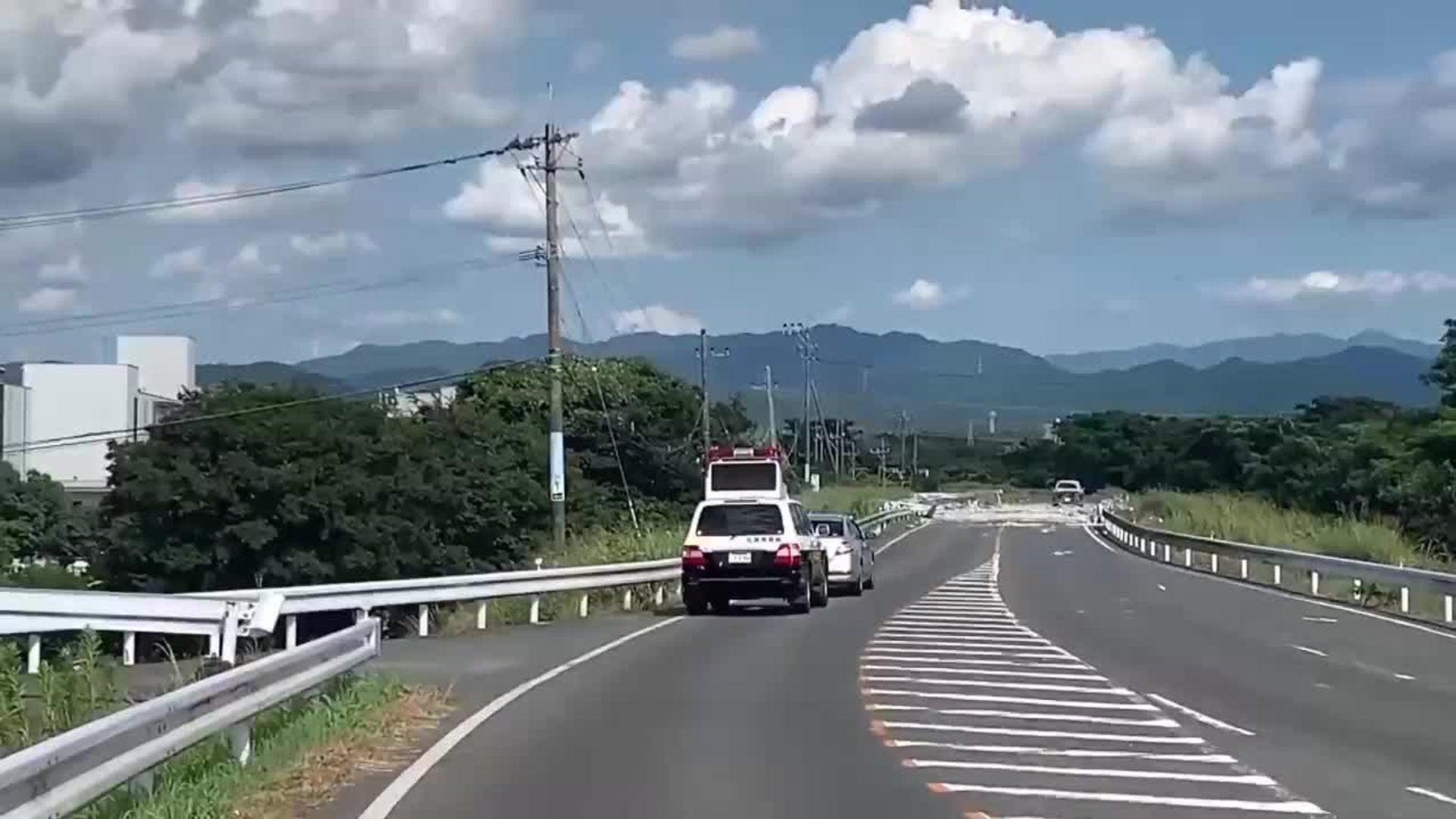
At the same time, the BBC reported that the quake caused power outages, damaged roads, brought down part of a castle wall, and destroyed a footbridge, while police cited by NHK said more than 40,000 households were without power and several people were missing after a chimney collapsed at a paper factory.
Al Jazeera later said the US Geological Survey revised its estimate to 6.8 and described a tsunami advisory that was issued immediately after the earthquake and later lifted, as aftershocks continued to threaten the region.
Aftershocks, power, and risk
As the search continued, authorities warned the number of casualties could increase and said it remained unclear how many people were still missing, while the prefectural government said the tally had been steadily growing.
“nearly 34,900 households without electricity and about 15,000 without running water”
The earthquake disrupted essential services, leaving nearly 34,900 households without electricity and about 15,000 without running water, and more than 8,800 people left their homes to stay in over 400 shelters where power sources were being added to provide air conditioning.
The Guardian reported that the Japanese military mobilised 3,600 personnel for disaster relief operations and sent 20 aircraft to assess the damage from the air, while the Japan Meteorological Agency warned areas with the biggest tremors would remain at risk of further strong quakes and landslides for about a week.
Al Jazeera said the earthquake was strong enough to be felt in Japan’s overseas neighbour, South Korea, and it described the epicentre near the coastal city of Uto about 48km (30 miles) southwest of Kumamoto City.
In the aftermath, the BBC said the quake forced more than 150,000 people to evacuate, and it reported that bullet train services remained suspended while operations at Aso Kumamoto Airport resumed Wednesday, with some airlines canceling flights as a precautionary measure.