Full story
Quake Strikes Colombia
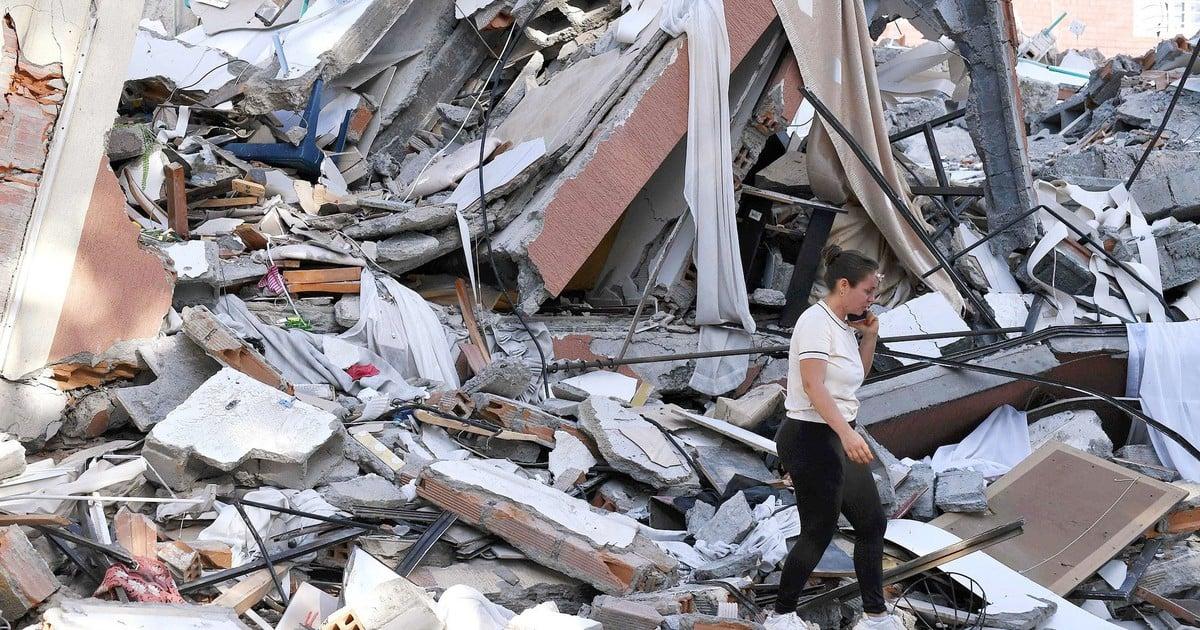
A 7.4-magnitude earthquake struck western Colombia on Monday, collapsing hospitals, schools and other buildings and leaving people trapped under the rubble, with the epicenter reported in the municipality of San José del Palmar in the department of Chocó.
“At least 169 people were killed Monday in a 7.4-magnitude earthquake”
Colombia’s newly inaugurated president, Abelardo De La Espriella, said in a national briefing that 700 people were injured and an estimated 5,000 homes were damaged or destroyed, and he declared a national disaster to mobilize emergency efforts.
In Colombia’s capital, De la Espriella said 188 people were missing, three hospitals had collapsed, and 18 other hospitals had been affected, while 39 schools were also affected.
NBC News reported that the quake’s strongest-to-hit-in-years impact left multiple cities under “red alert,” with Pereira, Cali, Quibdó, Manizales and Armenia named among the worst-hit areas.
The Associated Press said the disaster tested De la Espriella’s government as it scrambled to respond, with De la Espriella telling journalists that at least 265 people died and nearly 500 were reported missing.
Aid Delays and Limits
Colombia’s response also sparked a controversy over international assistance, with CNN reporting that Colombia initially refused some offers in the crucial hours after the quake.
CNN said the delay was tied to the tense political transition between administrations and noted that it was only on Wednesday that David Tamayo Roldán was appointed director of the National Unit for Disaster Risk Management.
A professor at Universidad de los Andes, Sandra Borda, argued that “Without a transition and with that kind of personnel change, it was perfectly normal for these short circuits to occur,” while Jens Laerke of the UN Office for the Coordination of Humanitarian Affairs said, “If that happens, the United Nations system and humanitarian actors are prepared to provide all the support we can.”
CNN reported that Salvadoran President Nayib Bukele said Colombia requested aid “only in the form of supplies” and that Peru confirmed it would dispatch volunteers for search and rescue.
In parallel, AP described how aid from regional partners began to roll into Colombia on Wednesday as the search grew more desperate, with teams continuing to pick through rubble in Cali, Pereira, Manizales and Quibdo.
Aftershocks, Missing, and Aid
As rescuers continued searching, the death toll and injury figures varied across outlets, with Reuters saying the quake was estimated to have killed at least 250 people and separate reports putting the death toll at 254 on Tuesday morning.
“the death toll at 254 on Tuesday morning”
Reuters reported that in Pereira, deep in coffee country, 101 people were killed, while 95 were killed in Cali, and it described rescue crews digging through mountains of rubble while shouting for quiet to listen for survivors.
The New York Times said the death toll from the 7.4-magnitude quake had risen to at least 181 people, with at least 1,310 people injured and 153 buildings collapsed, and it described rescuers in Cali hearing people and the crowd chanting “Diana! Diana!”
Project HOPE said that as of August 11, 2026, at least 250 people had been killed and at least 2,595 were injured, and it warned that thousands were still reported missing and the death toll was expected to climb.
With communications disrupted in remote areas, AP said Colombia’s geological service had documented 130 aftershocks since the quake, and it quoted Edith Penagos, 48, saying, “We have the most important things: a roof over our heads, food, water and, in my case, medical care.”