Full Analysis Summary
Doctor's detention and Gaza healthcare
A year after Israeli forces detained Dr. Hussam Abu Safiya, activists and family members are publicly demanding his immediate release.
They portray his case as emblematic of an assault on Gaza's health system.
His wife, Albina Abu Safiya, has publicly pleaded for his release, saying his only 'crime' was treating the wounded and children.
Supporters continue to urge human rights organisations and legal bodies to intervene on his behalf.
News coverage emphasizes the anniversary as a focal point for activists who link his detention to the wider destruction of medical infrastructure in Gaza.
Only two source documents were provided for this summary, limiting the number of distinct source types available for cross-source comparison.
Coverage Differences
Tone and focus
Al Jazeera (West Asian) foregrounds family testimony and eyewitness descriptions of the arrest and the conditions Abu Safiya has endured in custody, while NewsGram (Other) frames the case within broader legal and international accusations against Israel, including UN findings and international court actions; the two sources thus emphasize personal suffering versus systemic legal claims respectively.
Allegations of hospital assault
Eyewitnesses and medical staff told Al Jazeera that Israeli troops singled out Dr. Abu Safiya during an incursion into the hospital and forced him to list everyone present.
They reportedly ordered most people to leave while some patients and medics remained, then shelled the facility, set fires and cut electricity as they evacuated.
Captured staff were reportedly taken to al-Fakhoura school in Jabalia, where many were stripped, bound, beaten and interrogated.
Family members say Abu Safiya has suffered fractures, shrapnel wounds and ongoing physical and psychological abuse in custody.
These detailed accusations present a stark, direct account of Israeli forces' behavior toward medical personnel and patients inside the facility.
Coverage Differences
Level of operational detail
Al Jazeera provides granular eyewitness testimony about the arrest, alleged abuses in detention, and the hospital being shelled and set on fire, while NewsGram summarises legal and statistical findings (such as the UN commission’s conclusion and casualty figures) and personal pleas, offering less operational detail about the arrest itself.
International legal accusations
NewsGram places Dr. Abu Safiya’s detention within broader international legal accusations against Israel.
It cites an independent UN commission that concluded Israel carried out a deliberate campaign to destroy Gaza’s healthcare system and accused Israel of war crimes and the crime against humanity of extermination.
The report notes that South Africa has filed a genocide case at the International Court of Justice.
The story also highlights that the International Criminal Court has sought arrest warrants for Israeli leaders on multiple allegations.
Activists invoke these legal pathways to demand the release of medical staff and to hold Israeli authorities accountable.
Coverage Differences
Legal framing vs. eyewitness narrative
NewsGram (Other) foregrounds legal findings and actions — UN commission conclusions, South Africa’s ICJ genocide case, and ICC arrest notices — whereas Al Jazeera (West Asian) centers family appeals and eyewitness accounts about the arrest and alleged abuse; thus, NewsGram frames Abu Safiya’s case as part of systemic alleged crimes while Al Jazeera emphasises lived experience and immediate humanitarian concerns.
Gaza healthcare devastation
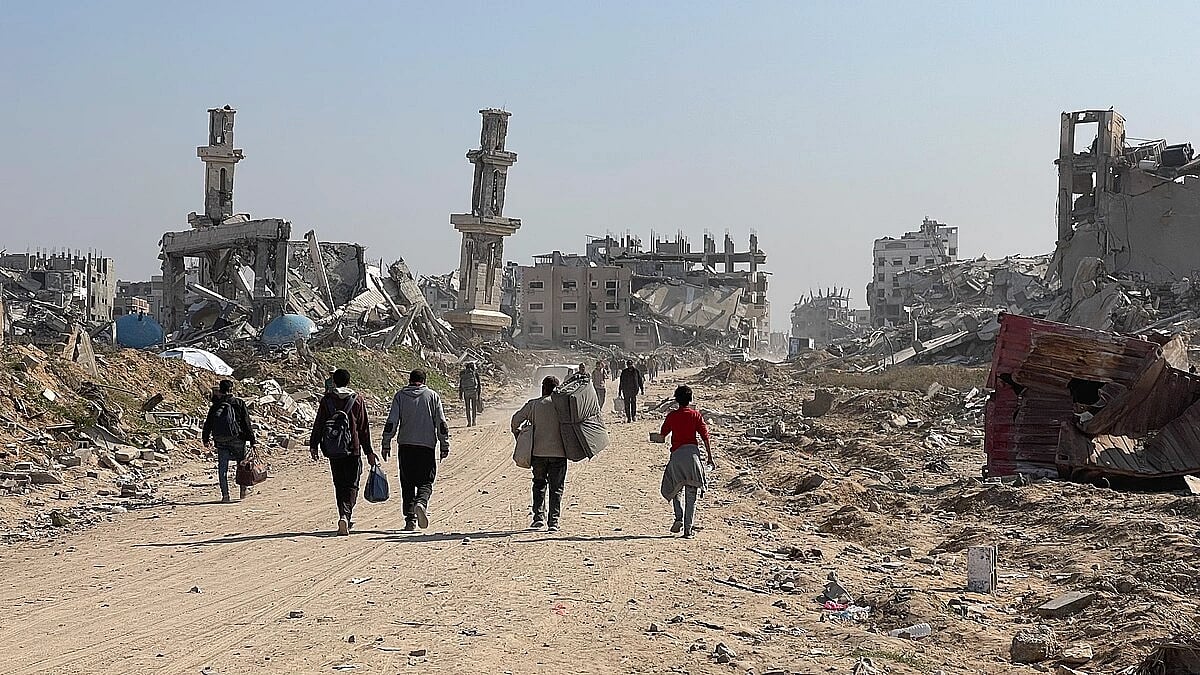
Both sources document the catastrophic toll on Gaza’s medical community and infrastructure.
NewsGram reports that more than 1,500 Palestinian health workers have been killed in Gaza and cites the UN commission’s finding that Israel’s campaign deliberately destroyed healthcare capacity.
NewsGram and activists describe that destruction as constituting extermination and grounds for genocide proceedings.
Al Jazeera provides human detail to that destruction, recording hospitals out of service, the shelling that killed Abu Safiya’s 20‑year‑old son Ibrahim on 26 October 2024, and families displaced and seeking safety abroad while demanding accountability.
Together, the pieces portray systematic targeting of health services and medical staff, consistent with the severe legal language used by the UN commission and by countries pursuing cases at the ICJ.
Coverage Differences
Scale vs. personal casualty detail
NewsGram emphasizes aggregate figures and institutional findings (e.g., 'more than 1,500 Palestinian health workers have been killed' and UN commission conclusions), while Al Jazeera supplies specific personal losses (e.g., the death of Abu Safiya’s son Ibrahim when the hospital was shelled) and narrative detail about hospitals being rendered out of service.
Two-source comparison
The two sources converge on demanding Abu Safiya’s release and documenting severe abuses and the collapse of Gaza’s health system.
They differ in emphasis: NewsGram highlights international legal mechanisms and the UN’s characterization of Israel’s actions as a deliberate campaign that some parties call 'extermination' or 'genocide'.
By contrast, Al Jazeera emphasizes eyewitness accounts, family appeals, and the immediate physical and psychological harm suffered by the doctor and other medical staff.
Because only two documents were provided, broader cross-type sourcing (for example, Western mainstream, Western alternative, regional, and NGOs) could not be integrated, which increases uncertainty about how other outlets might frame legal claims, operational details, or the language used to describe Israel’s actions.
Coverage Differences
Narrative and sourcing gap
NewsGram (Other) uses UN and international legal language to characterize Israel’s campaign as amounting to extermination and references ICJ and ICC actions, while Al Jazeera (West Asian) offers specific eyewitness and family testimony about arrest, abuse, and deaths; these divergent emphases reflect source_type differences and a gap created by the limited set of sources available for this summary.