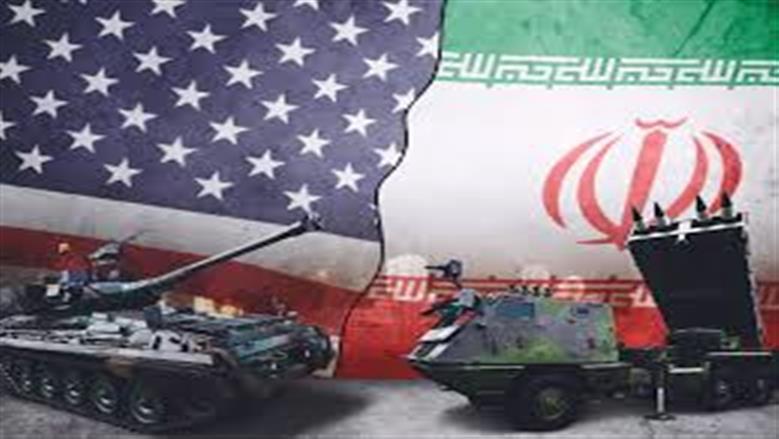
Adm. Brad Cooper Briefs Trump on New U.S. Military Options Against Iran Thursday
Key Takeaways
- CENTCOM prepared a plan for a wave of short, powerful strikes on Iran.
- Adm. Brad Cooper will brief Trump and senior national security team Thursday.
- Possible options include naval blockade and strikes targeting Iran's key infrastructure.
Trump briefed on Iran options
U.S. President Donald Trump is set to receive a briefing on Thursday on “new plans for potential military action in Iran,” with Axios reporting that CENTCOM Commander Adm. Brad Cooper will brief him and that Joint Chiefs Chairman Gen. Dan Caine is also expected to attend.
Axios says CENTCOM has prepared a plan for a “short and powerful” wave of strikes on Iran, “likely including infrastructure targets,” and that another option expected to be shared with Trump is focused on taking over part of the Strait of Hormuz to reopen it to commercial shipping.

NBC News similarly reports that “Adm. Brad Cooper, the commander of U.S. Central Command, will brief Trump and his senior national security team at the White House,” and frames it as an update on “the continued U.S. blockade of Iran's ports.”
CNBC adds that Defense Secretary Pete Hegseth suggested in Senate testimony that the “statutory countdown clock ‘pauses or stops in a ceasefire,’” while Trump faces a Friday legal deadline tied to the 1973 War Powers Resolution.
The reporting also links the briefing to market moves, with the BBC saying oil prices jumped to their highest level since 2022 after the report that the U.S. military was set to brief Trump on new Iran plans.
In the same BBC account, Brent crude rose “by almost 7% to more than $126 (£94) a barrel at one point,” before falling back to around $114.
The NBC News report places the briefing in the context of “little sign of a deal to end the war,” and it notes that the Strait of Hormuz is still effectively closed, with traffic “at an effective standstill.”
Plans, leverage, and escalation risk
Across the reporting, the briefing is described as part of a broader U.S. effort to apply pressure while negotiations remain stalled, with Axios saying Trump sees the naval blockade as “somewhat more effective than the bombing” and as “his primary source of leverage.”
Axios also says U.S. military planners are considering the possibility that Iran will take military action against U.S. forces in the region in retaliation for the blockade.

JNS.org, citing Axios, describes the CENTCOM plan as a “short and powerful” wave of strikes “likely including the Islamic Republic’s key infrastructure,” and it adds that other options include an operation to take over part of the Strait of Hormuz and a special forces raid to secure Iran’s “highly enriched uranium.”
NBC News reports that the briefing will cover “the way ahead in the Strait of Hormuz and on the ground in Iran,” and it ties the update to “the continued U.S. blockade of Iran's ports.”
CNBC situates the legal and operational context by saying the U.S. and Israel first struck Iran on Feb. 28 and that Trump sent a letter notifying Congress on March 2, “starting the 60-day clock and setting up a May 1 deadline.”
CNBC also says the U.S. and Iran are currently in a ceasefire first announced on April 7, and it emphasizes that the testy ceasefire “has so far failed to lead to a peace deal between Washington and Tehran.”
The BBC adds that the Strait of Hormuz waterway is still effectively closed and that “about 20% of the world's oil and liquefied natural gas (LNG) usually passes through the strait,” linking the confrontation to global energy prices.
NBC News further reports that Trump said he saw the blockade as “somewhat more effective than the bombing,” and it notes that traffic in the waterway has been at an “effective standstill” since Iran attacked shipping after the U.S. and Israel launched their joint military assault in late February.
Iran’s response and U.S. red lines
The reporting also shows Iran and the U.S. framing the standoff in sharply different terms, with Iranian leadership emphasizing protection of capabilities and U.S. officials stressing conditions for any deal.
NBC News says Iran’s new supreme leader vowed in a message earlier Thursday that the Islamic Republic would protect its “nuclear and missile capabilities” as national assets, describing it as “the latest signal that Tehran was not about to capitulate in the standoff wreaking havoc on the global economy.”
NBC News adds that President Masoud Pezeshkian said in a statement that the U.S. blockade was “doomed to fail.”
In the Axios-linked JNS.org account, Iranian Supreme Leader Ayatollah Mojtaba Khamenei posted tweets on X claiming that “A new chapter for the Persian Gulf and the Strait of Hormuz is unfolding,” and that “Today, it has been proven to not only the global public opinion but even to the rulers of countries that the U.S.’s presence and establishment in the Persian Gulf is the main source of instability in the region.”
JNS.org also quotes Trump’s position from the Oval Office, saying Trump told reporters that “at this moment, there will never be a deal unless they agree that there will be no nuclear weapons.”
JNS.org further reports that Trump warned earlier on Wednesday that Iran “better get smart soon,” saying the mullahs “don’t know how to sign a non-nuclear deal” to end the war.
Axios says Trump told Axios on Wednesday that he saw the blockade as his primary leverage, but he would consider military action if Iran “still won’t cave.”
The BBC includes a statement attributed to Iran’s Supreme Leader Mojtaba Khamanei saying Tehran would secure the Strait of Hormuz and eliminate “the enemy's abuses of the waterway,” and it also says the U.S. would blockade Iranian ports “for as long as Tehran continues to threaten vessels that try to use the Strait of Hormuz.”
Oil shock and political pressure
The confrontation is being tied directly to energy prices and political pressure, with multiple outlets linking the briefing and the stalled talks to market volatility.
NBC News reports that “Brent crude rose to more than $126 a barrel at one point overnight — the highest since 2022,” before falling back to around $114, and it adds that “Gas prices in the United States rose to an average of $4.30 a gallon Thursday.”
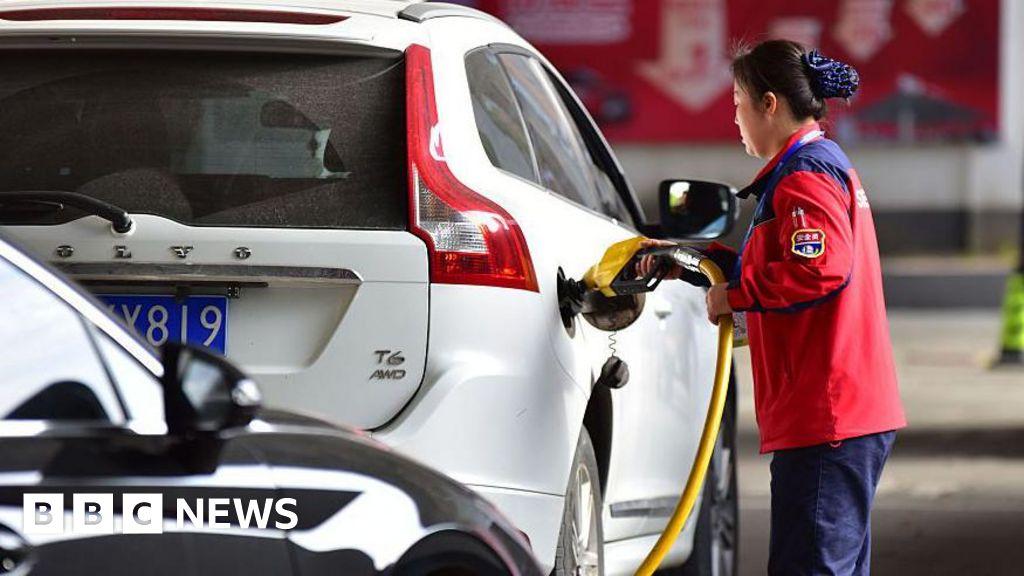
The BBC similarly says Brent crude rose “by almost 7% to more than $126 (£94) a barrel at one point,” and it notes that the sharp switch in oil prices was partly being blamed on a deadline for deals known as futures contracts, with the current Brent futures contract for June delivery “expired on Thursday.”
CNBC describes the broader economic stakes by saying the blockage of the strait has caused a global oil supply shock that has sent prices soaring, and it quotes International Energy Agency head Fatih Birol telling a conference in Paris that “Our world is facing a major economic and energy challenge.”
CNBC also says the U.S. and Iran are trying to inflict economic pain via the Strait of Hormuz, with Iran’s “de facto stoppage of ship traffic through the strait” and the U.S. “retaliatory naval blockade of Iranian ports.”
In the Jerusalem Post account, the political calculus is described as being shaped by gas prices, saying large majorities of the American public—and “even an increasing number of Republicans”—opposed the war due to the “spike in gas prices.”
The BBC adds that the UK government warned people could face higher energy, food and flight ticket prices, and it says some airlines have already started to raise fares or reduce flights.
It also reports that fertiliser prices have started to increase, with a “knock-on effect on food prices,” and it quotes RAC head of policy Simon Williams saying “our analysis of wholesale costs shows petrol is now more expensive for retailers to buy than at any time since the war began.”
Legal deadline and competing narratives
The reporting diverges on how imminent escalation is, while also converging on the idea that the U.S. is constrained by legal timing and that the ceasefire has not produced a settlement.
CNBC emphasizes the Friday legal deadline under the 1973 War Powers Resolution, saying Trump is required to withdraw U.S. armed forces 60 days after reporting their deployment to Congress “unless the legislative branch authorizes the military action,” which it has not done.
CNBC also says Trump sent the letter notifying Congress on March 2, “starting the 60-day clock and setting up a May 1 deadline,” and it reports that Hegseth believes the statutory countdown clock “pauses or stops in a ceasefire.”
The Jerusalem Post, by contrast, frames the situation as a “game of chicken” that will likely continue, saying that leaked reports about top U.S. military officials briefing Trump on “new” options are not new and that “all of these plans have been on the table since early March.”
The Jerusalem Post also claims that Trump “preferred avoiding the additional risks they entail,” and it says Trump opted for a unilateral ceasefire on April 7 “even though he received no assurances of concessions by Iran.”
It further argues that the latest leaks could signal “his desperation to secure Iranian concessions,” while also saying “Nothing has really changed since Trump decided to end the war with no concessions.”
The BBC takes a more direct market-and-policy framing, saying the BBC has contacted US Central Command and the White House for comment and that the Strait of Hormuz waterway is still effectively closed.
NBC News adds a retaliatory posture from Iran, quoting a senior Revolutionary Guard commander who vowed swift retaliation if the U.S. renews its assault, saying, “With prolonged and wide-ranging painful strikes, we will, by the grace of God, respond to the enemy’s operations even if they are rapid and short,” and “We have seen the fate of your fragile bases in the region; we will also see your warships.”
More on Iran

Trump Announces US-Iran Peace Deal, Reopens Strait of Hormuz and Removes Naval Blockade
35 sources compared
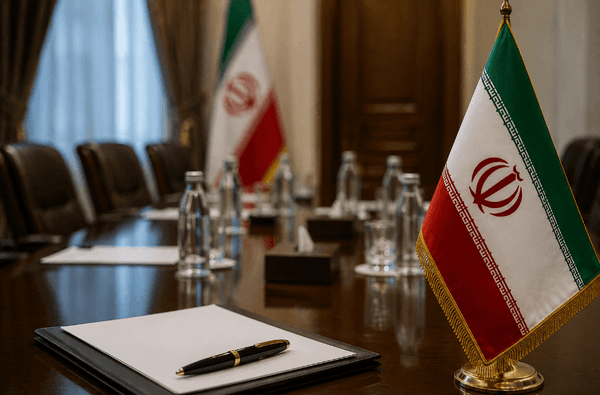
Donald Trump Announces US-Iran Ceasefire, Orders Removal of Naval Blockade, Strait of Hormuz Reopens
29 sources compared
Trump Says US-Iran Peace Deal Complete, Orders Removal of Naval Blockade
11 sources compared

Donald Trump Orders Stop Of U.S. Naval Blockade As Iran Deal Opens Strait Of Hormuz
13 sources compared