Europe · 04 July, 2026 · 2 min read
AfD Re-Elects Alice Weidel and Tino Chrupalla at Erfurt Congress Amid 30,000 Protests
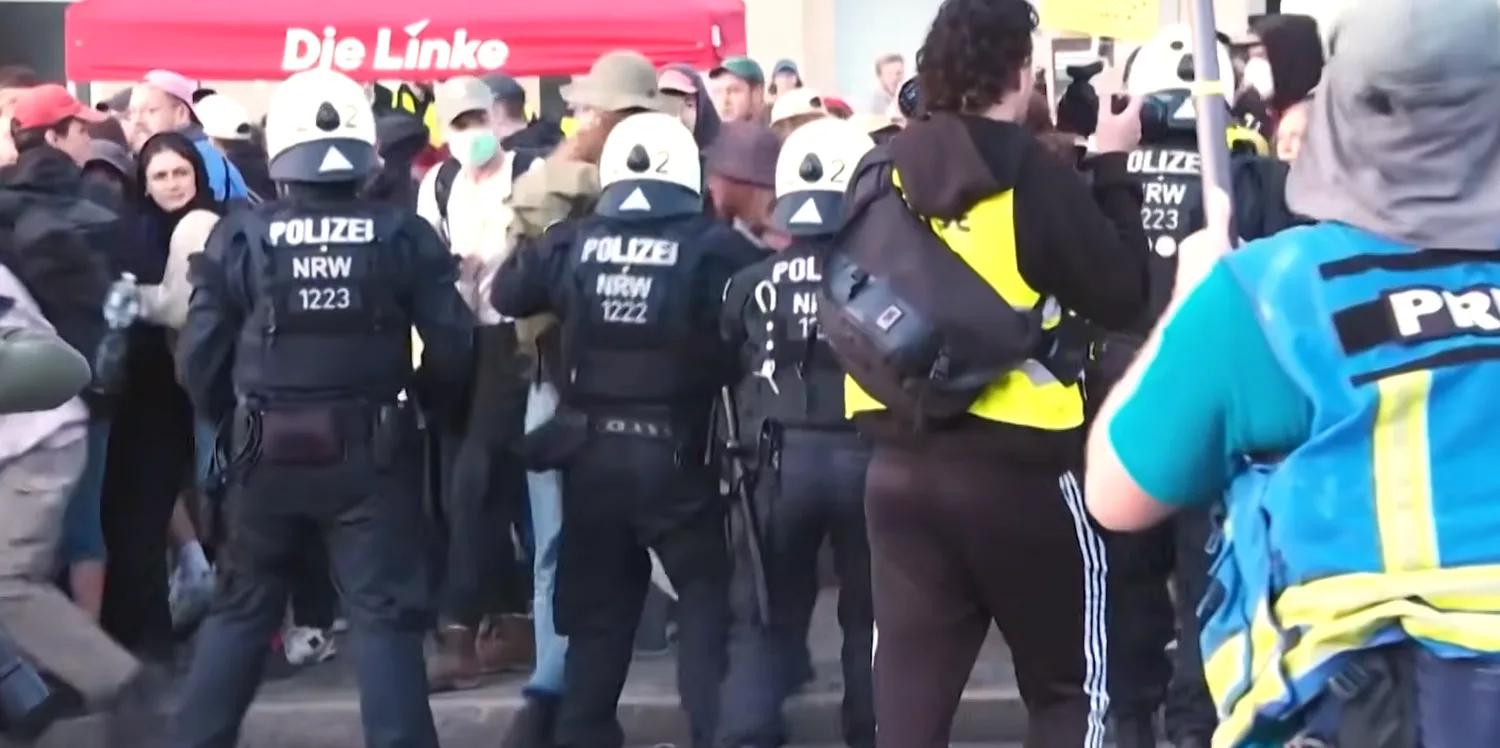
Weidel and Chrupalla reelected AfD co-leaders for two years. Thousands protested outside Erfurt; police clashed with demonstrators during proceedings.
How protesters/security actions and clashes are portrayed.
7 of 8 outlets skipped it: rejected idea of switching from collective leadership to one chair..
15outlets compared
Same story, two versions
tap a side to read it in full
Anadolu and SCMP add Kremlin/intelligence angle; others focus on re-election and protests.
AfD Congress in Erfurt
Germany’s far-right Alternative for Germany (AfD) wrapped up its two-day congress in Erfurt on Sunday, with co-leaders Alice Weidel and Tino Chrupalla re-elected for another two-year term amid large protests by anti-far-right groups. Police reported that more than 30,000 demonstrators turned out on Saturday, the first day of the congress, while smaller groups continued protesting in the city center on Sunday. Delegates re-elected Weidel and Chrupalla unopposed, with Weidel receiving 81.3% of the vote and Chrupalla garnering about 70%.
The AfD, the largest opposition party in the German parliament, is under surveillance by Germany’s domestic intelligence agency over suspicions of anti-democratic and anti-constitutional tendencies, and the agency determined the party pursues a far-right nationalist agenda that threatens Germany’s democratic order. In the midst of the congress, the weekend protests were described by Thuringian state police as “mostly peaceful” despite the large crowds.

Security and Political Fallout
German Defence Minister Boris Pistorius said Sunday that the federal government is considering withholding information from ministers in state administrations if they are formed by the far-right Alternative for Germany (AfD). Pistorius tied the move to state governments’ broad powers, including intelligence services activities, and the AfD’s regular criticism for close ties to Moscow. The South China Morning Post reported that polls indicate the AfD could win an absolute majority in a state election in September in Saxony-Anhalt, which would mean it would form a state government for the first time.
At the congress, Weidel rejected accusations that the AfD poses a threat to democracy, telling delegates, "We are the new people's party in Germany." Outside the venue, protesters tried to disrupt the meeting, with police estimating turnout at around 31,000 while organisers claimed at least 50,000 people joined demonstrations that AFP described as largely peaceful.

Elections and Europe Stakes
The AfD congress and protests in Erfurt came as Germany’s political system faced a potential shift in Saxony-Anhalt, where the AfD is described as aiming to convert growing support into its first experience of governing. The Times of India said opinion polls indicate the party could secure an outright majority in September elections in Saxony-Anhalt, while the Ukrainian National News item cited a forecast that the AfD expects to win over 40% of the vote in elections in Saxony-Anhalt on September 6. Ukrainian National News also framed the congress’s timing as taking place on the days of the 100th anniversary of the Nazi party congress near Erfurt, which historians and political opponents consider symbolic.
“Perhaps we'll soon be able to govern on our own.”
In a separate European-facing thread, Anadolu Ajansı reported that after a years-long investigation, Germany’s domestic intelligence agency determined the party’s definition of citizenship based on “ethnicity and ancestry” is incompatible with constitutional principles. AAgainst that backdrop, the AfD’s leadership messaging to delegates included Chrupalla telling them, "Perhaps we'll soon be able to govern on our own."