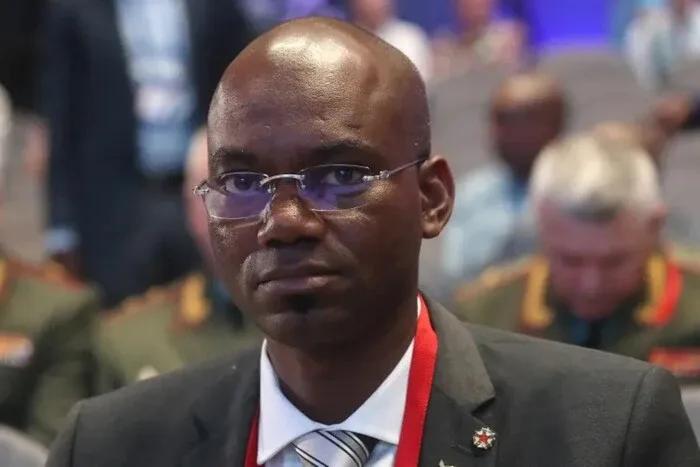
Al-Qaeda Affiliate JNIM Kills Mali Defence Minister Sadio Camara in Kati Attack
Key Takeaways
- Defense Minister Sadio Camara killed during coordinated attacks on his Kati residence.
- Coordinated attacks across Mali were launched by JNIM and Tuareg rebels.
- JNIM-linked militants targeted multiple military sites, amplifying security crisis.
Camara killed in Kati attack
Mali’s Defence Minister General Sadio Camara was killed amid coordinated attacks on military sites across the country, according to sources cited by Al Jazeera and Jeune Afrique.
“According to several sources, he was killed on April 25, 2026, during an attack on his home in Kati, near Bamako, the Malian capital”
Al Jazeera said the news on Sunday came a day after Camara’s residence in the garrison town of Kati came under attack during simultaneous attacks launched by an al-Qaeda affiliate and Tuareg rebels on Saturday.
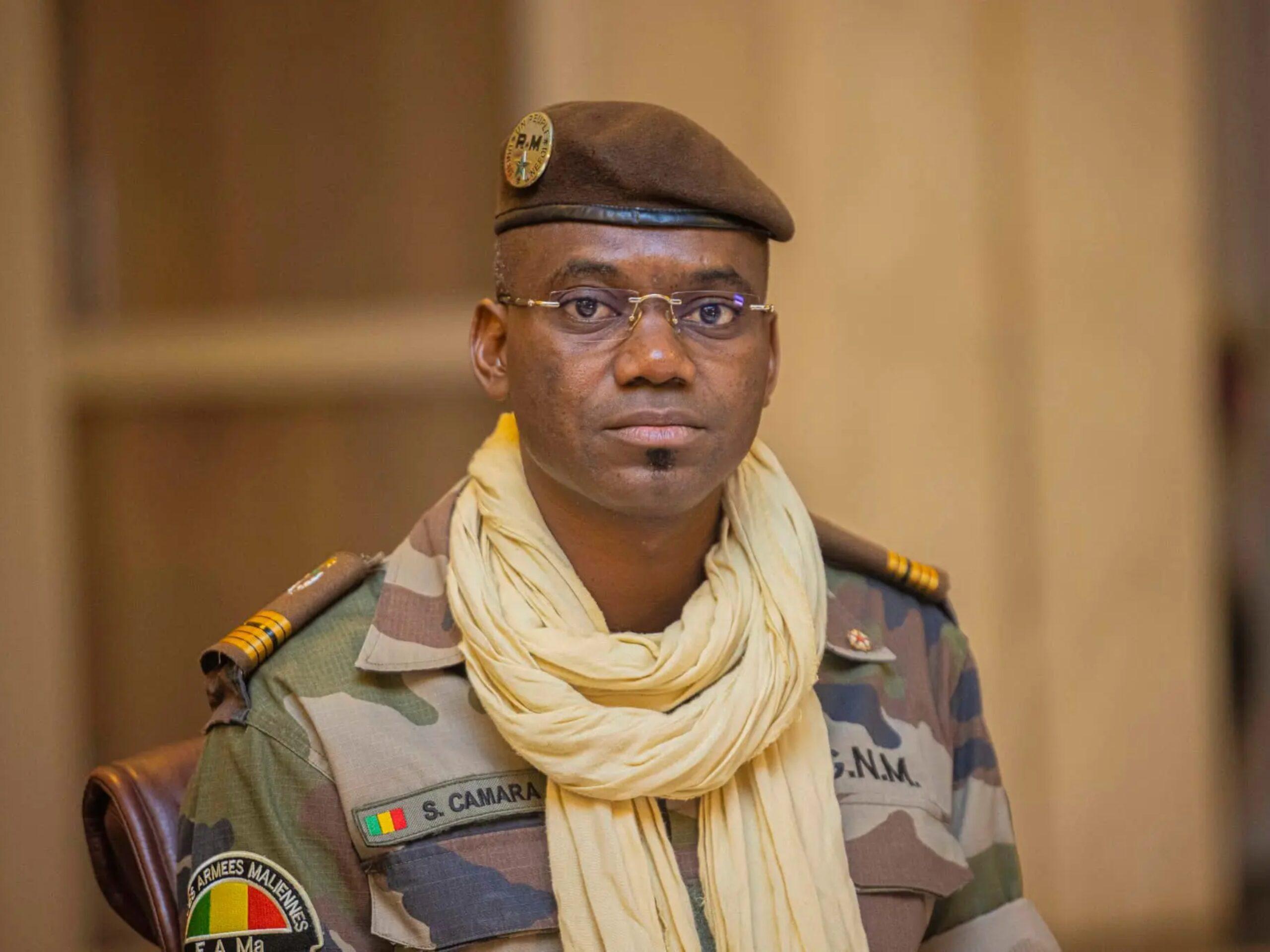
Al Jazeera’s Nicolas Haque said attackers carried out a suicide car bomb assault on Camara’s residence in Kati, describing it as “a heavily fortified military town about 15km (9 miles) northwest of the capital, Bamako.”
Jeune Afrique reported that Camara’s death was confirmed by the outlet and that he was killed during the attack targeting his residence in Kati near Bamako on April 25.
Jeune Afrique added that the assault attributed to JNIM was believed to have been carried out with the help of a vehicle-borne improvised explosive device driven by a suicide bomber, and that the blast “completely destroyed the defense minister’s residence.”
Multiple outlets tied the attack to April 25, including Actu Cameroun, which said Camara was killed on April 25, 2026 during an attack on his home in Kati near Bamako.
While Al Jazeera and Jeune Afrique described the killing as confirmed by their sources, other reporting emphasized that Mali’s authorities had not yet officially confirmed the death at the time of publication, as La Nouvelle Tribune wrote that authorities “have not yet officially confirmed his death.”
Timeline and geography of attacks
The attack on Camara’s residence in Kati was part of a wider wave of violence that Al Jazeera said involved coordinated assaults on multiple locations across Mali.
Al Jazeera reported that armed men also attacked several other locations across Mali, including Bamako, as well as Gao and Kidal in the north, and the central city of Sevare.

Al Jazeera’s Nicolas Haque said that as of the time of his reporting, “people in the garrison town of Kidal can still hear heavy gunfire and loud explosions,” and that “This remains an ongoing operation more than 24 hours after it began.”
The National’s account similarly described coordinated attacks around the capital Bamako, “in gold-producing areas and elsewhere across Mali,” and said witnesses reported sustained gunfire in a garrison town near Bamako on Sunday suggesting fighting had resumed for a second day.
Commonspace.eu described explosions and sustained gunfire in Mali’s capital, Bamako, and said fighting was also reported around Kati, Gao, and the central cities of Sevare and Mopti, with gunfire resuming in Kidal in the north on Sunday.
La Nouvelle Tribune described an offensive on “several cities” and listed Bamako, Kati, Gao, Kidal, Sévaré and Mopti, attributing the assaults to JNIM and the Azawad Liberation Front (FLA).
The National also said the insurgents claimed Kidal had been captured from government forces, while it separately reported that the Azawad Liberation Front said on Sunday it had “regained control of Kidal.”
JNIM, FLA and competing claims
Reporting across outlets described the coordinated offensive as involving JNIM and the Azawad Liberation Front (FLA), with both groups claiming responsibility and describing their collaboration.
“Ammon News - Mali’s Defence Minister General Sadio Camara has been killed amid coordinated attacks on military sites across the country, sources told Al Jazeera”
The National said an Al Qaeda affiliate called JNIM and a group of nomadic rebels claimed responsibility for co-ordinated attacks around Bamako and elsewhere across Mali, and it described the FLA as dominated by Tuareg people.
Commonspace.eu quoted FLA spokesman Mohamed Elmaouloud Ramadane telling the BBC, “We had been working on this operation for a long time, in a well-planned manner, and in fact, in alliance with [JNIM],” and added that “It is difficult to find any solution without their participation, and there was co-ordination.”
Commonspace.eu also stated that JNIM confirmed in a statement that the attacks had been part of a joint operation with the FLA.
La Nouvelle Tribune described the first time that JNIM and the FLA “officially displayed their collaboration,” calling it a partnership against the Malian Armed Forces (FAMa), and it said the alliance remained open to any actor wishing for a regime change in Bamako.
In parallel, ANF described heavy clashes in Bamako between the army and JNIM linked to al-Qaeda, and it said a statement issued by JNIM stated that the attacks targeted strategic sites including “the presidential palace, the Ministry of Defense, and the international airport.”
Meanwhile, La Nouvelle Tribune reported that the FLA spokesperson Mohamed Elmaouloud Ramadane told AFP that his forces had taken control of most of the city of Kidal, while the governor had taken refuge in the former MINUSMA camp, and it noted that this could not be independently verified.
Officials, analysts and international reactions
Al Jazeera framed Camara’s death as a major blow to Mali’s armed forces and described him as influential within the ruling military leadership.
Nicolas Haque said, “He was one of the most influential figures within the ruling military leadership and had been seen by some as a possible future leader of Mali,” and added, “His death is a major blow to the country’s armed forces.”

Al Jazeera also reported that Interim President Assimi Goita has come under pressure since the offensive, with Haque saying Goita was “alive and well in a secure location” and that “When the attack took place, he was moved to safety, so he remains in command of the military.”
The African Union, the secretary-general of the Organisation of Islamic Cooperation and the United States Bureau of African Affairs condemned the attacks across Mali, according to Al Jazeera.
La Nouvelle Tribune said the U.S. State Department’s Bureau of African Affairs condemned the attacks on April 25, reaffirming Washington’s support for the Malian people and government, and it quoted the Chair of the African Union Commission, Mahmoud Ali Youssouf, expressing grave concern and urging a return to calm.
La Nouvelle Tribune also reported that the U.S. Embassy in Bamako and the UN asked their staff to avoid all nonessential travel.
Actu Cameroun said the Malian government published a statement on Saturday April 25, 2026 to reassure the population and condemn the coordinated attacks, and it reported that “the situation was totally under control.”
Disputed details and what comes next
While outlets agreed that Camara was killed during the April 25 attack on his residence in Kati, they diverged on how the attack was carried out and on what Mali’s forces claimed during the fighting.
“Mali's defense minister reported dead amid attacks - Breaking The News Home Markets Economy Business Politics World War/Terrorism Technology Crypto Sports Insights [](https://breakingthenews”
Jeune Afrique said the assault attributed to JNIM was believed to have been carried out with the help of a vehicle-borne improvised explosive device driven by a suicide bomber, while La Nouvelle Tribune said the death was “said to have died in the car-bomb attack carried out by a kamikaze that completely destroyed his residence in Kati.”

The Ukrainian National News report said “one of the militants blew himself up in a booby-trapped vehicle near Sadio Camara's house,” and it added that “The powerful explosion completely destroyed the residence.”
Daily Post Nigeria cited a security analyst Brant Philip, writing on X, that “JNIM SVBIED (some say a truck was used) that struck his house yesterday morning,” and it said the blast destroyed much of Sadio Camara’s residence in Kati.
On the battlefield, commonspace.eu reported that Mali’s military said on Saturday evening that efforts to repel the attacks were under way and that “some militants had already fled,” while La Nouvelle Tribune said the FAMa stated in a second communiqué that they had regained control of the situation, neutralized several attackers and continued sweeping operations, though it added that ongoing clashes in Kidal more than 24 hours after the attacks began could not be independently verified.
The National described the situation as involving an overnight curfew lasting three days, stating “An overnight curfew lasting three days in is place,” and it said the number of deaths and injuries had not been established on Sunday.
In the background to the stakes, Actu Cameroun described Camara as a key actor in the 2020 coup and a close ally of Assimi Goïta, and it said the United States imposed sanctions on Camara in July 2023 for alleged ties to the Wagner group.
More on Africa

Gunmen Launch Simultaneous Attacks Across Mali, Striking Bamako and Kati
33 sources compared
EU Foreign-Born Population Reaches Record 64.2 Million in 2025, Germany Hosts Nearly 18 Million
10 sources compared
Nigeria Charges Six With Terrorism And Treason Over Alleged Coup Plot Against President Bola Tinubu
12 sources compared
Pope Leo XIV Condemns War After Strait Of Hormuz Ceasefire Tested
13 sources compared