
Gunmen Launch Simultaneous Attacks Across Mali, Striking Bamako and Kati
Key Takeaways
- Al-Qaeda-linked militants and Tuareg rebels launched coordinated attacks across Bamako, Kati, and other cities.
- Malian army says it repelled coordinated attacks and is fighting militants in multiple sites.
- JNIM and Tuareg rebels claimed responsibility for coordinated attacks across Mali.
Coordinated assault across Mali
Gunmen launched simultaneous attacks across Mali, striking the capital Bamako and multiple locations around the country, the Malian army said, in what several outlets described as a coordinated offensive involving multiple groups.
The army said it was fighting “terrorist groups” that had attacked army barracks in Bamako and other areas in the military-ruled nation, and it reported that two loud explosions and sustained gunfire were heard shortly before 6am (06:00 GMT) near Mali’s main military base, Kati, outside Bamako.

Residents in Kati said the house of Defence Minister General Sadio Camara was targeted, and two witnesses quoted by Reuters said Camara’s house was hit and destroyed, while Camara’s entourage said he was not present and was “safe”, according to AFP.
An Associated Press journalist in Bamako reported the use of heavy weaponry and automatic rifle gunfire near Bamako’s Modibo Keita International Airport, located about 15km (nine miles) from the city centre, with a helicopter patrolling nearby neighbourhoods.
Similar unrest was reported at about the same time in the central town of Sevare, the town of Kidal and the city of Gao in northern Mali, and the army later said shortly after 11am (11:00 GMT) that the situation was under control but “sweeping operations” were ongoing.
The scale and coordination were described as unprecedented by Al Jazeera’s Nicolas Haque, who said the scale and coordination of the attacks “appear to be unprecedented,” and he added that “there is an unprecedented level of panic” in the military ranks.
The Globe and Mail reported that the attacks hit multiple sites in or near Bamako, the nearby barracks town of Kati and elsewhere, while the BBC said explosions and sustained gunfire were reported in Bamako as armed groups launched co-ordinated attacks across the country.
Claims, counterclaims, and timeline
As the attacks unfolded, multiple outlets reported competing claims about responsibility and the extent of control, with JNIM and Tuareg rebels presenting a joint narrative while Mali’s government emphasized ongoing operations.
Al Jazeera reported that Al-Qaeda affiliate Jama’at Nusrat al-Islam wal-Muslimin (JNIM) confirmed in a statement that it was involved in the attacks and coordinated with the FLA, adding that it had attacked the homes of the country’s leader, General Assimi Goita, and Defence Minister General Sadio Camara, among other targets.

France 24 with AFP said a jihadist group claimed its fighters had joined forces with Tuareg rebels to launch attacks against the army across junta-ruled Mali, and it quoted a Saturday evening statement from JNIM saying the day’s attacks were a joint operation with the Tuareg FLA.
The BBC reported that the FLA spokesman Mohamed Elmaouloud Ramadane told the BBC that “We had been working on this operation for a long time, in a well-planned manner, and in fact, in alliance with [JNIM],” and he said “there was co-ordination.”
In parallel, the Malian army said it was fighting “terrorist groups” and that it was “routed” with “several hundred” killed, a claim the BBC said it could not independently verify.
The Globe and Mail said Mali’s army stated it had killed “several hundred” assailants and repelled the assault, while also reporting that it was unclear how many soldiers or civilians were killed.
The Associated Press, as carried by PBS, said the government gave no death toll but said that 16 people were wounded, and it quoted Gen. Issa Ousmane Coulibaly on state television saying 16 people were wounded, including civilians and military personnel, and that several militants were killed.
Officials, rebels, and analysts react
Reactions to the attacks spanned government statements, rebel claims, and assessments by analysts and regional officials, with outlets quoting multiple voices on both the battlefield and the political response.
Al Jazeera reported that shortly after 11am (11:00 GMT) the army said the situation was under control but “sweeping operations” were ongoing.
Al Jazeera quoted Alex Vines, Africa director at the European Council on Foreign Relations, saying Malian authorities appear to have been caught off guard, and he said: “I hear that al-Qaida-affiliated JNIM, as well as the FLA separatist movement, are involved.”
Vines added that “Government forces and their auxiliaries are responding fiercely – but for now, it sounds like much of Kidal has been captured by the insurgents,” and he described the “key consensus for all was the urgency in the threat to West Africa from armed groups and terrorism.”
The BBC quoted Mahmoud Ali Youssouf, chair of the African Union Commission, who said he was following the situation with “deep concern,” adding in a statement on X that he “strongly condemns these acts which risk exposing civilian populations to significant harm.”
The US State Department’s Africa bureau, as quoted by the BBC, “strongly condemned the attacks,” saying: “We extend our deepest condolences to the victims, their families, and all those affected, and we stand with the Malian people and government in the face of this violence.”
Rebel voices were equally prominent: France 24 reported that JNIM’s statement said, “Together, we are carrying out a veritable transformation, in the service of religion, of the country and of the people,” and the BBC carried Ramadane’s insistence that “It is difficult to find any solution without their participation, and there was co-ordination.”
How outlets framed the same attacks
Across the reporting, outlets diverged in emphasis—some focused on the operational details and battlefield geography, others on the political and security backdrop, and still others on the claims of responsibility and the role of foreign-linked forces.
Al Jazeera foregrounded coordination and the uncertainty of Malian command, noting that “The whereabouts of Assimi Goita remain unknown” and that the Malian government had struggled to control the narrative, while fighters flooded social media with images of their advances.
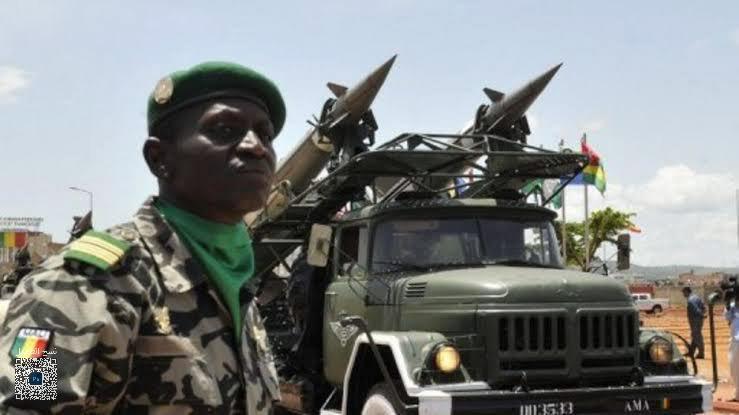
France 24 emphasized the boldness of the operation and the complexity of the assault, describing it as “one of the boldest operations insurgents have launched” and quoting JNIM’s statement about a “joint operation with the Tuareg FLA.”
NPR, by contrast, framed the attacks as one of the largest coordinated attacks in recent years and highlighted the U.S. Embassy’s guidance, saying the U.S. Embassy in Mali urged American citizens to shelter in place and avoid all travel, while also describing Russian-backed Africa Corps mercenaries fighting alongside Malian forces.
The New York Times, as presented in the source text, described the offensive as a “major escalation” and said experts said JNIM claimed to have seized two key cities while simultaneously striking the heart of the capital, Bamako, and it quoted Jean-Hervé Jezequel saying: “This morning’s attacks represent a major escalation in the conflict, a new stage reached by armed groups.”
The Globe and Mail leaned into the government’s counterattack narrative, reporting that Mali’s army said it had killed “several hundred” assailants and that the government spokesperson Issa Ousmane Coulibaly said 16 people had been injured, while also noting that the airport was closed with flights turned back or cancelled.
The BBC combined operational reporting with a broader security assessment, calling it “the largest jihadist attack in years” and quoting Ulf Laessing that it appeared to be “the largest co-ordinated jihadist attack on Mali for years,” while also reporting that a curfew had been imposed from 21:00 to 06:00 local time for the next three nights.
Consequences and what comes next
The immediate consequences reported across outlets included security measures such as curfews and airport closures, along with warnings to civilians and the prospect of continued fighting through “sweeping operations.”
PBS reported that the governor of Bamako’s district, Abdoulaye Coulibaly, announced a three-day overnight curfew, from 9 p.m. to 6 a.m., while the BBC said a curfew had been imposed from 21:00 to 06:00 local time for the next three nights.
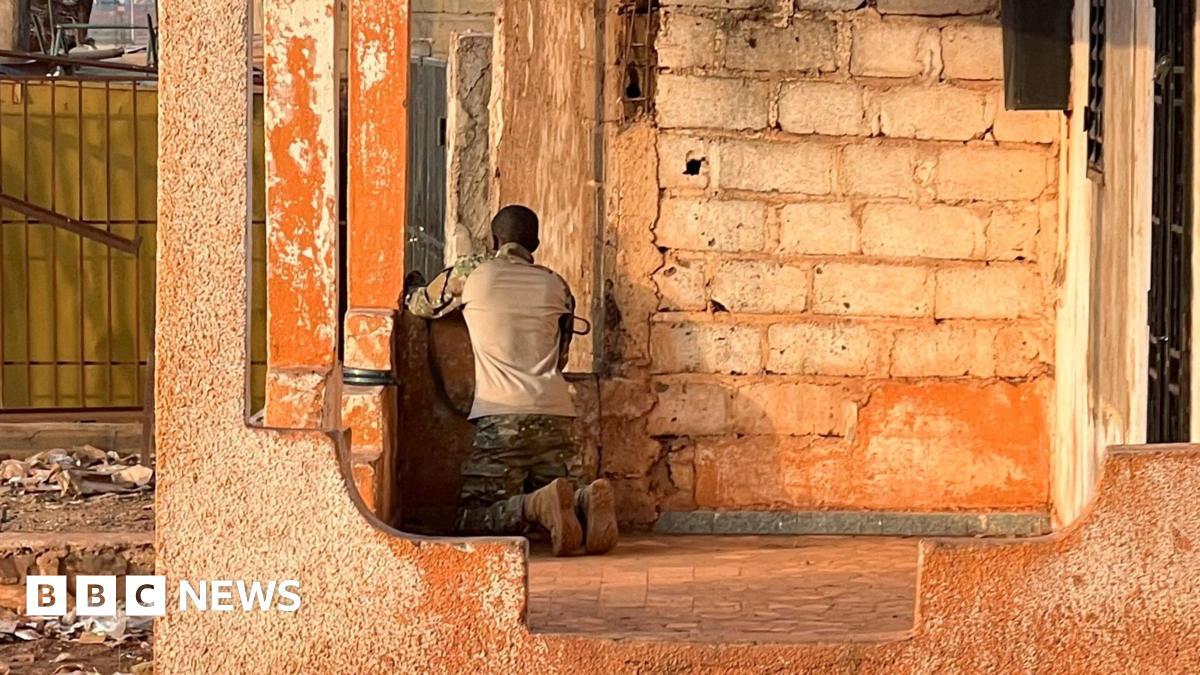
The Globe and Mail reported that Bamako authorities announced an overnight curfew lasting three days and that the airport was closed, with flights turned back or cancelled, while the BBC said the UK Foreign Office advised against all travel to Mali following the attacks, adding Bamako International Airport had been temporarily closed.
NPR reported that the U.S. Embassy urged Americans to shelter in place and avoid all travel, and it described the attacks as affecting the capital and at least three other locations, including Sevare, Kidal, and Gao.
Several outlets also tied the attacks to a longer trajectory of unrest and to the evolving security posture of Mali’s military government, including its reliance on Russian-linked forces.
Al Jazeera described how Mali’s military government, led by Assimi Goita, took power after coups in 2020 and 2021, pledging to restore security, but has struggled to do so, and it said the country is battling rebellions by West African affiliates of al-Qaeda and ISIL (ISIS), as well as the Tuareg-led rebellion in the north.
Looking ahead, Al Jazeera’s Alex Vines said the “key consensus” among regional actors was the urgency of the threat to West Africa from armed groups and terrorism, and he added that the attacks were “a bloody reminder of the urgency of this,” while the BBC quoted the African Union chair Mahmoud Ali Youssouf condemning the violence and warning it risks “exposing civilian populations to significant harm.”
More on Africa
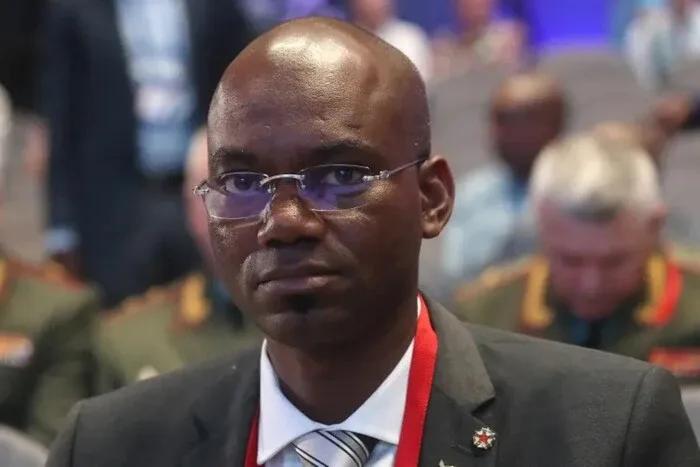
Al-Qaeda Affiliate JNIM Kills Mali Defence Minister Sadio Camara in Kati Attack
11 sources compared
EU Foreign-Born Population Reaches Record 64.2 Million in 2025, Germany Hosts Nearly 18 Million
10 sources compared
Nigeria Charges Six With Terrorism And Treason Over Alleged Coup Plot Against President Bola Tinubu
12 sources compared
Pope Leo XIV Condemns War After Strait Of Hormuz Ceasefire Tested
13 sources compared