Australia · 19 February, 2026 · 2 min read
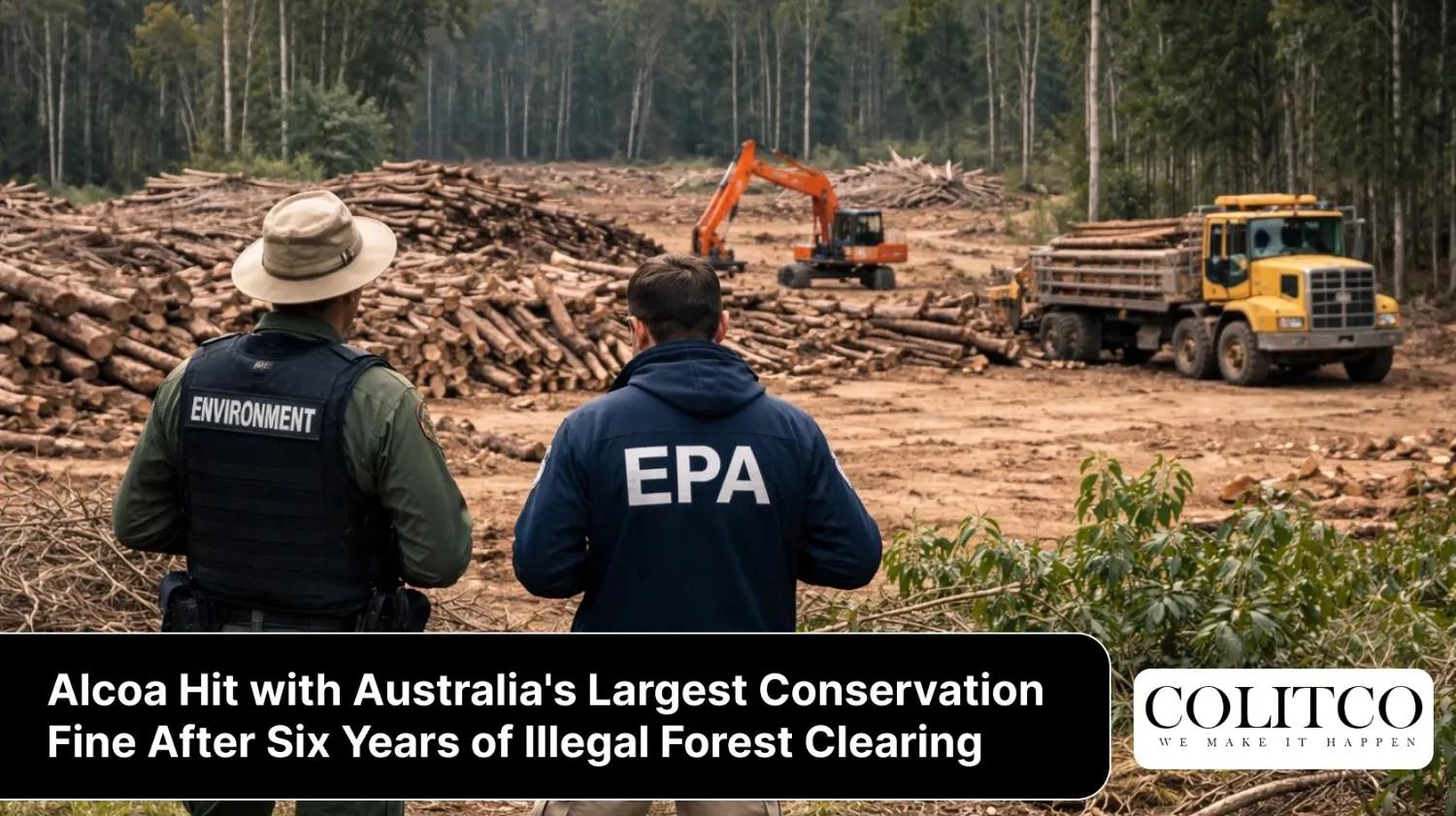
Alcoa Agrees to Pay Record A$55 Million Fine After Unlawfully Clearing Nearly 2,100 Hectares of Protected Northern Jarrah Forest
Alcoa agreed to pay A$55 million to the Australian federal government. Company unlawfully cleared WA jarrah forest to mine bauxite.
4 outlets, one story, no spin found.
4outlets compared
Alcoa Jarrah Forest settlement
Alcoa has agreed to pay A$55 million after unlawfully clearing nearly 2,100 hectares of the protected Northern Jarrah Forest in Western Australia between 2019 and 2025. The payment will fund conservation commitments under a legally binding enforceable undertaking with the Federal Court, resolving the government’s action over the unauthorised clearing.
“Alcoa has agreed to pay A$55 million to the federal government after unlawfully clearing nearly 2,100 hectares of the protected Northern Jarrah Forest in Western Australia between 2019 and 2025 without approvals under the EPBC Act. The settlement (18 Feb 2026) is the largest conservation-focused enforcement action in Australian history.”
The settlement has been described as the largest conservation-focused enforcement action in Australian history. The agreement was announced on 18 February 2026 and has drawn attention because it avoids a formal criminal prosecution so long as Alcoa meets the terms of the undertaking.
Alcoa undertaking and exemption
Under the terms reported, the A$55 million will fund conservation and rehabilitation programs enforced through the court-backed undertaking. Colitco reports that the arrangement allows Alcoa to avoid formal criminal charges provided it fulfils the undertaking.
The federal Environment Minister, Murray Watt, called the outcome unprecedented and said it sets a new benchmark for corporate accountability. However, the minister concurrently granted Alcoa a national interest exemption permitting limited clearing for 18 months while a strategic assessment of the company’s operations to 2045 is completed.
Alcoa forest clearing dispute
The unauthorised clearing damaged habitat for threatened species, notably black cockatoos, and came amid intense public opposition to Alcoa’s broader proposals. Colitco records that Alcoa historically cleared roughly 28,000 hectares of native jarrah forest, that the company’s proposal to clear an additional 11,500 hectares prompted a record 59,000 public submissions, and that the settlement will cap annual clearing at 800 hectares while increasing rehabilitation to 1,000 hectares per year by 2027. Boiling Cold similarly highlights the impact on endangered black cockatoos and frames the episode as an enforcement action that nevertheless allowed ongoing clearing under approvals.
“Alcoa (about 6,000 Australian employees, ~4,300 in WA) has mined bauxite in WA since the 1960s and has cleared roughly 28,000 hectares of native jarrah forest historically. Under the deal it will cap annual clearing at 800 hectares and increase rehabilitation to 1,000 hectares per year by 2027.”
Reactions to the settlement
Reactions to the settlement are mixed and reflect different priorities across stakeholders. Colitco notes the Minerals Council of Australia described the resolution as pragmatic and urged faster national environmental standards to reduce approval delays, framing the outcome as a step towards clearer regulation.
Boiling Cold foregrounds criticism from conservation voices who see the fine and undertaking as insufficient and points out that Alcoa was fined yet allowed further clearing under approvals. The differences in coverage show Colitco emphasising regulatory process and precedent, Boiling Cold emphasising ecological harm and perceived leniency, while ABC's supplied snippet contains no substantive coverage to contribute to these perspectives.