Sports25 January, 20262 min read
Alex Honnold Free-Soles Taipei 101, Reaches Top of 1,667-Foot Tower
Alex Honnold became first to climb Taipei 101 without ropes, reaching its 508m summit Netflix live-streamed the rope-free ascent worldwide with a brief safety delay
49 outlets told this the same way.
Outlets did split on Tonda Eckert Keeps Southampton Job After Six-Week Suspended Ban Over Spygate →
Taipei 101 free-solo ascent
Alex Honnold became the first known person to free-solo Taipei 101, reaching the spire of the 1,667-foot (508 m) tower in a live-streamed Netflix special after an ascent of roughly 90 minutes. Reporters described him climbing one corner of the 101-floor building without ropes or protective equipment, wearing a red shirt and occasionally hauling himself around ornamental projections; the ascent was watched by street-level crowds and broadcast live with a short producer delay. The attempt had been postponed 24 hours because of rain, then went ahead under the scheduled live window.
“Alex Honnold... free-soloed Taipei 101 on Sunday, reaching the top spire of the 1,667-foot tower about 90 minutes after he began.”
Route geometry and coverage
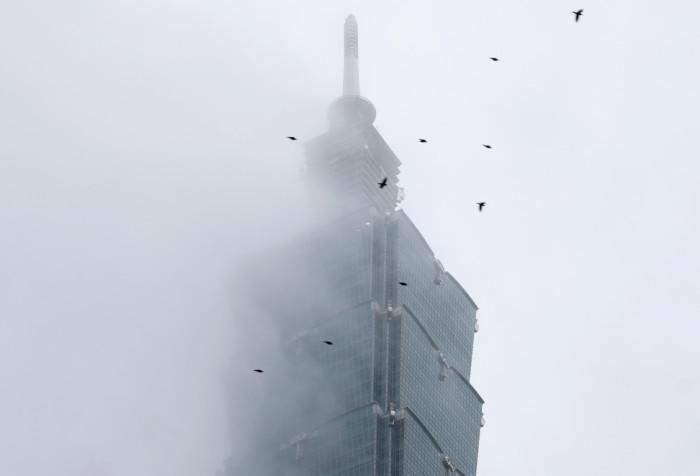
The route's geometry shaped both the physical challenge and how outlets described it. Journalists repeatedly highlighted the tower's stacked, pagoda-like bamboo box modules and the long middle section as the most demanding stretch.
Reporters described alternating sequences of steep, overhanging segments and balconies where Honnold could rest. They noted the climb required sustained endurance rather than a single maximal move, contrasting urban free-soloing with the big-wall rock climbs that made Honnold famous.
Production safety and weather
The Netflix production and its safety protocols were a major thread in coverage. Outlets described a 10-second broadcast delay, rehearsed camera plans including drones and helicopter shots, and a formal go/no-go process that could postpone or cancel transmission if conditions were unsafe.
“Alex Honnold... postponed a planned rope-free ascent of Taipei 101 by 24 hours because of rain. He said, 'Sadly it's raining in Taipei right now so I don't get to go climbing.'”
Reporters also documented the real-world scheduling impact of Taipei’s weather, noting that organizers postponed the live attempt by 24 hours because rain made glass-and-metal surfaces slippery. These reports showed how production safeguards and meteorology intersected with the inherent risk of a live, rope-free ascent.
Reactions to Honnold's climb
Reactions were mixed between celebration of a record urban free-solo and sharp ethical concerns. Crowds cheered when Honnold waved from the top. Reports said his wife greeted him on a balcony.
The climb prompted congratulations and commentary about inspiration and personal goals. At the same time, critics and columnists framed the broadcast as sensationalizing danger or profiting from a real risk. Some outlets relayed commentators who called the spectacle "voyeuristic" or "ghoulish."

Honnold's commentators and supporters emphasized meticulous planning and his experience. Critics stressed the moral questions of televising high-risk soloing.
Media framing of Honnold climb
Coverage placed the climb in Honnold's career and in the longer history of urban climbing. He is best known for his 2017 El Capitan free solo and has long sought a skyscraper challenge, while French climber Alain Robert previously scaled Taipei 101 in 2004 using ropes.
“Alex Honnold became the first person to free solo Taipei 101 in Taiwan, a 1,667-foot skyscraper, setting the record for the largest urban free solo.”
Journalists also framed the event as part of Netflix's push into live, sports-style programming and, for Taiwan, an international moment on the global stage. Some reports emphasized the climb as a technical-record urban free solo, while others highlighted commercial and geopolitical angles and noted how the live event functions as both entertainment and publicity.
