Full Analysis Summary
2025 Chinese New Year greetings
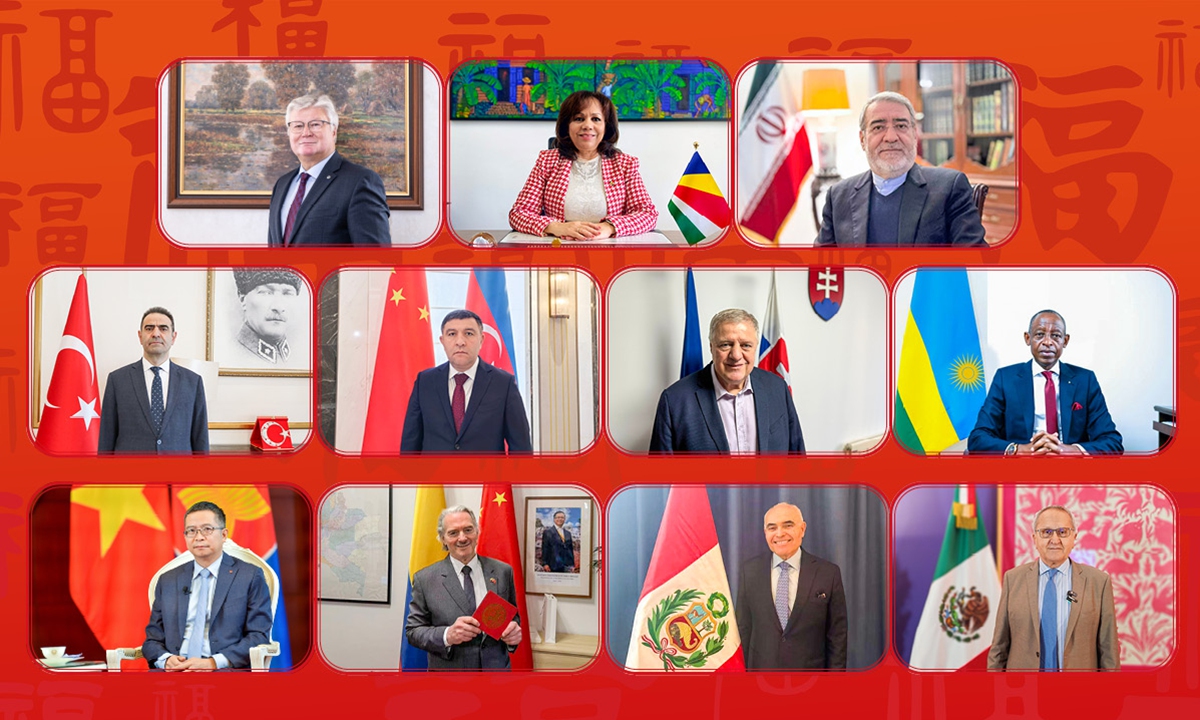
Ambassadors and consuls general in China sent Spring Festival greetings marking the 2025 Chinese New Year, the Year of the Horse.
Global Times published a brief message offering warm greetings and best wishes to the people of China on the occasion of the upcoming Spring Festival, expressing joy and goodwill for the holiday.
@globaltimesnews ran a celebratory roundup of messages from foreign ambassadors and consuls general in China marking the 2025 Chinese New Year, the Year of the Horse.
Only two source items were provided for this summary, limiting the range of source_type perspectives available for comparison.
Coverage Differences
Tone
Global Times offers a concise, official-sounding greeting emphasizing goodwill, while @globaltimesnews frames a broader, celebratory roundup that foregrounds individual envoys and their reflections on the Year of the Horse.
Source availability
Only two source items were provided (Global Times and @globaltimesnews), so perspectives from other source_types (e.g., Western, West Asian) are not available in these materials.
Envoys on horse symbolism
The social-account roundup highlights portraits and short contributions from envoys representing a diverse set of countries.
It explicitly lists "Latvia, Seychelles, Iran, Türkiye, Azerbaijan, Slovakia, Rwanda, Vietnam, Colombia, Peru and Mexico."
@globaltimesnews reports that these envoys "reflect on the horse’s symbolism and its historical role across Eurasia," giving the piece a cross-cultural and historical emphasis that is absent from the single brief greeting in Global Times.
Coverage Differences
Content detail
@globaltimesnews provides concrete details (a country list, portraits, brief contributions, and explicit focus on horse symbolism across Eurasia) that are not present in the short Global Times greeting, which contains no such envoy-specific content.
Narrative framing
@globaltimesnews frames the coverage as a platform for foreign envoys' personal and cultural interpretations of the Year of the Horse, whereas Global Times frames the holiday with a short, general goodwill statement rather than an envoy-focused narrative.
Editorial approaches compared
The social-account piece explicitly frames itself as a curated, celebratory compilation.
An editor's note states its purpose is 'to share what the Year of the Horse means to these foreign representatives in China.'
The piece uses portraits and envoy quotes to personalize diplomatic ties.
By contrast, the Global Times excerpt included is a succinct seasonal greeting without personalization or lists of contributors.
Coverage Differences
Format
@globaltimesnews uses a roundup/curation format with portraits and envoy contributions, per its editor’s note, while Global Times presents a standalone brief greeting; this affects how readers perceive diplomatic engagement — either as personalized cultural exchange or as a formal seasonal message.
Audience emphasis
The roundup appears aimed at highlighting foreign envoys' perspectives for readers interested in cross-cultural ties, while the brief greeting addresses the general Chinese public with goodwill language.
Spring Festival diplomacy
Taken together, the pieces illustrate cultural diplomacy around the Spring Festival.
A formal greeting and a curated set of envoy reflections signal attention to symbolism, highlighting the horse as a historical and cross-cultural motif and a desire to underscore friendly ties.
Only the Global Times item and the @globaltimesnews social-account roundup were provided, so perspectives from other media types and independent commentators are not available here.
That absence should be noted when assessing how broadly the horse-symbolism narrative is being presented internationally.
Coverage Differences
Scope
Both items promote goodwill and cultural exchange, but only @globaltimesnews supplies envoy-specific, cross-national detail; absence of additional source_types prevents checking for alternative framings or independent commentary.
Missed information
Because the supplied materials are limited to these two items, any broader patterns (for example coverage by other national media, embassy websites, or independent analysts) cannot be confirmed from these sources alone.