
American-Israeli statements about the 'endgame' and Iran prepares for a long battle.
Key Takeaways
- Trump and Netanyahu promote an endgame narrative.
- Tehran is preparing for a long conflict lasting weeks or months.
- Independent analysis supports the long-war assessment.
Endgame rhetoric vs long conflict
US President Donald Trump and his influential supporters began talking about the 'endgame', and even Israeli Prime Minister Benjamin Netanyahu promised as much, but the data indicate that Tehran is preparing for a long conflict that could last weeks or months.
“US President Donald Trump and his influential supporters began talking about the 'endgame', and even Israeli Prime Minister Benjamin Netanyahu promised as much, but the data indicate that Tehran is preparing for a long conflict that could last weeks or months”
Indeed, an analytical report in the Independent showed that the optimistic statements by both Trump and Netanyahu about the near end of the war with Iran do not reflect the complex battlefield reality, especially since Iran still retains its ability to respond, despite the intensive strikes carried out by the United States and Israel and the substantial damage they inflicted on the Iranian military infrastructure.
This view is reinforced, according to Alex Crawford's report for the newspaper, by estimates that Iran still possesses a large stockpile of missiles, in addition to its ability to produce low-cost drones.
Iran’s long-war posture and tactics
Experts say that Iran treats the war as a long marathon rather than a short confrontation, relying on nontraditional strategies to compensate for the military gap, such as pressuring the global economy via the Strait of Hormuz, expanding the scope of the conflict regionally, in addition to a decentralized leadership structure that allows operations to continue even if the top leadership is targeted.
Tehran has indeed shown the ability to respond quickly and escalate, indicating that the leadership and control system remains effective, even though it faces a war on two fronts: a direct confrontation with the United States, which focuses on undermining its military capabilities, and another with Israel seeking to destabilize the regime through targeted assassinations.
Reality check and political dynamics
Gap between estimates and reality. While Washington may declare partial success in achieving its military objectives, analysts say the concept of 'victory' remains hazy, because the likely outcome would be to weaken Iran without ending its regional role, which means the war seems likely to continue, contrary to political expectations of near its end.
“US President Donald Trump and his influential supporters began talking about the 'endgame', and even Israeli Prime Minister Benjamin Netanyahu promised as much, but the data indicate that Tehran is preparing for a long conflict that could last weeks or months”
In this context, concerns within Trump's base about his continued involvement in this war are growing, especially with rising disputes over Israel's role and Netanyahu's role in igniting the conflict and controlling the course of the operations.
The Times newspaper, in an article by Katie Bowles, pointed out that the basis of the conflict lies in the intertwined relationship between Washington and Tel Aviv, as they entered the war together, and Trump praised Israel for committing to fight at a time when other allies refused to participate.
Dueling agendas and uncertain end
But some Trump supporters see that it was Israel that dragged America into this conflict, and they doubt the president's enthusiasm for finding a quick exit, and they see a gap between the American assessment of the success of the military operations and the Israeli strategic reality, which regards Iran as an existential threat, not just a distant country.
In the American heartland, signs of division appeared within the MAGA movement and some Democrats, who began to see that Israel is complicating U.S. foreign policy.
And according to the author, the resignation of the head of counterterrorism intelligence Joe Kent and his claim that the U.S. president is being drawn into an Israeli conspiracy, as well as questioning the necessity of war against Iran, revealed the existence of a wing within the administration seeking to reassess American interventions abroad.
Israel has its agenda and Iran has its strategies.
Although militarily the war has succeeded in destroying some of Iran's capabilities, the American ambition to achieve a 'clear victory' remains limited, as Iran continues to respond with missiles and drones, with its ability to reproduce drones at low costs.
On the political level, the relationship between Trump and Netanyahu is characterized by a focus on direct control by the American president over decisions, and Netanyahu, despite his long experience maneuvering with American presidents, has had to adapt to Trump's direct style.
The author noted that Israel nonetheless maintains its own logic, and Iran has its incentives, which makes Trump's attempt to withdraw from the war have limited effect, because the two sides can drag the United States back into the conflict at any moment.
And ultimately, the Times analysis concluded that Trump now has a degree of control over the course of the war, but he is no longer the sole author of the decision, because Israel has its agenda, and Iran has its strategies, which makes full American withdrawal difficult and hard to guarantee.
Despite Trump's ability to talk about 'de-escalation' and to set timelines, the intertwined nature of the conflict makes any end 'clean' not fully guaranteed, representing a major political and economic challenge in the short and medium term.
More on Iran

President Trump Says Iran Deal Within Reach Amid Talks With Senior Iranian Official
10 sources compared

Trump Approves Iran Operation After Netanyahu Presses for Joint Strike on Khamenei
12 sources compared

President Donald Trump orders ICE officers deployed to airports amid DHS shutdown.
227 sources compared
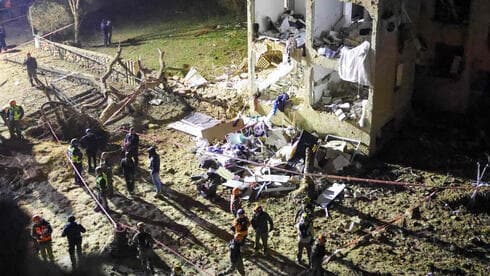
Iranian Missiles Strike Israel; Officials Report 180 Injured Amid Conflicting Casualty Figures.
12 sources compared