
President Trump Says Iran Deal Within Reach Amid Talks With Senior Iranian Official
Key Takeaways
- Trump postponed strikes on Iranian energy infrastructure for five days amid talks with Tehran.
- Officials describe talks with Iran as productive, with potential deal moving forward.
- Iran denies negotiations, Tehran says no talks are underway.
Trump's Deal Announcement
President Donald Trump announced on March 23, 2026, that a potential deal with Iran to end hostilities is within reach.
“Trump says US and Iran have 'major points of agreement,' including no nuclear weapons Trump said he also wants a "very serious form of regime change" in Iran”
The president had previously given Iran a 48-hour ultimatum to reopen the Strait of Hormuz or face massive attacks on Iranian power plants.

Trump later reversed course, instructing the Pentagon to postpone military strikes for five days while negotiations continue.
He claimed that Iran called him seeking a deal, stating Washington and Tehran 'have had, over the last two days, very good and productive conversations.'
Trump said the U.S. has been holding talks with individuals described as 'reasonable' and 'respected', expressing cautious optimism about the outcome.
Iranian Denials
Iranian officials vehemently denied Trump's claims of ongoing negotiations.
Iran's parliament speaker Mohammad Bagher Ghalibaf insisted 'no negotiations have been held with the U.S.'

Ghalibaf dismissed other accounts as 'fake news' used to 'manipulate the financial and oil markets, and escape the quagmire in which the U.S. and Israel are trapped.'
Iranian state media outlets echoed this denial, portraying Trump as backing down due to Iran's firm warnings.
The Iranian Defense Council threatened severe retaliation, stating any attack on Iran's power plants would result in a 'decisive and destructive response.'
Iran's Foreign Minister Abbas Araghchi also denied holding negotiations with the U.S., calling Trump's remarks 'part of efforts to reduce energy prices and buy time.'
Global Energy Crisis
The Hormuz crisis has triggered a severe global energy crisis.
“BREAKING Iran denies US President Donald Trump’s claim that it wants to make a dealSeveral reported killed in air attack on Iran-aligned armed group in IraqBuilding in northern Israel damaged after latest Iranian missile attack Click to pause breaking news tickerpause-square-backgroundClose Breaking News Tickerclose Toggle Play What Trump said about Iran after postponing military strikes After announcing the US would postpone strikes on Iran’s power plants, Donald Trump told reporters Iran had called him to make a deal”
The International Energy Agency reported that 40 energy assets in nine countries have been 'severely or very severely damaged.'
This has resulted in the loss of 11 million barrels per day of oil production, exceeding the combined losses from the 1973 and 1979 oil crises.
IEA leader Fatih Birol warned that 'no country will be immune to the effects of this crisis if it continues to go in this direction.'
The economic fallout caused U.S. stock futures to surge and oil prices to fall dramatically after Trump's announcement.
European leaders are considering cost-cutting steps including expanding renewables and pursuing new trade deals.
Military Developments
Military tensions remain high throughout the region.
Iran's Islamic Revolutionary Guard Corps (IRGC) warned it would retaliate by targeting power plants supplying U.S. bases and energy infrastructures.

Iran's Defense Council warned it would deploy naval mines across the entire Persian Gulf in response to potential U.S. troop deployments.
Israel has intensified its strike campaign against the Iran-backed Hezbollah militia in Lebanon.
Israeli jets pounded Beirut's southern suburbs and fighting intensified along the border.
The U.N. peacekeeping force in southern Lebanon reported its headquarters was struck by a projectile, likely fired by Hezbollah.
Global Diplomatic Response
Global leaders are actively working to de-escalate tensions.
“Skip to main content Updated 14 hours ago - World U”
Egypt and Turkey are leading diplomatic efforts to prevent further escalation.

Egyptian Foreign Minister Badr Abdelatty called for seizing on Trump's announcement as 'an opportunity to end the war.'
Oman's top diplomat said his country was working to secure safe transit through the Strait of Hormuz.
British Prime Minister Keir Starmer cautiously welcomed the talks, urging de-escalation while warning against 'false comfort' about a quick end.
The U.S. faces mounting concerns over the cost of the Iran war, with the Pentagon requesting $200 billion in additional funding.
More on Iran

US and Israel enter 25th day of war against Iran
12 sources compared

Trump Approves Iran Operation After Netanyahu Presses for Joint Strike on Khamenei
12 sources compared
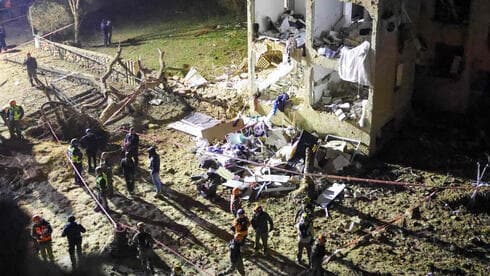
Iranian Missiles Strike Israel; Officials Report 180 Injured Amid Conflicting Casualty Figures.
12 sources compared

Iran Collects $2 Million Transit Fees From Some Vessels Crossing Strait of Hormuz
17 sources compared