Full Analysis Summary
Trump economic approval poll
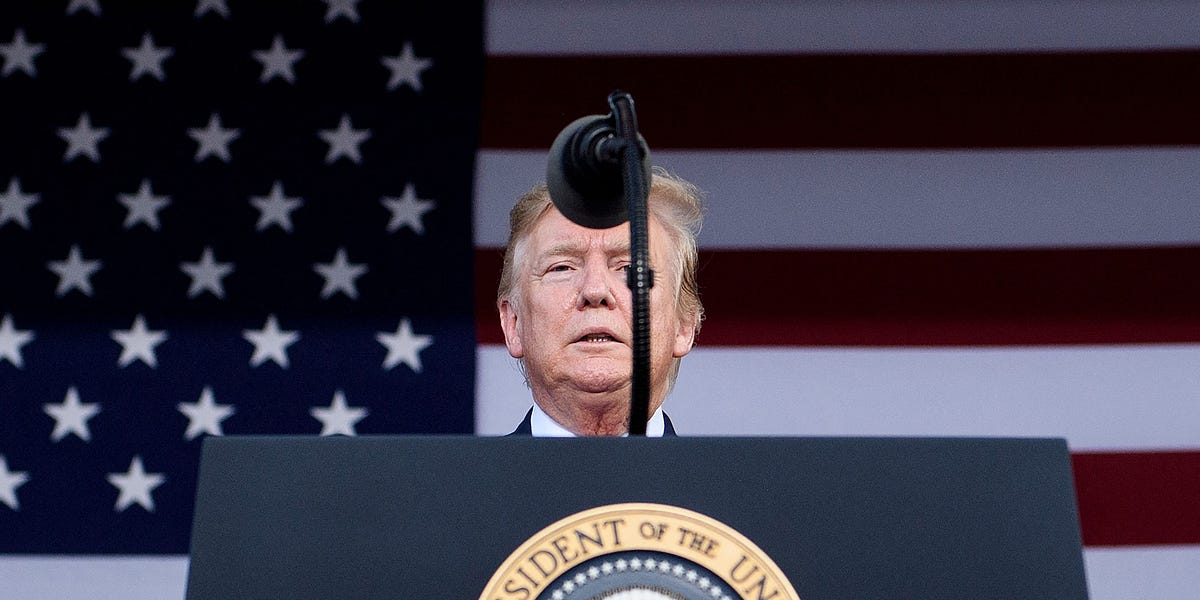
A new PBS News/NPR/Marist poll finds Americans giving President Donald Trump his worst ever rating on the economy.
The poll shows 57% disapprove of his handling of the economy while just 36% approve.
This marks the lowest approval this poll has recorded across either of his terms.
The poll's raw results are presented as evidence that voters are sharply negative about Trump's economic performance.
Observers say these weak economic ratings are contributing to a low overall job approval for the president.
Coverage Differences
Consistency / Emphasis
Both PBS (Western Mainstream) and PBS News (Western Mainstream) present the same core finding — 57% disapprove and 36% approve — and emphasize that this is the lowest approval measured across both of Trump’s terms. Neither source disputes the figures, and both frame the economic ratings as unusually weak.
Poll methodology summary
The poll’s methodology and sample details are provided in the PBS snippet: it polled 1,440 U.S. adults (±3.2 points) and 1,261 registered voters (±3.4 points) by phone, text and online.
That methodological detail underpins the report’s confidence framing, though PBS News’ version of the story repeats the headline findings more succinctly and does not include the same detailed sample-size and margin-of-error figures in the short snippet.
This difference affects how much methodological context readers immediately receive.
Coverage Differences
Missed information / Omission
PBS (Western Mainstream) includes explicit polling methodology and sample-size details — "1,440 U.S. adults (±3.2 points) and 1,261 registered voters (±3.4 points) by phone, text and online" — while the PBS News (Western Mainstream) snippet restates the headline findings but omits those specific sample-size and margin-of-error numbers in the excerpt provided. The omission means PBS News readers in this excerpt get less methodological context.
Economic concerns and presidency
Voters' concerns driving the negative economic rating are named in the reporting: widespread worry about the cost of living, health care prices and personal finances.
Marist director Lee Miringoff is quoted to explain the political impact: 'When affordability is so front and center in people's minds, that's going to be laid at the doorstep of a chief executive,' attributing responsibility for economic pain to the presidency.
Both PBS and PBS News use this quote or paraphrase it to connect the economic anxieties to the president's standing.
Coverage Differences
Tone / Attribution
Both PBS (Western Mainstream) and PBS News (Western Mainstream) attribute the explanation for the poll’s findings to Marist director Lee Miringoff; PBS uses the direct quote about affordability being "front and center," while PBS News paraphrases and repeats the same claim. The two pieces are consistent in tone (concerned, explanatory) and attribute the causal claim to Miringoff rather than presenting it as the outlets’ own assertion.
Economic approval and politics
Reporting links poor economic approval to broader political consequences.
PBS notes weak economic ratings are dragging down Trump's overall job approval (38%), its weakest since the end of his first term.
The combined coverage frames economic anxiety, especially affordability and healthcare costs, as central voter priorities harming the president's standing.
Both snippets align in narrative and severity, presenting the situation as a major political problem for Trump.
Coverage Differences
Narrative / Emphasis
Both PBS (Western Mainstream) and PBS News (Western Mainstream) emphasize that economic dissatisfaction is depressing Trump’s overall job approval; PBS explicitly states the overall approval figure and frames it as the lowest since the end of his first term, while PBS News reiterates that the poll’s results "help explain why Trump’s overall job approval is also low (38%), the weakest since the end of his first term." The two sources are consistent in narrative and emphasis.