Gaza Genocide · 01 May, 2026 · 6 min read
Amnesty International Says Israeli Army Killed Hind Rajab, Her Family, and Red Crescent Rescuers
Hind Rajab, five-year-old Palestinian girl, killed by Israeli army during Gaza City escape. Four cousins, her uncle, and her aunt were killed in the same incident.
Why India refused to release the film in India.
4 of 5 outlets skipped it: brazilian prosecutors issued investigation warrants (universal jurisdiction) against Israeli soldiers present in Brazil after complaints filed by the Hind Rajab Foundation (HRF)..
13outlets compared
Same story, two versions
tap a side to read it in full
The Times of Israël
““the Central Board of Film Certification (CBFC) had justified the decision to refuse its release in order not to affect India's relations with Israel.””Read the original ↗
All these outlets attribute the official rationale to diplomatic concerns, but the phrasing/attribution strength differs (one emphasizes CBFC “justified” it; another frames censorship as preserving diplomacy from the outset). That influences how readers interpret institutional intent vs. editorial framing.
Hind Rajab’s last call
On January 29, 2024, Amnesty International says Hind Rajab, “a five-year-old girl,” was killed by the Israeli army along with “her four cousins, her uncle, and her aunt as they were trying to flee a neighborhood in Gaza City.”
“On January 29, 2024, Hind Rajab, a five-year-old girl, was killed by the Israeli army”
Amnesty International reports that “The two Palestinian Red Crescent rescuers who came to help her were also killed by the Israeli army,” and that Hind’s mother, Wesam Hamada, was on the phone with her while the girl hid “with Israeli soldiers nearby.”

In the Amnesty International interview, Hamada recounts the final words she heard from her daughter, saying, “I am scared... come and get me.”
She adds that Hind also told her, “Mom, they are lying. Stay with me!”
Hamada says she understood “the betrayal” when “They sent an ambulance to pick her up, but it did not reach its destination. She was bombed.”
Amnesty International frames her account as a call for accountability, with Hamada saying, “This silence that makes the crime possible and facilitates its repetition.”
The same Amnesty International piece links the recording of the distress call to the film The Voice of Hind Rajab, which it says was “nominated for an Oscar,” and Hamada describes her wish for Gaza’s children as “that the life of a Palestinian child be protected as if it were the life of your own child.”
Film banned in India
Multiple outlets report that Indian authorities barred the release in India of the Oscar-nominated film The Voice of Hind Rajab, which depicts the death of Hind Rajab during the Gaza war.
The Times of Israël says the Indian Central Board of Film Certification “has barred the release in India of the film The Voice of Hind Rajab,” and it attributes the decision to the film’s distributor, Manoj Nandwana, who told AFP that the CBFC justified refusal “in order not to affect India's relations with Israel.”T
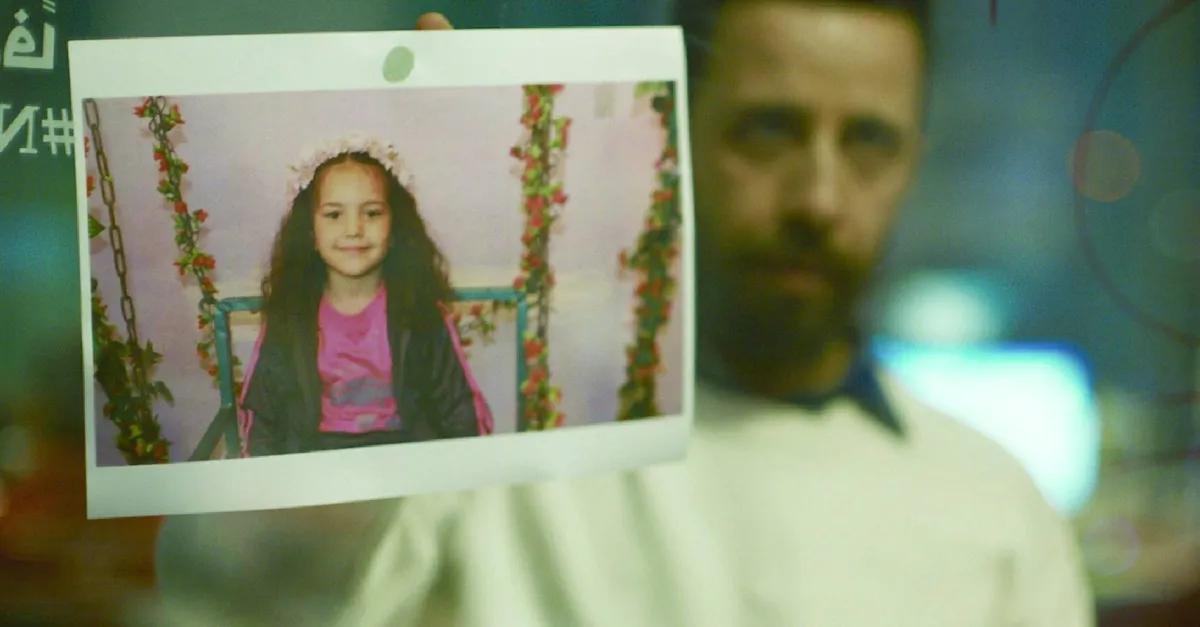
Sud Ouest similarly reports that the Indian Film Certification Board “has forbidden the release in India of the film 'The Voice of Hind Rajab,'” and quotes Nandwana saying, “After watching the film, it was clear to me that it would not be allowed in India.”S
RTBF frames the move as a democratic failure, quoting the decision as “Unworthy of a democracy,” and it repeats Nandwana’s explanation that CBFC refused “in order not to 'affect India's relations with Israel'.”
The outlets also describe the film’s subject matter in overlapping terms: Sud Ouest says the feature “tracing the death of a 5-year-old Palestinian girl” was “shot by Israeli fire as she tried to leave Gaza with her family,” while RTBF says it “recounts the true story of Hind Rajab, shot dead by Israeli fire as she was trying to leave Gaza with her family.”S
The Times of Israël adds that the film’s director relied on “real emergency-call recordings from a Palestinian girl,” and it says Hind Rajab’s relatives recovered her body “about twelve days after her death,” along with “the bodies of five family members and two paramedics.”T
It further reports that the Palestinian Red Crescent Society broadcast audio excerpts of a call made by Hind’s teenage cousin, Layan Hamadeh, in which she stated that “an Israeli tank was approaching,” before gunfire rang out.
Call details and accusations
The Times of Israël provides additional detail about the emergency call that the film is said to use, describing how regulators were contacted and how the call lasted.T
“about twelve days after her death”
It says Hind Rajab’s relatives recovered her body “about twelve days after her death,” and it lists “the bodies of five family members and two paramedics who had come to her aid.”
The outlet reports that the Palestinian Red Crescent Society accused Israel of “deliberately targeting the ambulance it had sent to aid Rajab,” and it describes the audio excerpts as being broadcast “to regulators.”
The Times of Israël says the call was initially made by Hind’s teenage cousin, Layan Hamadeh, and it quotes her statement that “an Israeli tank was approaching,” before “gunfire rang out and she began to scream.”T
It then says that “Considered the sole survivor, Rajab remained on the line with the regulators for three hours,” while “they had tried to reassure her while arranging an ambulance.”
The same article notes that “A few weeks after Rajab's death, the Israeli army had stated that none of its soldiers were in the area at the time of the incident.”
The Times of Israël also situates the film’s international visibility by saying that “Hollywood, for its part, paid tribute to it by nominating it in the Best International Feature Film category for the 98th Academy Awards ceremony.”
Brazil seeks investigations
Le Club de Mediapart reports that Brazil may investigate Israeli soldiers connected to the Gaza campaign under universal jurisdiction, after complaints filed by the Hind Rajab Foundation.
It says the Hind Rajab Foundation (HRF) confirms that “the Brazilian Federal Public Prosecutor's Office issued three investigation warrants ordering the Brazilian Federal Police (PF) to open investigations into Israeli soldiers present in Brazil,” following complaints about “crimes committed during the Israeli military campaign in Gaza.”

The decision is dated “March 4, 2026,” and the outlet says the prosecutor transmitted the complaints to “the Regional Directorate of the Federal Police for the Federal District (Brasília and surrounding areas), requesting the urgent opening of investigative measures.”
HRF describes the warrants as a legal advance and a recognition of Brazil’s “competence and responsibility under international law, including the principle of universal jurisdiction.”
The outlet says the complaints involve “several Israeli soldiers found in Brazil,” including individuals identified on “the two Campeche Islands (Santa Catarina) and Morro de São Paulo (Bahia)” and in “the municipality of Itacaré (Bahia).”
Among the named individuals is “Omri Turgeman, a soldier in the 424th Infantry Battalion Shaked of the Givati Brigade,” and the outlet says his unit has been associated with “grave crimes committed during Israeli operations in Gaza.”
Le Club de Mediapart adds that HRF says it obtained information indicating that “one of the soldiers identified in the complaints has already been clandestinely removed from Brazil,” and it says HRF received a response from the Brazilian Federal Police that “appealed the Attorney General's decision instead of executing the investigation warrants.”
Ceasefire, ongoing suffering
Amnesty International frames the Gaza war’s continuing impact through Wesam Hamada’s account of conditions for Palestinians after a ceasefire.
“Despite the ceasefire announced at the end of 2025, the suffering in Gaza continues”
Hamada tells Amnesty International that “Despite the ceasefire announced at the end of 2025, the suffering in Gaza continues,” and she describes what her family and friends say about access to basic needs.

She says, “The first proof that genocide continues daily is the large number of victims,” and adds that “My family and friends tell me they do not have access to the bare minimum.”
In her description, Hamada lists “No access to water, no electricity, no food, nor medicines,” and she says “The health system has collapsed and children do not have access to education.”
Amnesty International also has Hamada insist that “Genocide persists and normal life has not returned to Gaza,” and she expands the scope of harm by saying, “Every woman, every child, every person remains a target in Gaza.”
The Amnesty International interview also returns to the idea of accountability, with Hamada saying, “If the law cannot save a child, then those responsible must be held accountable.”
She links her public speaking to keeping Hind’s memory alive, saying, “I want her voice to keep resonating, because it is not only hers, but that of all the children of Gaza.”