
Hamas Says Israel Violates Gaza Ceasefire Every Day Since Sharm El-Sheikh Agreement
Key Takeaways
- Hamas says Israel violates the Gaza ceasefire daily for over 200 days.
- Israel evades first-phase commitments, delaying negotiations for a second-phase.
- Second-phase talks stalled; Hamas tightens civilian control during the pause.
Ceasefire claims and daily violations
Hamas says Israel violates the Gaza ceasefire “every day” since the Sharm el-Sheikh Agreement was signed more than 200 days ago, and it frames the ongoing fighting as part of a broader assault rather than a temporary breakdown.
“When the Gaza Strip ceasefire agreement went into effect about 200 days ago, the world hoped to end the genocidal war that Israel has waged for two years, but the cycle of killings and aggression and the deepening humanitarian tragedy did not stop, while data indicate that Israel has evaded the commitments outlined in the Sharm el-Sheikh Agreement concluded in October 2025”
In a written statement, Hamas said the movement and other Palestinian groups “had remained committed to the terms of the ceasefire agreement,” while Israel carried out what Hamas called a “brutal war of genocide” for more than two years.

Hamas also said it followed the deal’s provisions, including “the handover of Israeli captives and bodies according to the agreed schedule,” and it accused Israel of continuing attacks “under the cover of the agreement.”
The statement said the alleged violations included targeting civilians, deepening the humanitarian crisis in Gaza, and keeping the Rafah border crossing closed or only partially open.
Hamas added that it believed the Israeli government of Prime Minister Benjamin Netanyahu was “not committed to mediation efforts,” and it urged mediators and guarantor countries to ensure implementation of the ceasefire agreement.
In parallel, Al-Jazeera Net posed the question “200 days... what has been accomplished regarding the Gaza ceasefire agreement?” and reported that Hamas says it showed “full commitment” to provisions including handing over Israeli hostages and bodies “according to the agreed timetable.”
Al-Jazeera Net also said Israel has evaded commitments outlined in the Sharm el-Sheikh Agreement concluded in October 2025, while Hamas pointed to daily violations including killing civilians and “tightening the siege.”
Hostages, aid, and rebuilding
As the ceasefire period stretches past 200 days, multiple reports describe a parallel struggle over hostages, aid access, and the pace of reconstruction.
The Asr Iran report said “about 200 soldiers” entered Israel to monitor the ceasefire agreement between Israel and Hamas in the Gaza Strip, with the stated plan to station them on Israeli soil to set up a joint coordination center for humanitarian aid and logistical and security support.
It also said that under the ceasefire terms “48 remaining hostages held by Hamas are set to be released by Monday,” while the Israeli government says “about 20 of the hostages are alive,” and it contrasted that with Israel’s promise to release “about two thousand Palestinian prisoners.”
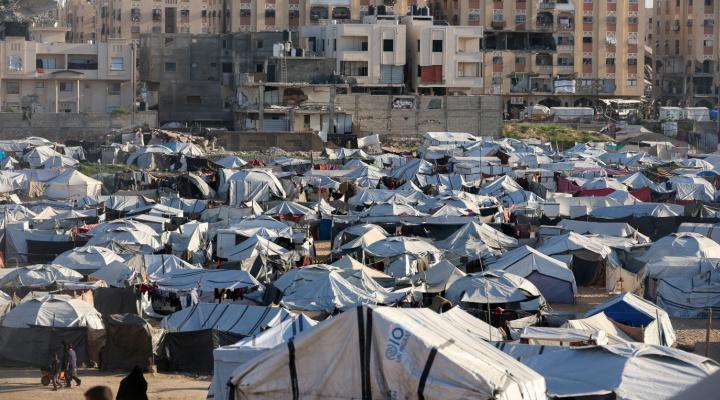
On the humanitarian side, Asr Iran said the World Food Programme (WFP) was ready to reopen “145 food distribution centers across Gaza,” but that the move depended on Israel allowing an increase in aid shipments.
It reported that the United Nations announced it had received authorization from Israel to increase aid deliveries starting Sunday, and it described local authorities saying that since the ceasefire began more than “5,000 public works” had been carried out to rebuild water and sewage infrastructure, medical services, and relief efforts.
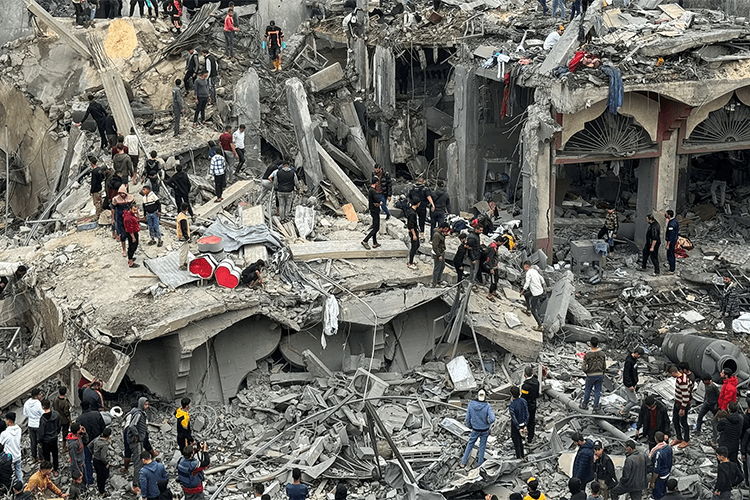
UNICEF’s Tess Ingram warned that “When people return to their homes, they will face heaps of rubble,” and she said, “The ceasefire alone is not enough. There must be a dramatic increase in humanitarian aid deliveries to compensate for the enormous damage of the past two years.”
Another report from Şarku’l Avsat-style coverage said the agreement stipulated entry of “600 trucks per day,” but that actual entries amounted to “only about 39 percent,” with fuel deliveries at “roughly 14.9 percent,” contributing to disruption of essential services.
Hamas conditions for phase two
Hamas leaders say the second phase of the Gaza ceasefire cannot move forward unless Israel fully implements the first phase commitments, and they describe the current period as daily, organized aggression.
“Hamas: The Occupying Regime Is Not Fulfilling Its Commitments in the Gaza Strip Ceasefire”
Osama Hamdan, described as a senior Hamas leader, said: “As long as the Zionist regime refuses to implement the obligations of the first phase of the ceasefire agreement, negotiations for the second phase are meaningless.”
Multiple outlets quoting Hamdan said the Zionist regime has “reneged on its commitments” over the past 200 days, and they repeated his claim that “The breach of the agreement by the occupying regime has gone beyond a violation and has become daily, organized aggression against the residents of Gaza.”
Hamdan also criticized Nikolai Mladenov, described in the reports as “the executive director of the Peace Council with the Zionist regime,” saying Mladenov “has failed to compel Israel to fully implement the first phase of the agreement.”
In the same accounts, Hamdan said Hamas has told mediators it “will not agree to enter the second phase until all the commitments of the first phase are fully implemented.”
NurNews added a direct condition in Hamdan’s words: “I have informed the mediators that we will refrain from moving to the second phase before fulfilling the commitments of the first phase of the ceasefire.”
NurNews further said Hamdan accused the Israeli regime of “daily, systematic aggression against the people of Gaza” and said, “We are witnessing Mladenov's collusion with the occupiers.”
Control, military rebuilding, and talks
While Hamas presents the ceasefire as a framework Israel violates, Israeli officials quoted in Algemeiner describe a different picture: they warn Hamas is using the pause to tighten civilian control and rebuild military power as second phase talks stall.
The Algemeiner report said the second phase remains stalled and that Israeli officials warn Hamas is “quietly exploiting the pause in fighting to tighten its control over civilian life while simultaneously rebuilding its military capabilities behind the scenes.”
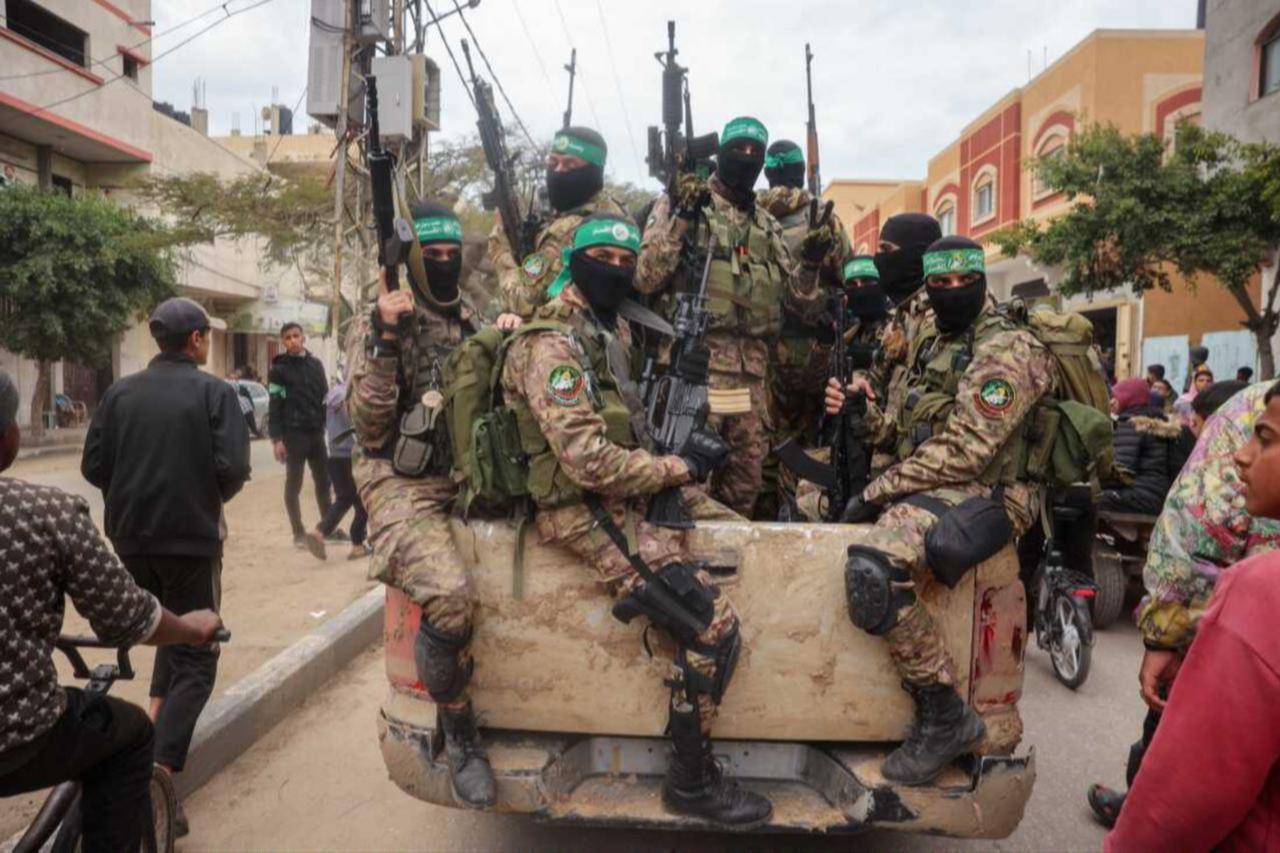
It attributed the assessment to a report by the Israeli news outlet Walla, citing security sources, and it said Hamas is led in Gaza by “military wing commander and de facto Gaza ruler Izz ad-Din al-Haddad.”
Algemeiner described Hamas as operating “three parallel systems” to secure its survival and restore military capabilities, including reestablishing civilian governance through checkpoints, strict regulation of goods, and takeover of key civilian institutions “including hospitals.”
The report said that under the ceasefire, “the Israeli military currently controls 53 percent of Gaza,” while Hamas remains entrenched in “the nearly half of Gazan territory it still controls.”
It also said Israeli officials estimate that Hamas’s military wing, “the al-Qassam Brigades,” is rebuilding forces with ranks totaling “roughly 27,000 members.”
On the diplomatic track, the report said a new draft proposal has been presented to Israel and Hamas, with talks potentially beginning “this week” on moving forward with the second phase of US President Donald Trump’s Gaza peace plan.
Numbers, rubble, and diverging narratives
Across the sources, the ceasefire period is described through sharply different numerical tallies and emphases, with some reports focusing on hostages and aid logistics while others foreground casualty counts and alleged obstruction rates.
“200 days of the Gaza ceasefire”
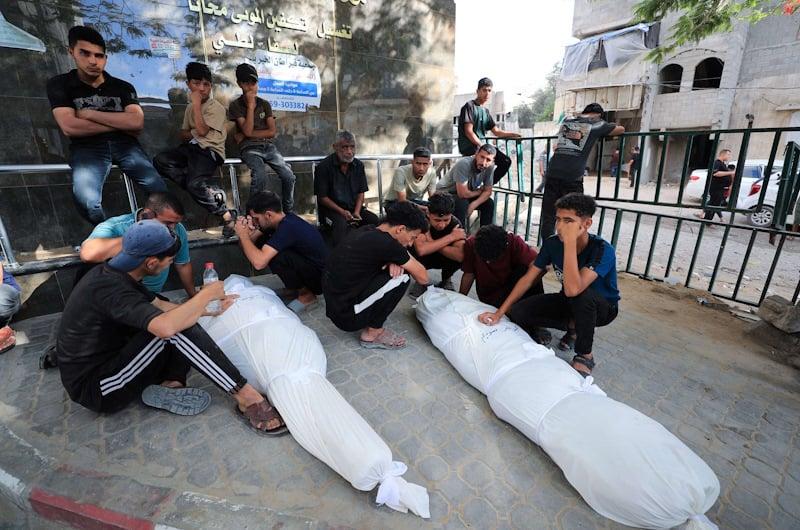
Al-Jazeera Net said that “Since the start of the truce brokered by the United States on October 10 of last year until today,” Israel has killed “824 Palestinians” and injured “2316 others,” citing “data from the health ministry in the sector.”
It also reported that the Government Media Office in the Gaza Strip issued statistics covering the first six months of the ceasefire (180 days), saying Israel committed “2,400 violations,” and it claimed compliance rate of “only 37%” for aid and a “very limited commitment (7%)” to allow Gazans to travel through Rafah crossing since it opened on “February 2.”
In a separate account, Şarku’l Avsat-style reporting said fatalities since the ceasefire rose to “817,” injuries to “2,296,” and it said “the bodies of 762 martyrs have been recovered,” while it also stated the cumulative toll since “October 7, 2023” reached “72,593 killed and 172,399 wounded.”
Another report, TurkPress-translated Yeni Şafak content, said field reports published daily by the Palestinian Center for Diplomacy on “April 26, 2026” put violations at “2,604,” averaging “13.2 violations per day,” and it claimed the total dead after the ceasefire rose to “817” including “213 children, 90 women, and 23 elderly.”
That same report said wounded reached “2,296” including “648 children, 414 women, and 109 elderly,” and it described “1,027 live-fire attacks,” “1,188 air raids or artillery bombardments,” and “286 house demolitions” during the ceasefire.
The stakes of these competing narratives are immediate in the reports’ descriptions of what comes next: Hamas says it will not move to phase two until first phase commitments are fully implemented, while Algemeiner says Israeli officials warn they will not withdraw troops further or approve rebuilding efforts if Hamas does not fully disarm for the second phase.
More on Gaza Genocide
Israeli Forces Kill Three-Year-Old Palestinian Boy Rayan Abu Al-Ajeen in Central Gaza
11 sources compared

Israeli Drone Kills Nurse Mohammed Al-Habil and His Son in Gaza City
12 sources compared

Israel Plans To Control 100% Of Gaza, Squeezing Hamas, Netanyahu Says
11 sources compared

Iran Negotiator Mohammad Baqer Qalibaf Questions US Peace Commitment After Israel Attacks Beirut
10 sources compared