Gaza Genocide · 02 May, 2026 · 7 min read
Palestinians Mark Nakba in Ramallah, Denounce Israel’s Gaza Conquest Operation and UNRWA Ban
Palestinians commemorate Nakba, denounce ongoing displacement, and fear history repeating. Nakba described as catastrophe with village destruction and mass dispossession.
Responsabilité et justification des expulsions (plan/“guerre psychologique” vs narration plus générale).
6 of 11 outlets skipped it: la résolution 181 de l’ONU (29 novembre 1947) et le contexte de partition/l’après-retrait britannique sont présentés comme éléments déclencheurs/inscrits dans la chronologie menant à 1948..
13outlets compared
Same story, two versions
tap a side to read it in full
Radio France
“« le plan de partage donne une espèce de feu vert à cette opération qui va ensuite s'accélérer au mois de mars 1948 avec le plan Dalet, le plan D de l'armée israélienne, qui est un plan d'expulsion »”Read the original ↗
Lumni Enseignement
“« A broad consensus today exists among historians of all nationalities to say that these departures were largely forced. »”Read the original ↗
Les sources diffèrent sur le niveau de détail explicatif: Radio France insiste sur des documents/plans militaires et des mécanismes (expulsion, rumeurs), tandis que Lumni met en avant un consensus historiographique général sans développer une causalité planifiée aussi précisément.
Commemorations and warnings
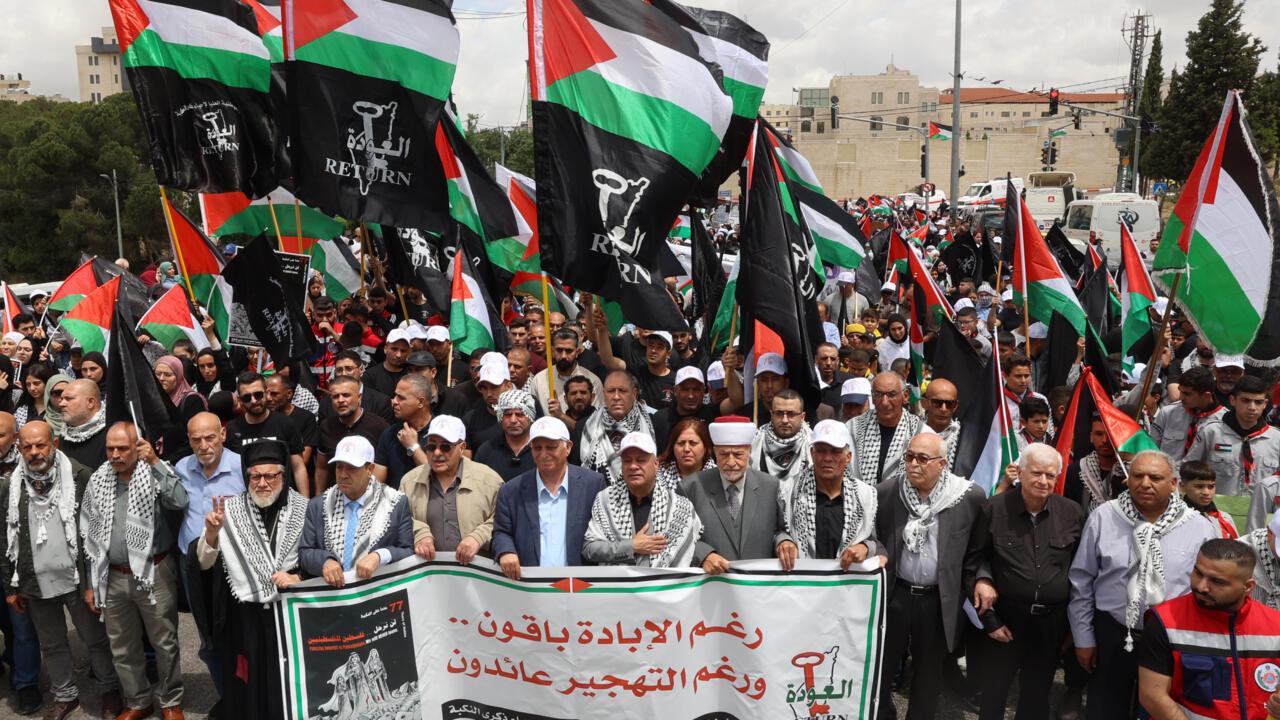
Palestinians marked the Nakba this week with black flags of remembrance and Palestinian flags at crossroads in Ramallah and across the West Bank, denouncing what they described as new attempts to drive them from their lands.
“Seventy-seven years after the Nakba—the mass exodus linked to the founding of Israel”
France 24 reported that the commemorations come “Seventy-seven years after the Nakba—the mass exodus linked to the founding of Israel,” and framed the moment as a fear that “history may repeat itself.”
The same report said that, while “nothing official was planned in the Gaza Strip,” the territory has been ravaged by “more than 19 months of war between Israel and the Islamist movement Hamas.”
In Ramallah, a Palestinian woman told AFP that “It’s become a daily reality that we live in Gaza,” describing living “without security, moving from tent to tent with her children.”
France 24 also tied the anxieties to political statements, saying the specter of a definitive departure lingered after U.S. President Donald Trump floated the idea of emptying Gaza to create “the Riviera of the Middle East,” an idea it said was “partially revived by Israeli Prime Minister Benjamin Netanyahu.”
Another demonstrator, Nail Nakleh, summed up the commemorations’ focus on ongoing attacks on refugee camps, saying, “We still live every day through a new Nakba, through Israeli attacks on the camps.”
The report added that in the processions, conversations revolved around “the Israeli government’s announcement of an operation to conquer Gaza” and “Israel’s ban on UNRWA, the UN agency for Palestinian refugees.”
Memory as a political lens
Across the sources, the Nakba is presented not only as a historical event but as a framework for interpreting the present conflict and the right of return.
Le Monde diplomatique described the term as referring to “the consequences for Palestinians of the defeat of the Arab armies that entered the war against Israel in May 1948,” emphasizing “the exodus of 800,000 of them, expelled, one way or another, from territories that came under Israeli control.”

It said the Nakba is commemorated by the Palestinian Authority every May 15 and described it as an “opportunity to relive the memory of the 530 villages destroyed by the Israeli armed forces” while reaffirming “the right of return for Palestinian refugees (including those living in Gaza or the West Bank) in accordance with UN General Assembly Resolution 194 (December 11, 1948).”
The Conversation similarly framed the commemoration as a “war of memories,” writing that for Palestinians it was “a matter of correcting a historical error” and that the Nakba narrative rests on a claim that victims “cannot see UN General Assembly Resolution 194, adopted December 11, 1948, guaranteeing the expelled Palestinians the right to return.”
Orient XXI connected the word’s spread to contemporary displacement, saying the prominence of “Nakba” comes “at a moment when genocide and mass displacement of the population are still taking place in Gaza.”
It also stated that in autumn 2023, the word returned “with the Iron Glaive offensive launched by Israel against Gaza,” which it said “displaced more than double the number of Palestinian refugees of 1948.”
Orient XXI added that “on May 15, 2023, the UN commemorated, for the first time in its history, the mass displacement of Palestinians” and said that “overnight turned 700,000 Palestinians into refugees.”
Origins and contested narratives
Several sources traced the Nakba’s origins to the 1947 partition plan and the 1948 war, while also highlighting how different accounts interpret responsibility and intent.
“Entre 1947 et 1949, environ 800 000 Palestiniens ont été chassés de leurs terres par les forces israéliennes”
Radio France described how, “Entre 1947 et 1949, environ 800 000 Palestiniens ont été chassés de leurs terres par les forces israéliennes,” and said that “le 29 novembre 1947” the UN General Assembly adopted “la résolution 181” to split Palestine into “deux Etats : l'un juif, l'autre arabe.”R
It reported that journalist and historian Dominique Vidal defined the start of what he called “la guerre d'expulsion des Palestiniens” as beginning with the partition plan and then accelerating with “le plan Dalet, le plan D de l'armée israélienne,” which he said was “un plan d'expulsion.”
Radio France also cited a document described as a “document secret” from the Haganah and said that “au 15 mai 1948, il y a déjà presque 400 000 Palestiniens” who had left the territory, adding that “73%” left “en raison des actions des forces armées juives et des massacres.”R
The same Radio France piece quoted historian Walid Khalidi denouncing a “plan politico-militaire d'expulsion” as early as 1961 and described a “guerre psychologique,” including a claim that “Radio Haganah annonçait” cases of “variole” in Jaffa and that among Arab casualties there were “maladies contagieuses.”R
In parallel, Philosophie Magazine described the Nakba as “the forced exile of Palestinians following the creation of the State of Israel in 1948” and said that “On November 29, 1947, the UN adopted Resolution 181” planning partition between a “Jewish State” and an “Arab State.”
It stated that “The British settlers withdrew five months later, on May 15, 1948, and the State of Israel was proclaimed,” and that “About 750,000 Palestinians were forced to leave their lands and 14,800 of them were killed or died as a result of these expulsions.”
Legal and institutional legacies
Fédération internationale pour les droits humains argued that the Nakba’s legacy is embedded in Israeli laws and institutions that, it said, continue to deny Palestinians the right of return and sustain a system of racial domination.
The organization stated that “Israel has established a regime of racial domination and oppression over the Palestinian people,” and that “In the wake of the Nakba, Israel adopted a series of laws, political measures and practices” that “sealed the expropriation of the indigenous Palestinian people.”
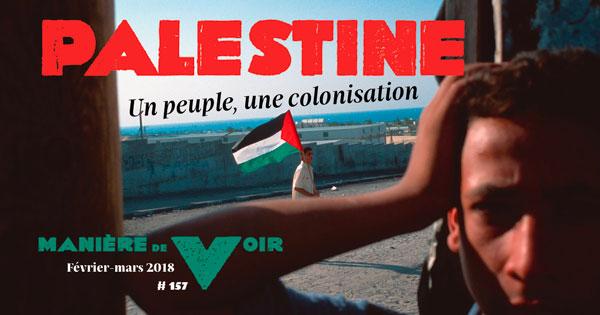
It singled out “the 1950 law, dubbed 'Absentee Property' or 'Law of Absentees,'” and said the law “has become the main legal instrument enabling the expropriation of Palestinians,” adding that Israel used it “to confiscate the property of Palestinian refugees and displaced people who were considered 'absent,' while the State refused their return.”
The same source said that “Seventy-five years later, this law still participates in Israel's Judaization of various parts of the West Bank, notably the city of Jerusalem,” and claimed that “the 1950 Return Law and the 1952 Citizenship Law formed the foundation of institutionalized racial discrimination in Israeli law.”
It also described how Israel, in its view, fragmented Palestinian society “in at least four distinct domains: geographic, legal, political and administrative,” and said this strategy prevents Palestinians from “exercising their rights collectively.”
The organization tied the legal architecture to ongoing restrictions, stating that the “illegal closure and blockade of the Gaza Strip,” “the Annexation Wall,” and “the permit regime” “gravely hinders the freedom of movement of the Palestinian people.”
It further asserted that “the crimes of the Nakba… have never been prosecuted and the victims have never received reparations,” and it connected the memory to contemporary violence by stating that “while implementing their policy of 'shoot-to-kill', the Israeli occupying forces killed en masse 60 unarmed Palestinians who were demonstrating in the Gaza Strip on the eve of the 70th anniversary of the Nakba.”
Israeli politics and the “move on” debate
The Israeli debate over how to relate to the Nakba appears in Haaretz through the perspective of Israeli Arabs who argue over memory and political strategy.
“We need to wield influence from within, like the Jews did outside Israel when they entered politics. They didn't create their own parties.”
Haaretz’s article centers on Somaya Bashir, described as “a religious Muslim, therapist and activist,” who, the piece says, “urges Arab citizens toward national service” and believes “Arab parties are stuck in the past.”
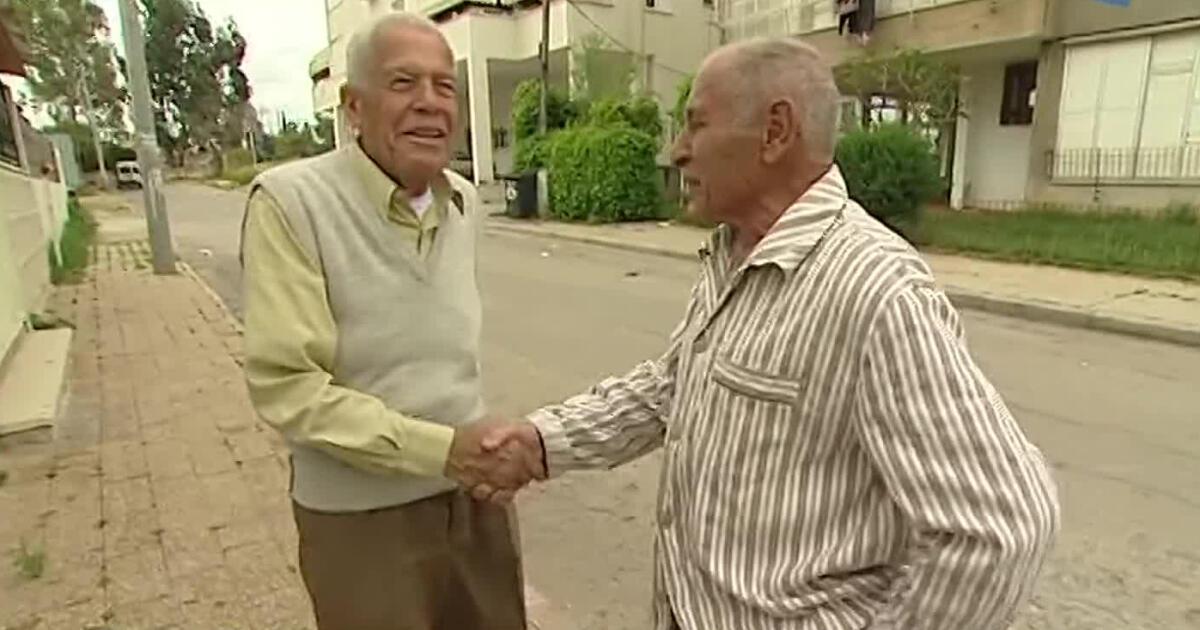
It quotes Bashir saying, “We need to wield influence from within, like the Jews did outside Israel when they entered politics. They didn't create their own parties.”
The article also describes how Bashir is “called a terrorist by Jews and a traitor by Arabs,” while she remains “unmoved,” and it says she “plans to run for the Knesset on a Zionist party's slate.”
In the broader set of sources, Le Monde diplomatique said that “legislation prohibits the use of the word 'Nakba' in Israeli school textbooks,” and that “the criminalization of its commemoration is regularly raised by political leaders of the country.”
Radio France similarly described how the Nakba narrative is contested, quoting Dominique Vidal’s account of a “guerre d'expulsion” and citing Walid Khalidi’s denunciation of a “plan politico-militaire d'expulsion,” while also quoting Menahem Begin’s account of panic and flight in his book The Revolt (1973).R
Orient XXI added that the word’s global spread is occurring “at a moment when genocide and mass displacement of the population are still taking place in Gaza,” linking the political dispute over memory to the current war.