Britain23 January, 20265 min read
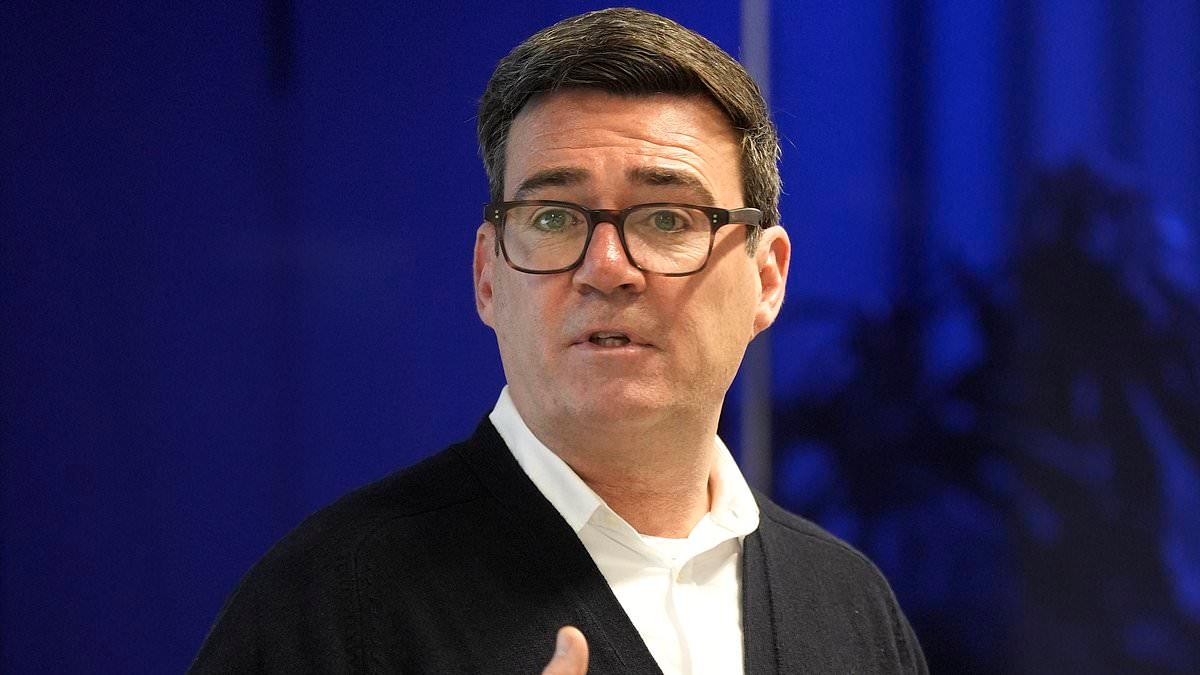
Angela Rayner Backs Andy Burnham's Westminster Challenge to Keir Starmer as Labour MPs Gather
This article is an automated aggregation of coverage from news outlets. Our editorials offer in-depth analysis curated by the NewsCord team.
Angela Rayner backs allowing Andy Burnham to stand in the Gorton and Denton by-election Rayner's support intensifies a Labour leadership rift and challenges Keir Starmer's authority

6 outlets told this the same way.
Missing source articles
I cannot create the requested 4–6 paragraph article because you did not provide any of the source articles to summarize or compare; your message ended with the line 'Here are the articles:' but no articles or links followed. I must base my writing strictly on the provided articles, so I need you to paste the article texts or links before I can proceed. Without those sources I cannot reliably report what Angela Rayner, Andy Burnham, Keir Starmer, or Labour MPs said or how different outlets covered the story.
“Create a comprehensive 4-6 paragraph article about Angela Rayner Backs Andy Burnham's Westminster Challenge to Keir Starmer as Labour MPs Gather. Use details from as many distinct sources as possible...”
Please provide the reformatted version with the specified structure. The output should be formatted as a JSON instance that conforms to the JSON schema below, and as an example, for the schema {"properties": {"foo": {"title": "Foo", "description": "a list of strings", "type": "array", "items": {"type": "string"}}}, "required": ["foo"]} the object {"foo": ["bar", "baz"]} is a well-formatted instance of the schema while {"properties": {"foo": ["bar", "baz"]}} is not. Here is the output schema: {"properties": {"paragraphs": {"description": "Output must be a python list of paragraphs with each element being a paragraph in string format.", "items": {"type": "string"}, "title": "Paragraphs", "type": "array"}, "subheader": {"description": "A python string of the subheader you have decided for the paragraphs in totality", "title": "Subheader", "type": "string"}}, "required": ["paragraphs", "subheader"]}

Source-based editing rules
I also cannot invent or rely on external knowledge beyond the supplied sources; developer instructions require strict adherence to the provided articles and explicit cross-source comparisons. Therefore, I will not add details about who said what, quoted language, or the tone used by particular outlets until you provide the actual source texts or links. If you want, you can paste the articles' text bodies, or provide URLs to each article, and I will immediately create the requested article with the required citations and difference analysis.
Please provide the reformatted version with the specified structure. The output should be formatted as a JSON instance that conforms to the JSON schema below. As an example, for the schema {"properties": {"foo": {"title": "Foo", "description": "a list of strings", "type": "array", "items": {"type": "string"}}}, "required": ["foo"]} the object {"foo": ["bar", "baz"]} is a well-formatted instance of the schema.
The object {"properties": {"foo": ["bar", "baz"]}} is not well-formatted. Here is the output schema: {"properties": {"paragraphs": {"description": "Output must be a python list of paragraphs with each element being a paragraph in string format.", "items": {"type": "string"}, "title": "Paragraphs", "type": "array"}, "subheader": {"description": "A python string of the subheader you have decided for the paragraphs in totality", "title": "Subheader", "type": "string"}}, "required": ["paragraphs", "subheader"]}
Summary and formatting instructions
If you supply the articles, I will produce a four-to-six-paragraph piece. The piece will (a) summarize what happened and why, noting who said what and what actions were taken. It will (b) compare coverage across outlet types, for example West Asian, Western mainstream, and Western alternative.
“Identify and explain differences across sources, clearly distinguishing between a source's own views and any quotes or claims it reports on.”
It will (c) highlight tone differences and any contested claims. It will (d) include an explicit 'differences' section per paragraph that names sources (source_name) and uses 'quotes' or 'reports' to avoid misattribution. I will also include at least three to five citations from different sources for each paragraph as you requested.
Please provide the reformatted version with the specified structure. The output should be formatted as a JSON instance that conforms to the JSON schema provided below.
The example demonstrates a correct instance and an incorrect one to illustrate proper formatting. The final output must match the given schema with 'paragraphs' as a list of strings and 'subheader' as a string.
Formatting options and schema
I can proceed in two alternative ways. Option 1: you can give permission to use publicly available reporting I find now and I will cite those sources, though that would not strictly follow your instruction to use only provided articles unless you approve. Option 2: you can ask for a hypothetical example article clearly labeled as such, but that would be fictional and not allowed under the strictly based on provided articles requirement.
Please confirm which option you prefer or paste the articles you want used. Please provide the reformatted version with the specified structure. The output should be formatted as a JSON instance that conforms to the JSON schema below.

As an example, for the schema {"properties": {"foo": {"title": "Foo", "description": "a list of strings", "type": "array", "items": {"type": "string"}}}, "required": ["foo"]} the object {"foo": ["bar", "baz"]} is a well-formatted instance of the schema. The object {"properties": {"foo": ["bar", "baz"]}} is not well-formatted. Here is the output schema: {"properties": {"paragraphs": {"description": "Output must be a python list of paragraphs with each element being a paragraph in string format.", "items": {"type": "string"}, "title": "Paragraphs", "type": "array"}, "subheader": {"description": "A python string of the subheader you have decided for the paragraphs in totality", "title": "Subheader", "type": "string"}}, "required": ["paragraphs", "subheader"]}
Submission and formatting instructions
Please paste the article texts or URLs in your reply and tell me if you prefer certain outlet types to be prioritized, for example mainstream UK, regional, West Asian, or alternative outlets. Once I have the sources I will produce a 4–6 paragraph article with per-paragraph citations drawn from three or more distinct sources and a differences analysis that explicitly names each source and quotes text where appropriate. Please provide the reformatted version of the article texts or URLs using the specified structure.
“Create a comprehensive 4-6 paragraph article about Angela Rayner Backs Andy Burnham's Westminster Challenge to Keir Starmer as Labour MPs Gather.”
The output must be formatted as a JSON instance that conforms to the provided JSON schema. For example, given the schema {"properties": {"foo": {"title": "Foo", "description": "a list of strings", "type": "array", "items": {"type": "string"}}}, "required": ["foo"]} the object {"foo": ["bar", "baz"]} is a valid instance and the object {"properties": {"foo": ["bar", "baz"]}} is not. Finally, use the output schema provided to structure your JSON with a "paragraphs" array of strings and a "subheader" string, and include both keys in the top-level object.
