Yemen11 May, 20262 min read
Ansarullah Warns United States After Trump Rejects Iranian Peace Plan
This article is an automated aggregation of coverage from news outlets. Our editorials offer in-depth analysis curated by the NewsCord team.
Ansarullah warns U.S. to bear consequences for rejecting Iran's peace plan. Nasruddin Amer, Ansarullah media deputy head, issued the warning on X.

Ansarullah issues warning
Yemen’s Ansarullah movement warned the United States after Donald Trump rejected an Iranian peace plan, with Nasruddin Amer, deputy head of Ansarullah’s media office, writing on X that “From the outset, it was clear from the American mobilization and intransigence that they would not accept the Iranian response.” Amer said Trump’s rejection came directly after Trump’s contact with the “criminal” Israeli Prime Minister Benjamin Netanyahu, adding that “Trump does not like the truth, and for this reason, he continuously receives defeats from Iran,”.
“Trump reacted angrily to Tehran’s formal response to the American side, calling it ‘completely unacceptable.’”
The Iranian counterproposal, delivered through Pakistani mediators, was passed to Washington on Sunday, and an IRIB report said it insisted on full compensation for war damages and the lifting of all sanctions. The proposal also demanded the release of frozen Iranian assets and recognition of Iran’s sovereignty over the Strait of Hormuz, while Trump called Tehran’s formal response “completely unacceptable.”
Yemen-linked stance on straits
In Yemen-related reporting, Al Araby Al Jadeed said the Ansar Allah group is “fully prepared and ready to enter the field,” citing a “well-informed source.” The same source told Al Araby Al Jadeed that if the need arises to control the Bab al-Mandab Strait to discipline the enemy further, the group is fully prepared “to play a technical and precise role.”
The BBC later framed the wider negotiation context around the Strait of Hormuz, saying Trump warned Iran is “doing a very bad job” at allowing ships to pass through the strait. In that BBC account, it added that “hundreds of ships and about 20,000 sailors remain stuck there,” as Iran tightened control and announced new transit routes north of the two current traffic separation schemes.

Negotiations, rejection, and risk
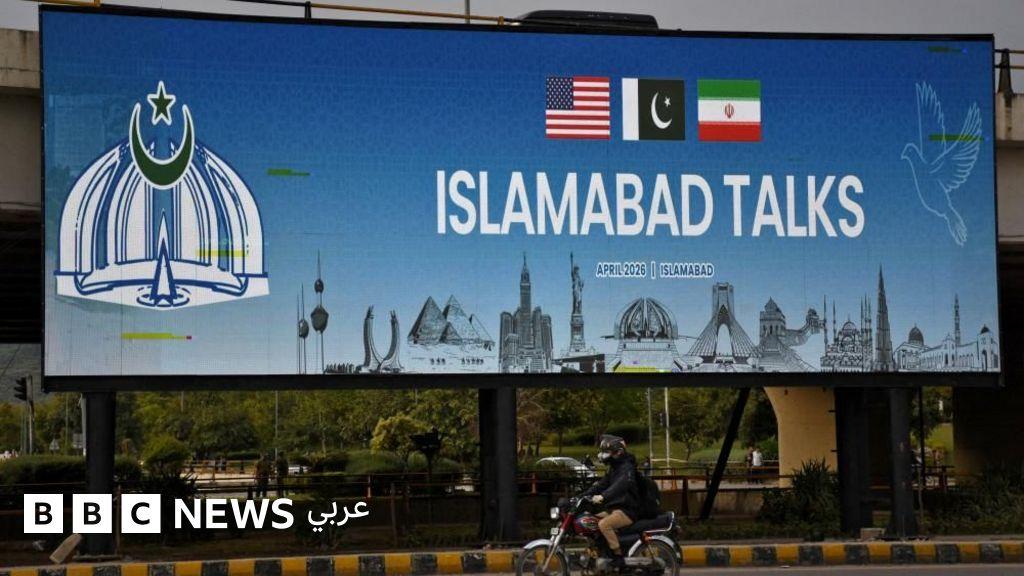
As talks between the United States and Iran were discussed, the BBC reported that negotiations began on Saturday in the Pakistani capital Islamabad to end the war in the Middle East, with U.S. Vice President J.D. Vance arriving with Jared Kushner and Special Envoy Steve Weitkov.
The BBC also quoted Vance warning that “If they try to game us, they will find that the negotiating team is not as responsive.”
In parallel, PressTV reported that Tehran emphasized that at this stage negotiations would only focus on ending the war in the region, and it included an informed source’s claim that “Nobody in Iran writes a plan to please Trump.”
PressTV added that the same source said, “If Trump is unhappy with it, that is actually better,” while Ansarullah’s Nasruddin Amer had already warned the United States it would “bear the consequences” of rejecting the Iranian response.