Technology and Science05 June, 20262 min read
Antares Mark-0 Microreactor Reaches Zero-Power Criticality at Idaho National Laboratory Under DOE Pilot Program
This article is an automated aggregation of coverage from news outlets. Our editorials offer in-depth analysis curated by the NewsCord team.
Antares Mark-0 reached criticality under the DOE Reactor Pilot Program. First advanced reactor to reach criticality under DOE Pilot Program.
_46816.jpg&w=1920&q=75)
Antares hits zero-power criticality
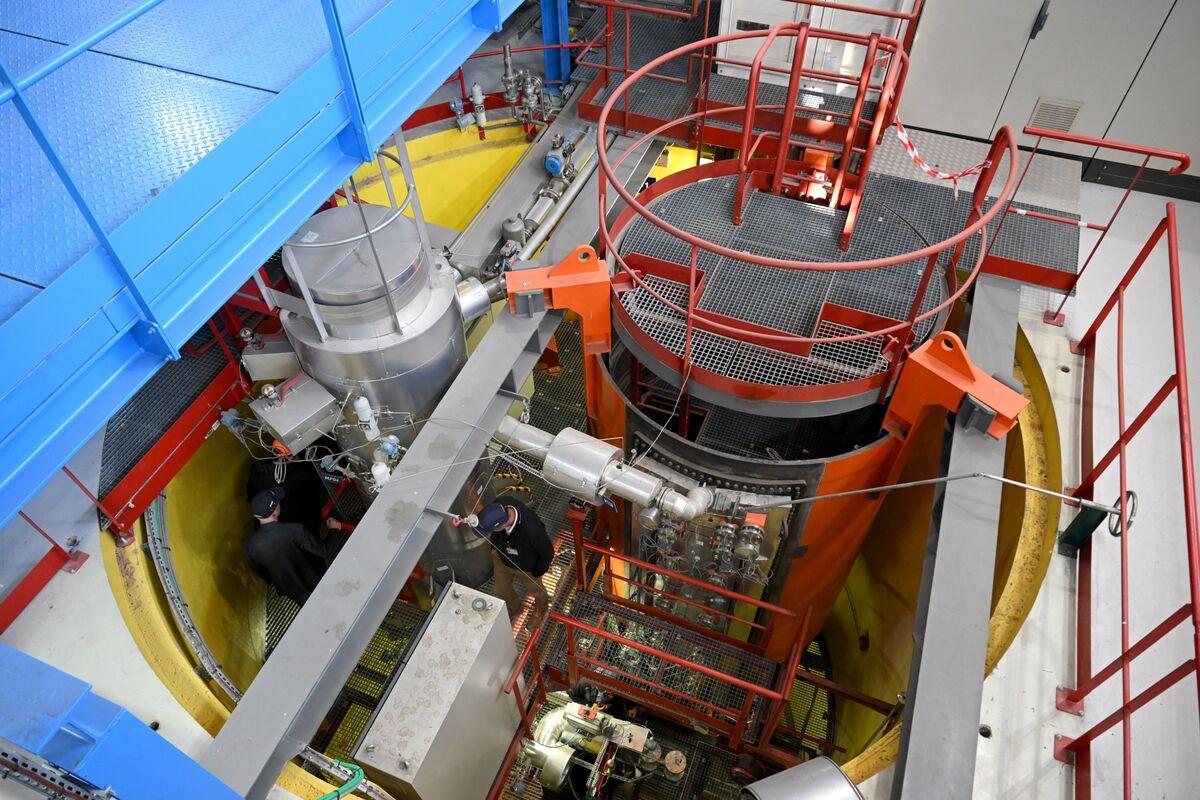
Antares Nuclear Inc.’s Mark-0 microreactor achieved zero-power criticality at Idaho National Laboratory’s Reactor and Critical Experiment facility under the Department of Energy’s Reactor Pilot Program, the company announced on June 4. The milestone came as the Mark-0 test reactor became the first advanced reactor to reach that specific threshold under the DOE pilot effort, and it marked the 53rd reactor built at the INL site since 1951, according to INL Laboratory Director John Wagner.
POWER Magazine described Mark-0 as a sodium heat-pipe-cooled microreactor fueled by high-assay low-enriched uranium (HALEU) tri-structural isotropic (TRISO) fuel compacts, and said the Reactor Pilot Program was established under President Trump’s May 2025 Executive Order 14301. Wagner explained in a LinkedIn post that criticality is “the condition at which a nuclear fission chain reaction becomes self-sustaining,” and he said Antares’ result was “specifically zero-power criticality—the chain reaction was sustained at essentially no measurable energy output.”

DOE timeline and what it proves
The DOE Reactor Pilot Program targets at least three advanced-reactor criticalities by July 4, 2026, and Ars Technica said the executive order directed the Department of Energy to have three different reactor designs reach criticality in a bit over a year. Ars Technica emphasized that reaching criticality “does not mean the reactor had started to generate power,” even as it said Antares’ test at Idaho National Laboratory made it the first new design to cross the threshold.
World Nuclear News said the demonstration took place at INL under DOE authorisation, and described the criticality test of the 53rd reactor built at INL since 1951 as a “tremendous accomplishment” validating safety and operational performance. World Nuclear News also said the Mark-0 demonstration reactor validated key reactor physics parameters for Antares’ sodium heat-pipe cooled microreactor technology using TRISO fuel containing HALEU, and it described the test as establishing a replicable licensing pathway that DOE and industry can use to accelerate future reactor demonstrations.
Next steps toward electricity
Antares’ Mark-0 is described as a platform for validating reactor physics, reactivity control behavior, and system-level safety performance in operation while producing no measurable thermal output, and POWER Magazine said this is “not electricity generation” and “not full-power operation.”
“This is not electricity generation. It is not full-power operation.”
POWER Magazine reported that Antares’ timeline calls for electricity production in 2027 and initial deployments of electricity-producing microreactors in 2028, with the company advancing toward defense and space customers in 2028.
World Nuclear News said the demonstration was conducted in partnership with DOE, INL, and BWX Technologies, Inc., and it said the US Army provided integration and observation support as a future end user of the technology.
In a separate statement, Antares CEO Jordan Bramble said, “We said criticality in 2026, electricity production in 2027, and power to the warfighter in 2028. Today is the first of those commitments delivered on the schedule we set.”