Europe25 November, 20253 min read
Antifa Ost 'Hammer Gang' Members Face Trial in Dresden Over Attacks on Neo-Nazis
This article is an automated aggregation of coverage from news outlets. Our editorials offer in-depth analysis curated by the NewsCord team.
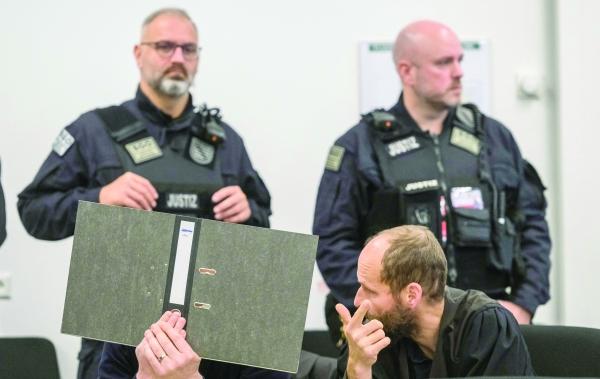
Seven alleged Antifa Ost members have gone on trial in Dresden They are accused of violent attacks targeting right-wing extremists that injured several people

7 outlets told this the same way.
Outlets did split on Azerbaijan Bars Hijab in Schools, Sparking Protests in Baku and Arrests →
Antifa Ost trial summary
Seven alleged members of a militant far-left network known as Antifa Ost - six men and one woman - have been put on trial at Dresden's Higher Regional Court on charges ranging from membership of a criminal organisation to violent assaults carried out between 2018 and 2023. The defendants and the case have been widely described in media reports as the so-called "Hammer Gang", accused of carrying out multiple hammer and bludgeoning attacks on people they identified as neo-Nazis and other right-wing activists. Prosecutors say some victims were seriously injured, and the proceedings have been portrayed as among Germany's most prominent prosecutions of left-wing militancy.
“A German court in Dresden has opened the trial of seven alleged members of Antifa Ost — a previously convicted lead defendant, Lina E, and six men — accused of carrying out a series of politically motivated bludgeoning attacks on neo‑Nazis and other right‑wing hardliners across eastern Germany between 2018 and 2023.”
Leipzig attack network allegations
Prosecutors and investigative reports allege a pattern of organised, premeditated operations by a Leipzig-based network. Brussels Signal summarises claims that the group carried out at least 14 raids that injured roughly 35 people and used weapons including hammers, small axes and batons. Reports say the network kept depots of weapons and disguises and maintained a list of about 215 intended targets.
Media coverage notes attackers reportedly trained together and disguised themselves as delivery workers or tradespeople to get close to targets. Coverage also cites specific attacks, such as hammer assaults on presumed right-wing extremists and incidents tied to a Thuringian restaurant frequented by right-wing activists.

Cross-border Hungary links
The case has a notable cross-border dimension. Several outlets report that two defendants, partly identified as Johann G. and Paul M. in some accounts, are accused of assaults in Budapest around the February 2023 'Day of Honour' rally; Hungarian prosecutors have described coordinated transnational activity and issued international warrants.
“Johann G and Paul M are accused of assaults in Budapest in February 2023 around the far-right 'Day of Honour,' where at least nine people were attacked over three days; Hungarian prosecutors describe coordinated, transnational activity and issued international warrants.”
Media coverage records that German activist Maja T. was extradited to Hungary and faces charges there, while an Italian activist detained after the same Budapest event, Ilaria Salis, was released after being elected to the European Parliament. These Hungary links have added to the trial's international profile and legal complexity.
Designation of Antifa Ost
Beyond courtroom facts, political reactions and legal classifications have become part of the story. Several outlets report that the United States has designated Antifa Ost and related European groups as foreign terrorist organisations. The Guardian describes that move as part of President Trump’s broader crackdown on 'antifa', noting the US designation bars entry to the US, freezes assets and criminalises material support.
The far-right Alternative for Germany (AfD) welcomed the US action and urged Berlin to follow suit. Germany’s foreign ministry 'took note' and the interior ministry told The Guardian it believed the group's threat had recently fallen as ringleaders and violent members have been convicted or were in custody.

Trial timelines and reactions
The trial timetable and public reaction vary across reports. Brussels Signal says hearings are planned through mid-2026 and could be extended. The European Conservative reports the proceedings are expected to run until July 2026.
“Hearings are planned through mid‑2026 and could be extended.”
Oman Observer (AFP) projects the Dresden trial may continue until at least April 2027. Coverage also records public demonstrations and split narratives outside court.
Supporters characterise defendants as anti-fascist defenders, while victims' advocates describe the attacks as vigilantism. The case has fuelled domestic political debate over how to classify and respond to militant anti-fascist activity.