Technology and Science15 June, 20263 min read
Apple Ends macOS 27 Support for Intel Macs on 6 Juin 2026
This article is an automated aggregation of coverage from news outlets. Our editorials offer in-depth analysis curated by the NewsCord team.
macOS 27 ends Intel Mac support; remaining Intel Macs get two more years of updates. Rosetta 2 ends for Intel apps with macOS 28 in 2027.
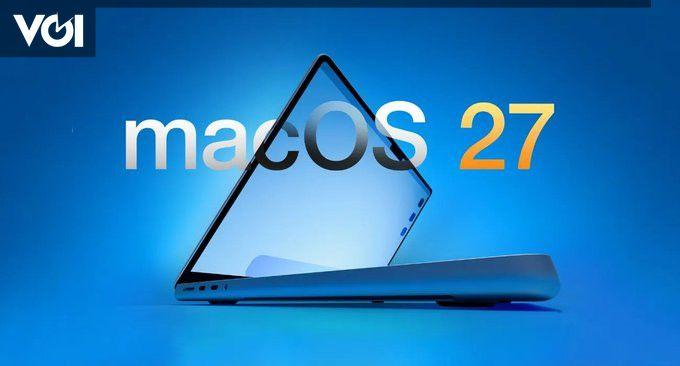
macOS 27 drops Intel
Apple will stop supporting all Macs based on Intel with macOS 27 on 6 juin 2026, and from macOS 27 only Macs equipped with Apple Silicon chips in the M series can run the operating system. VOI.id says the company will also publish a macOS 27 beta in juin alongside WWDC 2026, before a public launch in septembre, and it adds that Intel-based users will not receive major system updates after the previous version, macOS Tahoe. VOI.id lists Intel models that still receive support in macOS Tahoe but cannot be upgraded to macOS 27, including MacBook Pro 16 pouces (2019), iMac 27 pouces (2020), MacBook Pro 13 pouces (2020, quatre ports Thunderbolt 3), and Mac Pro (2019).
Mashable frames the same shift as an upgrade deadline, saying macOS 27 “will only be compatible with the newer M-series models,” and it lists Macs that work with macOS 27 as those with the M1 chip or later. Mashable also notes that members of the Apple Developer Program can try macOS 27 starting today, with a public beta following next month and an official launch “sometime later this fall.”
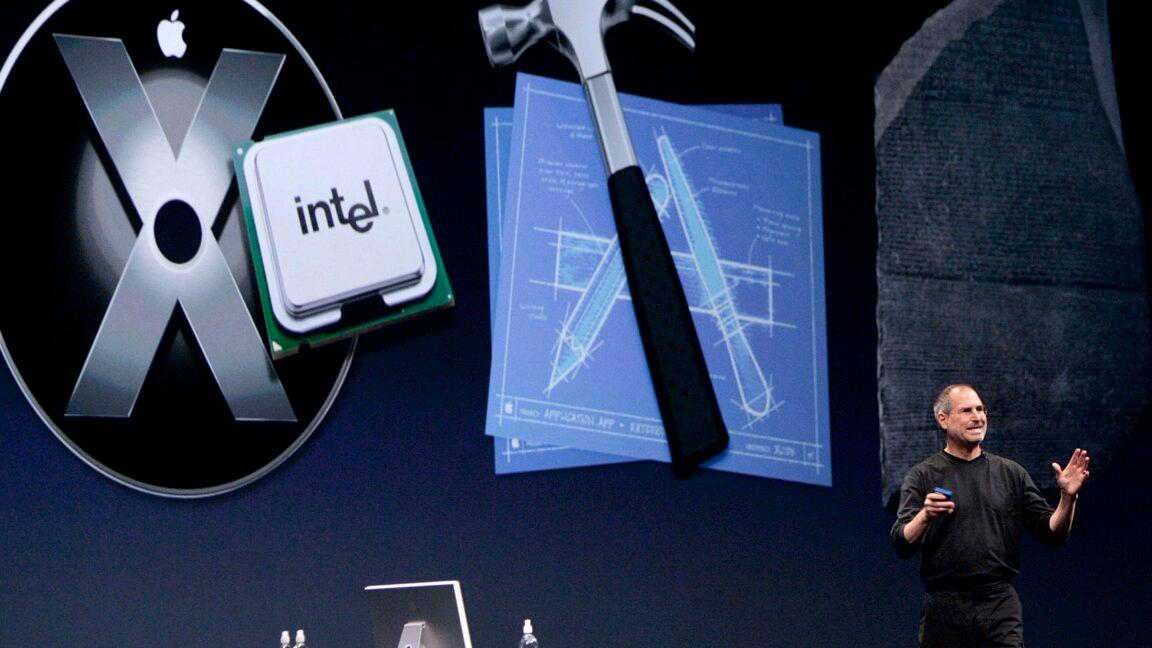
Rosetta 2 ends in 2027
Le Monde Informatique reports that Apple confirmed it will end support for Rosetta 2 for Intel applications starting with macOS 28 in 2027, meaning remaining Intel apps that businesses rely on must be replaced to maintain continuity and security. Le Monde Informatique adds that macOS 26 will be the last system update to support existing Intel Macs, and it says Apple began alerting customers to the end of support when they launch an Intel application. Ars Technica places the change in a longer arc, saying macOS 26 is “definitely the last chapter of the Intel Mac story,” even as it notes that security and Safari updates for the last eligible models will continue for two more years.
Ars Technica also says elements of the Rosetta compatibility layer for running Intel code on Apple Silicon Macs will remain “in some form for some indeterminate amount of time after that.” Le Monde Informatique describes Rosetta 2 as the transition layer between Intel and Apple Silicon (ARM) systems, and it says the software was useful when the first M-series Macs arrived because users could keep running most Intel apps while developers created updated versions.
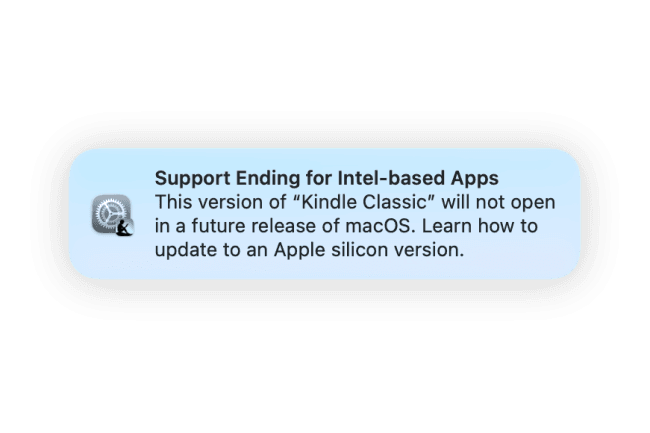
What users and IT must do
Le Monde Informatique says there is “encore 12 à 18 mois” to revise or replace Intel applications and to upgrade remaining Intel Macs, and it frames the window as a period for administrators and decision-makers to avoid future problems. It also provides a way to identify Intel apps on Intel Macs by opening “Informations système…”, selecting “Applications” under “Logiciels,” and scanning the “Type” column for applications marked as Intel. VOI.id says the affected Intel devices are effectively in a “sunset” phase where software support becomes increasingly limited, and it adds that users will need to consider upgrading hardware to keep receiving long-term security updates.
Mashable lists macOS 27 features tied to newer hardware, including support for the next-generation Siri AI assistant, updated Apple Intelligence features, and new child safety tools, and it says Liquid Glass design is getting more polished and more customizable. Ars Technica concludes that after macOS 26, anything that happens is a coda or epilogue, while Le Monde Informatique urges that the end of Intel support should be used as an argument to obtain budget to update “applications propriétaires” that remain problematic.