Full Analysis Summary
Campaign for Barghouti's release
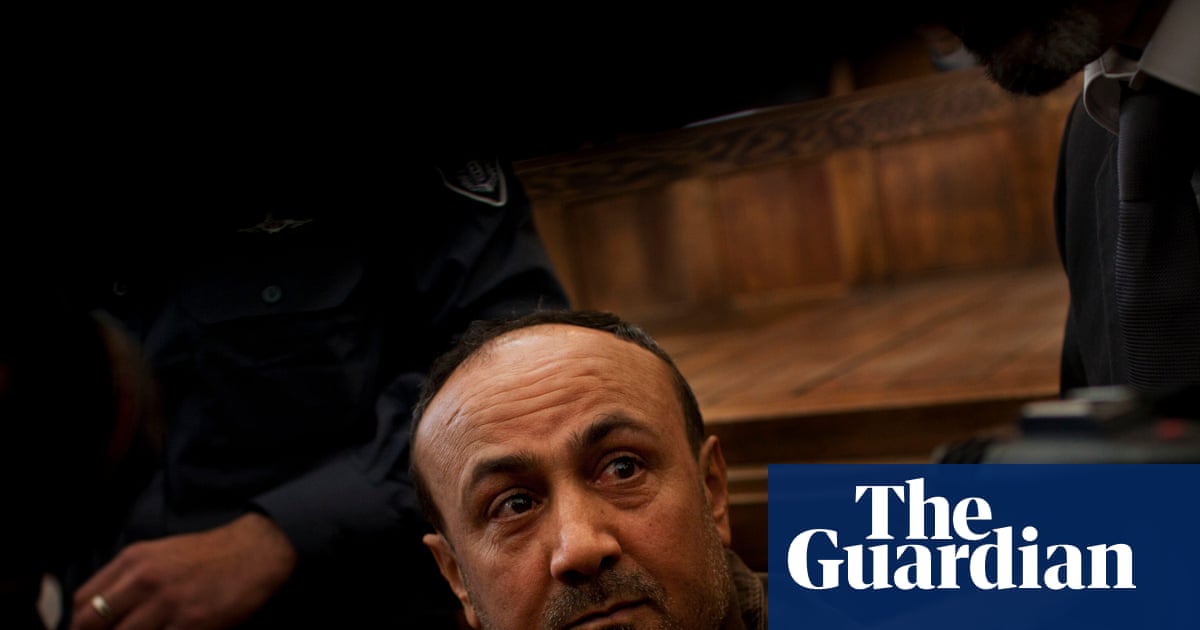
British cross-party MPs are campaigning for the release of Marwan Barghouti, a senior Fatah figure serving multiple life terms in Israel.
Arab Barghouti urged the UK government to prioritise securing Marwan Barghouti's freedom as part of Palestinian democratic renewal.
Arab Barghouti said the recent UK recognition of a Palestinian state is merely symbolic unless accompanied by diplomatic efforts to obtain Marwan Barghouti's release.
He argued Marwan Barghouti remains a unifying leader who could accelerate a negotiated two‑state solution.
The Foreign Office has declined to support calls for his release.
Sources are limited: only The Guardian snippet is available for these details.
Barghouti candidacy and release
Arab Barghouti told the UK government that Marwan Barghouti could still stand in the planned 1 November parliamentary elections even if imprisoned.
He said polls show Marwan remains the most popular potential successor to Mahmoud Abbas.
Arab framed his father as central to Palestinian political renewal and democratic legitimacy.
He urged the UK to move beyond symbolic recognition toward concrete diplomatic action to secure Barghouti’s release.
This summary is drawn solely from The Guardian excerpt provided.
Marwan Barghouti case summary
The Guardian notes Marwan Barghouti’s legal history: he was convicted in 2004 of involvement in five murders during the second intifada, though an Inter-Parliamentary Union inquiry found aspects of his trial did not meet fairness standards.
Arab also accused Israeli authorities of holding his father in solitary confinement and of assaults since 7 October, including broken ribs, and claimed Israel is refusing release because it does not want a legitimate Palestinian leader who could push a two-state deal.
The Foreign Office’s refusal to support calls for release is also recorded.
All information is from the single available source, The Guardian.
UK response to Barghouti
The Guardian presents British cross-party campaigning as motivated by the belief that Barghouti could be a unifying figure to advance a negotiated two-state solution.
Arab’s plea to the UK links diplomatic leverage with Palestinian democratic renewal.
The Guardian frames the Foreign Office response as a refusal to back the release.
This framing leaves open political questions about whether the UK will move from symbolic recognition to active diplomacy.
Because only The Guardian’s reporting is available, other narrative angles, international reactions, and Israeli government statements are not present in the provided material.
Guardian excerpt limitations
Available material is limited to the single Guardian excerpt, and significant gaps remain.
Notable absences include Israeli government statements responding to Arab’s allegations, direct quotes from UK ministers beyond the Foreign Office’s refusal, corroborating or alternative media perspectives, and independent medical or prison records to verify the assault claims.
If you would like a fuller multi-source article that compares tone and coverage across West Asian, Western mainstream, and Western alternative outlets, provide additional source texts or permit me to fetch them.
For now, this article sticks strictly to the Guardian’s reporting and notes that other perspectives are not present in the supplied sources.