Gaza Genocide01 November, 20253 min read
Arab-Islamic Foreign Ministers Meet in Istanbul to Demand Israel Withdraw Troops from Occupied Gaza
This article is an automated aggregation of coverage from news outlets. Our editorials offer in-depth analysis curated by the NewsCord team.
Arab-Islamic foreign ministers met in Istanbul to demand Israeli troop withdrawal from Gaza. Hamas accused Israel of genocide, ceasefire violations, and blocking humanitarian aid at Rafah crossing.
13 outlets told this the same way.
Outlets did split on Israel Marks Oct. 7 Anniversary With Strikes on Gaza, Netanyahu Faces Election After Nova Tribute →
Middle East Diplomatic Meeting
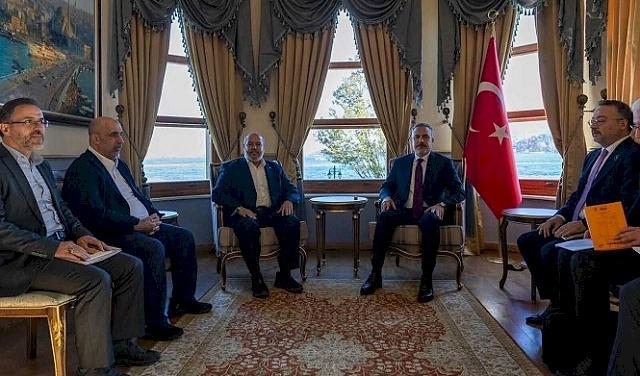
Arab and foreign ministers from predominantly Muslim countries convened in Istanbul, hosted by Türkiye, to urge Israel to withdraw its troops from occupied Gaza. They also called for the enforcement of the October 10 ceasefire and the unlocking of humanitarian aid and reconstruction efforts. The gathering included representatives from Pakistan, Türkiye, Saudi Arabia, Qatar, Egypt, the UAE, Indonesia, and Jordan.
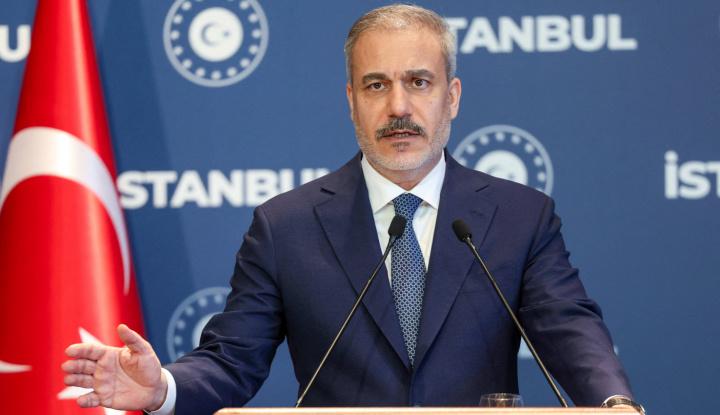
“Deputy Prime Minister and Foreign Minister Ishaq Dar arrived in Istanbul to attend a conference on the Gaza situation, hosted by Turkish Foreign Minister Hakan Fidan. The meeting includes foreign ministers from eight Muslim countries—Pakistan, Türkiye, Saudi Arabia, Qatar, Egypt, UAE, Indonesia, and Jordan.”
Turkey proposed mechanisms such as a Gaza Task Force and a Stabilisation Force to address the situation. Multiple sources describe plans for an international stabilization force to support Palestinian governance and oversee the withdrawal of Israeli troops.

Ceasefire Violations in Gaza
Ministers are using the Istanbul platform to condemn Israel for killing Palestinians during a supposed ceasefire. Kashmir English reports that Israel continues to violate the ceasefire agreement in Gaza, causing 236 Palestinian deaths and 600 injuries since the truce began. Middle East Monitor states that Israeli attacks have continued and caused significant Palestinian casualties.
Aaj English TV also reports ongoing Israeli violations resulting in substantial casualties. Firstpost adds that Erdoğan explicitly accused Israel of breaching the ceasefire and describes the Gaza conflict as genocide from Turkey’s perspective. Arab News PK quantifies the overall Palestinian death toll since October 2023 at more than 67,000.

Post-Israel Withdrawal Plans
The Istanbul meeting focuses on what will follow Israel’s withdrawal, including an international stabilization force, Palestinian-led policing, and reconstruction efforts. Al-Jazeera Net reports that Turkey will propose a temporary international stabilization force composed of Arab and Muslim countries to support a Palestinian police force and oversee the withdrawal of Israeli troops. Firstpost also highlights the proposed formation of an international stabilization force.
“Turkey plans to propose mechanisms aligned with a US-backed plan involving a temporary international stabilization force from Arab and Muslim countries to support a Palestinian police force and oversee Israeli troop withdrawal.”
The Express Tribune states that Pakistan is considering participation in the international stabilization force but emphasizes that any troop deployment should be decided collectively and preferably under a United Nations mandate. Aaj English TV adds that Turkey has announced plans to create a Gaza Task Force and a Stabilisation Force to support ceasefire enforcement and reconstruction.
Hostage and Remains Exchange Updates
Hostage and remains negotiations complicate the ministers’ push for withdrawal and justice. Middle East Monitor reports that since the October 10 ceasefire began, Hamas has released 20 Israeli captives and returned 19 bodies, though Israel questioned the identity of one. Algemeiner counters with slightly different totals — 20 living hostages and remains of 17 others, with 11 hostages still believed to be held — and adds that Israel determined the partial remains returned by Hamas do not belong to any of the hostages.
Thenationalnews adds a starkly different data point: Israel returned the bodies of 30 Palestinian detainees to Gaza after Hamas handed over two Israeli hostages. The outlet reports the returned bodies showed signs of torture and that the ceasefire terms stipulate Israel will release 15 Palestinian bodies for each deceased Israeli hostage.

Diplomatic Efforts and Regional Risks
Next steps from Istanbul focus on multilateral pressure and concrete enforcement while warning of wider regional fallout. Yeni Safak reports that the meeting aims to coordinate strategies within the UN and transform the ceasefire into lasting peace. Aaj English TV describes a joint strategy to enforce the ceasefire amid ongoing Israeli aggression.
“The meeting aims to unify Muslim countries’ efforts to turn the ceasefire into lasting peace, emphasize Palestinian governance in Gaza, and coordinate strategies within the UN to push for a comprehensive resolution and support the two-state solution.”
Kashmir English reports that Prime Minister Netanyahu said Israel would attack Gaza without notifying the United States. Thenationalnews highlights broader regional risks, noting the strategic importance of the Strait of Hormuz near Fujairah amid Iranian threats to block the passage.
It also includes unrelated items, reflecting the fragmented nature of media ecosystems. Algemeiner notes the parallel diplomatic involvement of Qatar, the UAE, Turkey, and Saudi Arabia in the Gaza situation.