Full Analysis Summary
Gaza Reconstruction and Ceasefire
Arab states are rejecting a U.S.-backed scheme to rebuild a “New Gaza” inside Israeli‑occupied zones.
They warn that the plan would cement partition and occupation after a U.S.-brokered ceasefire split the Strip along a “Yellow Line” with Israeli forces on one side.
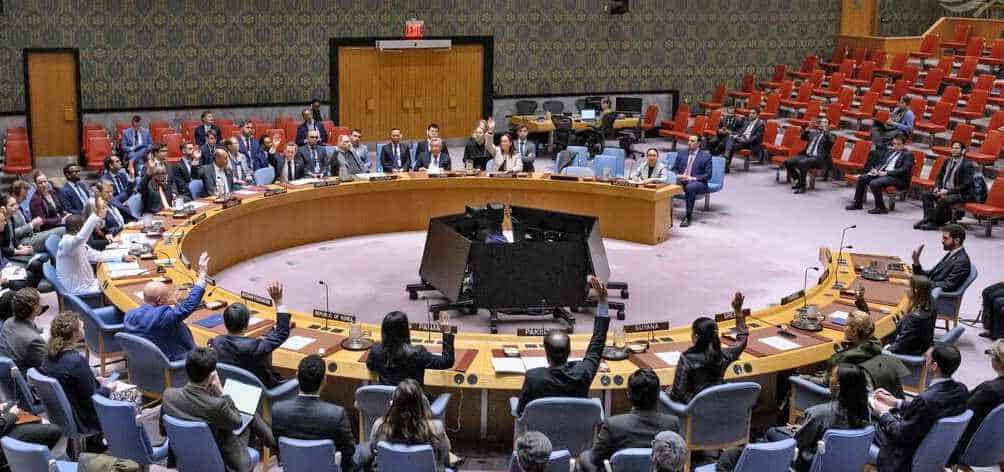
At the same time, Washington is driving a UN Security Council track.
Haaretz reports that the U.S. is pressing to formalize Donald Trump’s Gaza ceasefire into international law.
Le Monde frames the push as establishing an international stabilization force with an adoption target by the end of November and deployment supervision starting January 2026.
Together, these accounts show Washington trying to codify a post-ceasefire order even as Arab capitals say the plan sidelines Palestinian interests and entrenches Israeli control.
Coverage Differences
narrative
Mehr News Agency (West Asian) frames the U.S.-backed plan as entrenching Israeli occupation and partition via a ‘New Gaza’ inside Israeli-occupied areas, while Le Monde (Western Mainstream) emphasizes an institutional UN push to establish a stabilization force on a clear timeline. Haaretz (Israeli) focuses on the legal/diplomatic dimension of formalizing Trump’s cease-fire deal into international law.
missed information
Le Monde (Western Mainstream) adds specific timing for adoption and deployment supervision, which does not appear in Mehr (West Asian). Mehr uniquely introduces the ‘Yellow Line’ split after the ceasefire, absent from both Le Monde and Haaretz, which focus on UN process and legal formalization rather than the line of division.
Reconstruction and Aid in Gaza
More details reveal a reconstruction plan that prioritizes Israeli-occupied zones.
Because the destruction is vast, rebuilding is urgent.
However, Israeli and U.S. officials refuse to fund projects in areas controlled by Hamas.
Instead, figures like Jared Kushner propose investing in Israeli-held zones to promote an alternative to Hamas.
This approach echoes the idea of creating “Hamas-free bubbles.”
Arab, Muslim, and European states fear this strategy would entrench occupation and permanently divide Gaza.
Haaretz adds that the U.S. military has taken over humanitarian aid coordination from Israel through a new center in Kiryat Gat.
Washington is now making final decisions, and early operations have been described as chaotic.
Le Monde notes that formal UN negotiations on a U.S. draft began on November 6.
This marks a significant shift after earlier U.S. vetoes of texts condemning Israel’s actions.
Coverage Differences
unique/off-topic
Haaretz (Israeli) uniquely reports the U.S. takeover of aid coordination via a Kiryat Gat center—operational details not covered by Mehr (West Asian) or Le Monde (Western Mainstream), which focus on reconstruction politics and the UN framework.
tone
Mehr (West Asian) warns that ideas like Kushner’s “Hamas-free bubbles” would entrench Israeli occupation, Le Monde (Western Mainstream) uses institutional language about a UN framework and timelines, while Haaretz (Israeli) highlights disorganization and U.S. control in aid logistics.
Diplomatic Tensions Over Gaza Plan
Mehr reports that Arab diplomats are warning of a looming confrontation with the U.S.–Israel alliance if the plan moves forward.
Jordan’s foreign minister insists that Gaza is a unified Palestinian territory and demands a clear timeline for Israeli withdrawal.
Haaretz quotes U.S. Ambassador Mike Waltz warning diplomats that failure to adopt the UN plan could lead to renewed conflict between Israel and Hamas.
Le Monde places these pressures within the context of a fragile ceasefire brokered by Trump and the ongoing UN negotiations.
Coverage Differences
contradiction
Mehr (West Asian) says escalation comes if the plan proceeds, while Haaretz (Israeli) reports a U.S. warning that escalation comes if the plan fails at the UN; Le Monde (Western Mainstream) emphasizes the ceasefire context and UN process rather than assigning agency for escalation.
narrative
Mehr centers Arab sovereignty and territorial unity—highlighting Jordan’s demand for an Israeli withdrawal timeline—while Haaretz centers U.S. diplomatic pressure via Ambassador Waltz, and Le Monde centers a multilateral stabilization force path.
US Plan and Regional Reactions
Mehr concludes the proposal is still under consideration amid fears it will harden the Yellow Line split and undermine Palestinian sovereignty.
The U.S. moves to enshrine the plan in international law.
Le Monde stresses the push for a UN framework for a stabilization force and notes support from some Arab and Muslim countries, including possible Indonesian troop contributions.
This angle contrasts with Mehr’s emphasis on Arab rejection of the U.S.-backed partition through Israeli-controlled reconstruction.
Haaretz’s distinctive reporting reveals that the U.S. sidelined Israel in aid coordination, resulting in a chaotic rollout.
This underscores Washington’s effort to centralize control while pressing to formalize Trump’s deal at the UN.
Coverage Differences
contradiction
Le Monde (Western Mainstream) reports support from Arab and Muslim countries for a stabilization force, while Mehr (West Asian) reports Arab nations opposing a U.S.-backed ‘New Gaza’ reconstruction inside Israeli-occupied zones and fearing permanent division; Haaretz (Israeli) emphasizes U.S. legal formalization without taking a position on Arab support or opposition.
unique/off-topic
Haaretz’s operational angle—U.S. control over aid and a chaotic start—does not appear in Mehr or Le Monde, which focus on partition risks and UN frameworks respectively.