Full Analysis Summary
Threats to Syria's Christian Heritage
An archbishop warns that Syria’s Christian Church faces extinction amid political collapse.
Syria’s Christian communities are rapidly diminishing due to ongoing conflict and targeted violence.
Both Christian Post and its feed report an urgent appeal for international action to protect these communities and safeguard a 2,000‑year‑old Christian heritage.
Historic centers of faith like Antioch and the road to Damascus are under threat.
The message, conveyed through Ghazal’s call, frames survival as contingent on immediate, concrete protection and accountability mechanisms beyond rhetoric.
Coverage Differences
narrative
Christian Post (Other) and @ChristianPost (Other) both center an advocacy narrative that prioritizes emergency protection of Christians and heritage sites, presenting extinction as a near-term risk. Neither outlet contrasts this with broader regional political analysis or competing frames (e.g., humanitarian suffering across communities or state responsibility), maintaining a singular focus on Christian survival and heritage preservation.
tone
Both Christian Post (Other) and @ChristianPost (Other) adopt an alarmed, existential tone—using terms like “urgent need,” “targeted violence,” and warning that Syria is at risk of losing a “2,000‑year‑old Christian heritage.” This intensifies the immediacy of the call without moderating language or neutral balancing from other perspectives.
Protecting Religious Freedom
Ghazal emphasizes that survival depends on enforcing religious freedom and pluralism through diplomatic and legal means.
He urges governments and international bodies to move from statements to enforcement.
The appeal ties safety to concrete mechanisms that protect worship, equal citizenship, and access to historic sites like Antioch and the road to Damascus.
These places are central to Christian identity and are now described as under threat.
The framing links political collapse and insecurity directly to the erosion of a community with millennia‑deep roots.
Coverage Differences
missed information
While Christian Post (Other) and @ChristianPost (Other) detail the need for diplomatic and legal enforcement of religious freedom, they do not provide specifics on which international instruments, courts, or agreements would be invoked, nor do they outline which states or actors are expected to lead—leaving the operational pathway under-specified.
unique/off-topic
Both sources uniquely highlight heritage sites—Antioch and the road to Damascus—as symbols at risk, which foregrounds cultural and religious continuity rather than granular policy or security analysis. This heritage-centered emphasis stands out in the absence of broader situational data.
Attack Highlights Christian Risks
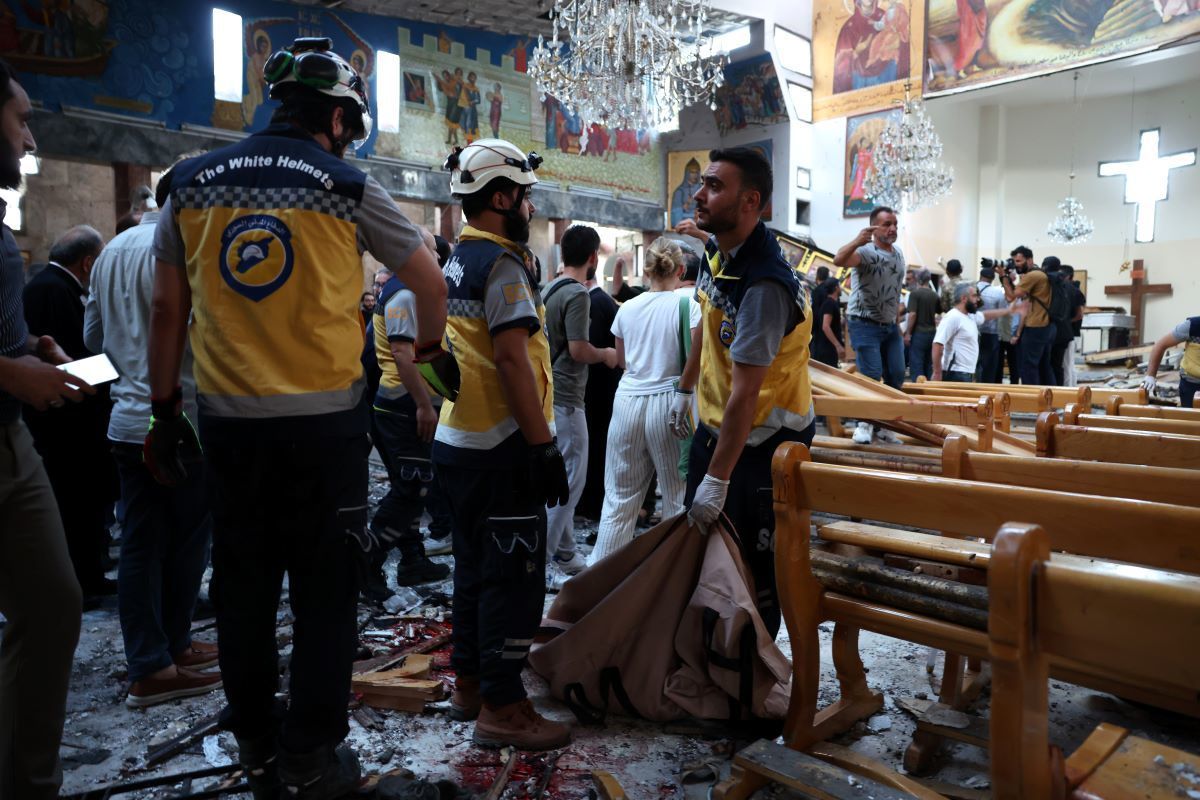
A suicide bombing at Mar Elias Church in Damascus killed over two dozen worshippers.
The attack was widely condemned by various outlets.
This incident is seen as a symbol of the severe dangers facing Christian communities.
The archbishop warned that these communities are shrinking due to ongoing conflict and targeted violence.
The event is cited as proof that religious life and cultural presence are becoming increasingly unsustainable without outside protection.
Coverage Differences
narrative
Both Christian Post (Other) and @ChristianPost (Other) use the Mar Elias Church bombing as a narrative pivot—linking a single catastrophic incident to a broader extinction risk for Syria’s Christians, thereby framing violence against worshippers as proof of systemic, targeted persecution.
missed information
Neither source attributes responsibility for the bombing or provides investigative detail (perpetrators, motives, or state response), focusing instead on the consequences for Christian communities and the symbolic weight of the attack.
Protecting Syria's Christian Heritage
Framed as a last warning, the archbishop’s message is that without decisive international enforcement of religious freedom and pluralism, Syria could lose living Christian communities and the heritage they embody.
The outlets connect this to political collapse and insecurity, arguing that only diplomacy backed by legal measures can stabilize conditions for worship, citizenship, and the safeguarding of historic sites.
The stakes are summarized starkly: inaction risks the extinction of a 2,000‑year‑old Christian presence in Syria.
Coverage Differences
tone
Christian Post (Other) and @ChristianPost (Other) sustain an urgent, existential tone—“urgent need,” “extinction,” and loss of “2,000‑year‑old Christian heritage”—without tempering language or countervailing assessments from other communities or institutions.
missed information
Both sources omit specifics on implementation—what diplomatic steps, legal instruments, or guarantor states would operationalize protection—leaving the call aspirational rather than programmatic.