Entertainment14 February, 20262 min read
Arundhati Roy Quits Berlinale After Jury Led by Wim Wenders Defends Israel’s Genocide, Tells Filmmakers to ‘Stay Out of Politics’
Indian author Arundhati Roy withdrew from the Berlin Film Festival over jury Gaza comments. Jury president Wim Wenders said filmmakers should 'stay out of politics' regarding Gaza questions.

18 outlets told this the same way.
Outlets did split on Chad Lowe and Kim Painter Mourn Daughter Fiona Hepler Lowe’s Death at 13 →
Roy withdraws from Berlinale
Arundhati Roy announced she would withdraw from the 2026 Berlin International Film Festival after public exchanges at the Berlinale's jury press event. The exchanges involved jury president Wim Wenders and other jurors arguing against overt political intervention by filmmakers. Roy, who had been due to present a restored 1989 film In Which Annie Gives It Those Ones, described Wenders's comments as 'unconscionable' and said they silence discussion of what she called a 'genocide' in Gaza.
“Wenders had said filmmakers ‘have to stay out of politics’ and that art should be a ‘counterweight to politics.’ Roy called his comments ‘unconscionable,’ saying they amount to shutting down necessary debate about what she termed genocide in Gaza.”
She said she was 'shocked and disgusted'. The dispute crystallised around Wenders's line that while 'movies can change the world' they should 'stay out of politics' and act as a counterweight to political action, with similar formulations reported by several outlets.

Festival jury remarks
Festival jurors’ public remarks fuelled the specific clash. Wim Wenders is reported as saying filmmakers must "stay out of politics," that cinema can "change the world" but should not enter politics directly, and that filmmakers are a "counterweight to politics."
At the same panel, juror Ewa Puszczyńska pushed back on expectations that the jury should take a political stance, calling it "a little bit unfair" to expect the jury to comment on government policy; some jurors emphasised the complexity and remit limits of their role. These comments were presented in press-conference reporting across multiple outlets, prompting Roy’s decision.
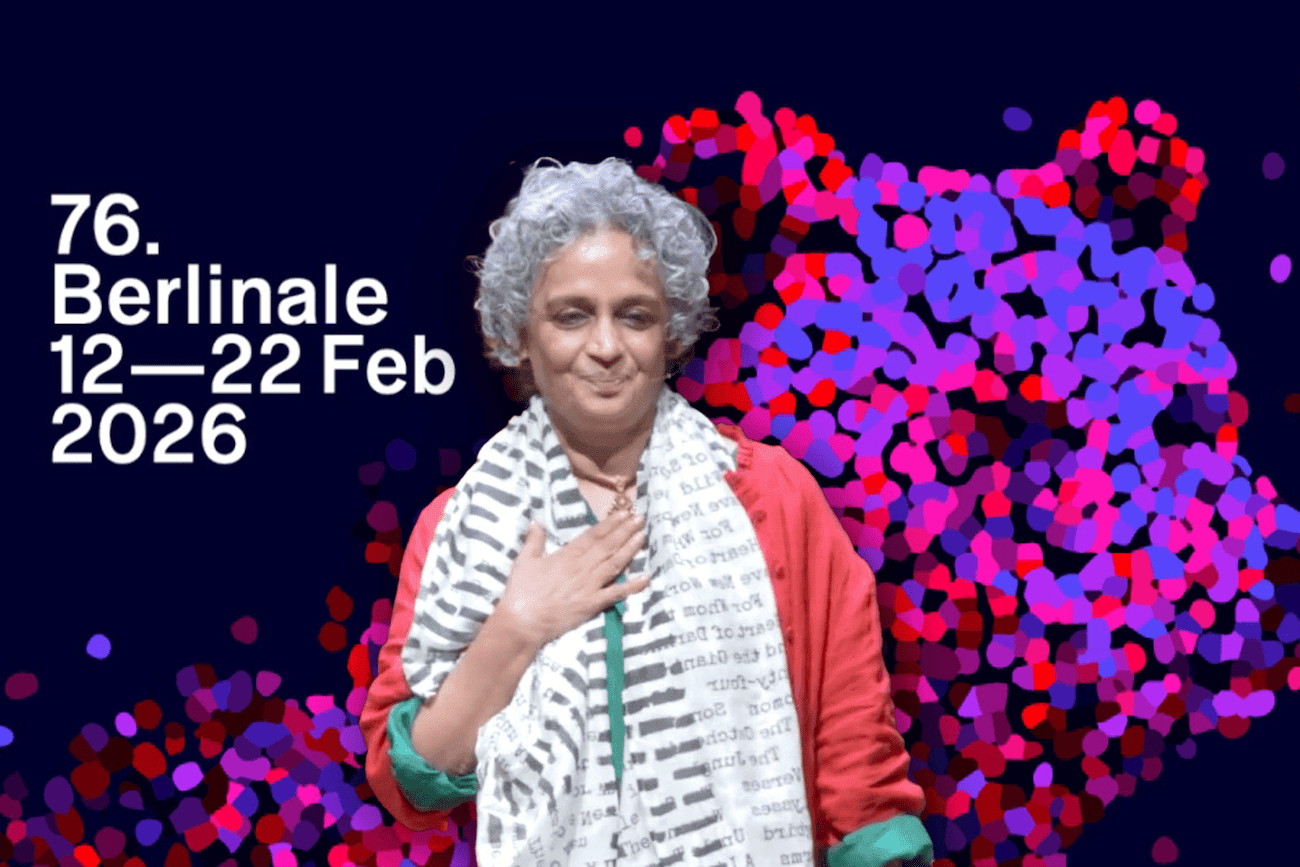
Roy's statements on Gaza
Roy used her withdrawal to make expansive political claims about the Gaza war. She called Israel’s actions "a genocide" and accused the United States, Germany and some European governments of complicity by supporting or funding Israel.
She warned that leading artists who remain silent "will be judged by history" and argued artists should oppose the war. Those formulations appear consistently across West Asian, Asian and other outlets that quote Roy’s statement and her piece in The Wire.
Festival political tensions
The controversy sparked further festival fallout, including the withdrawal of restored films by two late Egyptian directors. The Berlinale said it regretted those decisions while respecting them. Reporting across sources says the episode reflects wider tensions in European cultural spaces about whether cultural platforms should take political positions.
Some outlets also noted that a number of high-profile guests have shown reluctance to take public political stances this year. Observers and commentators quoted in several reports say the debate exposes persistent friction between artistic programming and geopolitics at major festivals.

Differences in media coverage
Coverage differs by outlet type. Western mainstream sources like The Guardian report the jury exchange and Roy's condemnation while noting the jury's international composition. West Asian outlets such as Al Jazeera and TRT World foreground Roy's political denunciation and the Gaza allegation.
“Roy... called that stance ‘jaw‑dropping’ and a way to shut down debate about what she described as Israel’s ‘genocide’ in Gaza.”
Regional Asian outlets (Mathrubhumi, Mint, Hindustan Times) highlight Roy's Booker status, Shah Rukh Khan connection to the restored film and the warning that "history will judge". Alternative and other outlets (Countercurrents, Tribune India, American Kahani) stress the idea that insisting art be apolitical "shuts down urgent discussion". These differences reflect editorial emphasis and audience, not contradictions in the quoted statements themselves.
