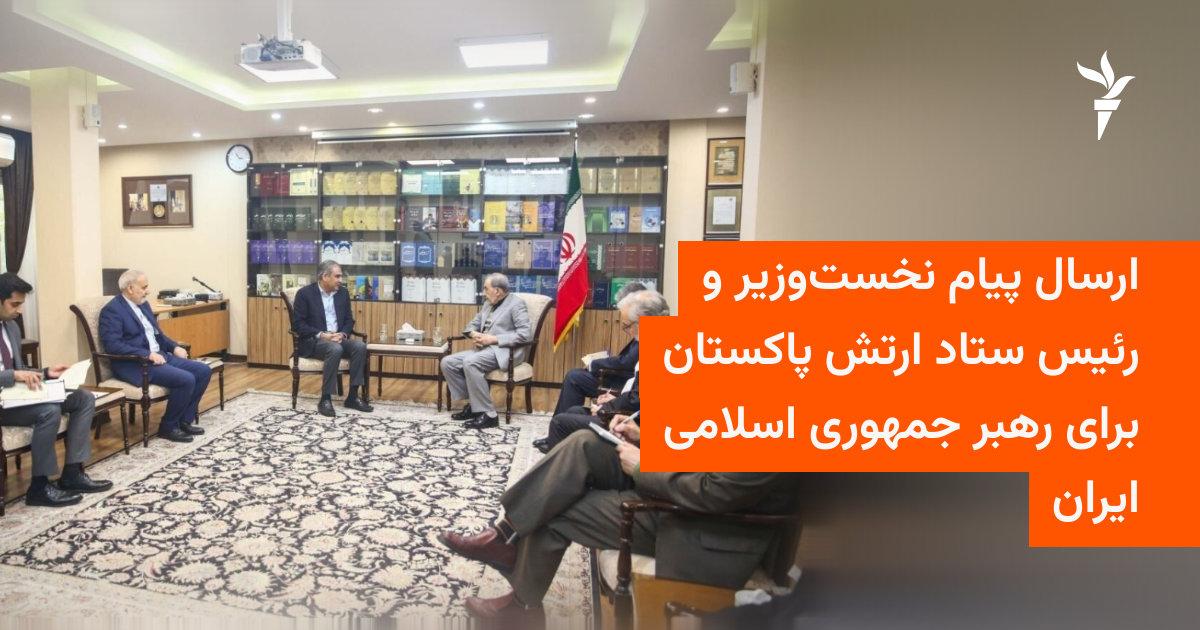
Asim Munir Meets Abbas Araghchi in Tehran After US-Iran Talks Fail in Islamabad
Key Takeaways
- Pakistan's army chief Asim Munir traveled to Tehran to push renewed US-Iran talks.
- He met Iranian leaders, including Abbas Araghchi and Parliament Speaker Ghalibaf, during a three-day visit.
- Dar-Araghchi phone call stressed continued dialogue as a U.S. delegation heads to Islamabad.
Pakistan’s Army Chief in Tehran
Field Marshal Asim Munir stepped off a plane on Wednesday evening and walked “straight into the warm embrace of Iran’s foreign minister and chief negotiator, Abbas Araghchi,” as he arrived in Tehran dressed in “full army fatigues.”
The Guardian describes Munir as “the powerful chief of Pakistan’s military” who became a “beacon for peace” in efforts to revive Pakistan’s mediation to end the war between the US and Iran.

It says Munir rushed to Tehran as a “last-ditch attempt” after the US vice-president, JD Vance, left Islamabad “after more than 21 hours of talks between the US and Iran failed to broker a deal.”
The same Guardian account says US President Donald Trump “quickly lashed out, imposing a naval blockade on the strait of Hormuz,” while also praising Munir’s “fantastic” efforts to continue negotiations.
On Wednesday night, the Guardian reports Munir arrived in Tehran with “a new proposal from Washington of a framework for a fresh round of talks in Islamabad next week.”
The Guardian adds that Pakistan’s army chief was “one of the few able to get the US and Iranian leadership on the phone,” passing messages as a “trusted intermediary to both sides.”
It also states that “it is widely acknowledged that the negotiations have been coordinated from Rawalpindi,” the seat of the army, rather than Islamabad, the seat of the parliament.
Talks Timeline and Ceasefire
The diplomatic push described by multiple outlets is anchored in a sequence of meetings and a ceasefire that Pakistan helped secure.
The Saudi Gazette says Pakistan urged dialogue with Iran as a US delegation prepared to arrive in Islamabad, reporting that Pakistani Foreign Minister Ishaq Dar told Iranian counterpart Abbas Araghchi that “continued dialogue is essential” as issues are resolved “as soon as possible” to promote “peace and stability in the region and beyond.”
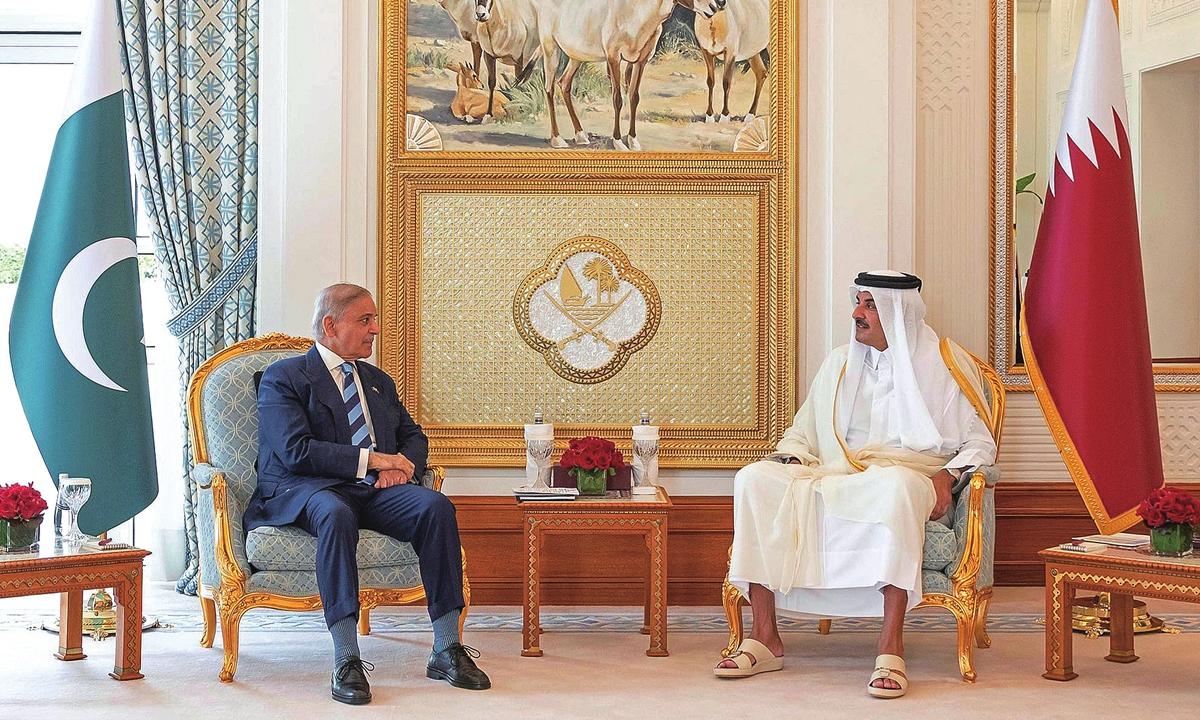
It adds that the two ministers agreed to remain in contact and that “a phone call between the Iranian president and the Pakistani prime minister is likely later Sunday.”
The Saudi Gazette also reports that “Pakistan hosted high-level engagement between the United States and Iran on April 11 and 12,” the first since diplomatic ties were severed in 1979, and that those talks ended without a final agreement.
It states that the negotiations, called the Islamabad Talks, were held after Pakistan mediated following the outbreak of war on “Feb. 28” and secured “a 14-day ceasefire on April 8.”
Anadolu Ajansı similarly frames the phone call between Dar and Araghchi as taking place as “a US delegation is set to arrive in Islamabad,” and it says the Islamabad Talks were held after Pakistan mediated since the war began on “Feb. 28” and secured “a 14-day ceasefire that took effect on April 8.”
Türkiye Today repeats the same core timeline, saying the negotiations were held after Pakistan mediated “following the outbreak of war on Feb. 28” and secured a ceasefire “that took effect on April 8.”
Voices: Dar, Trump, and Intermediaries
The reporting also captures direct statements from Pakistan’s top diplomat and from US President Donald Trump, alongside the Guardian’s portrayal of how Munir’s influence is used in the background.
“Iranian president to have phone call with Pakistani prime minister on Sunday -- report [](https://subscribe”
The Saudi Gazette quotes Pakistani Foreign Minister Ishaq Dar telling Abbas Araghchi that “continued dialogue is essential” and that “continued dialogue and engagement” are needed “as essential to resolving the current issues as soon as possible for promoting the peace and stability in the region and beyond,” language Anadolu Ajansı attributes to a statement from Dar’s office.
Anadolu Ajansı adds that Dar and Araghchi “agreed to remain in contact,” and it reports that Trump said “US representatives are set to reach Islamabad tomorrow evening for negotiations with Iran,” with Special Envoy Steve Witkoff and Jared Kushner attending.
Türkiye Today likewise says Dar emphasized “the need for continued dialogue and engagement as essential to resolving the current issues as soon as possible for promoting the peace and stability in the region and beyond,” and it repeats that Trump told the New York Post that “Special Envoy Steve Witkoff and Jared Kushner will take part in the talks.”
In parallel, Al Jazeera نت quotes Trump telling NBC News that he is “very optimistic” about reaching a peace agreement with Iran and that “Iranian leaders speak completely differently in meetings than they do to the press; they are much more rational.”
The same Al Jazeera نت report includes Trump’s warning that “if they (the Iranians) do not reach an agreement, it will be extremely painful,” and it adds Trump’s claim that “the Iranians have been crushed and no longer have an army.”
The Guardian provides a different set of voices by quoting Maleeha Lodhi, saying, “Field Marshal Munir is the driving force – without him this would not work,” and adding, “The foreign ministry is just a junior partner.”
Different Frames of the Same Push
While the core diplomatic mechanics—Pakistan’s mediation, US-Iran talks in Islamabad, and phone calls between Pakistani and Iranian officials—appear across outlets, the framing differs in emphasis and tone.
The Guardian foregrounds the personal role of Asim Munir, describing him as “the driving force” and portraying his arrival in Tehran as a “last-ditch attempt” to revive Pakistan’s mediation after US-Iran talks failed.

It also links the diplomatic effort to Trump’s actions, saying Trump “quickly lashed out” with a “naval blockade on the strait of Hormuz” while praising Munir’s “fantastic” efforts.
By contrast, the Saudi Gazette and Anadolu Ajansı focus on the formal diplomatic steps, centering Ishaq Dar’s phone call with Abbas Araghchi and the expectation of a phone call “between the Iranian president and the Pakistani prime minister.”
They also emphasize the logistics of the next round, reporting that at least two US aircraft carrying “advance delegates” landed in Islamabad on Sunday and that US representatives were set to arrive “Monday evening.”
Türkiye Today largely repeats the same diplomatic language and schedule, but it presents the US role as a set of named participants, saying Trump told the New York Post that “Special Envoy Steve Witkoff and Jared Kushner will take part in the talks.”
Al Jazeera نت, however, shifts the spotlight to Trump’s public messaging, quoting him as “very optimistic” while warning of “great pain” and asserting that “the Iranians have been crushed and no longer have an army.”
What Comes Next and the Stakes
The next phase of diplomacy, as described in the sources, is set around US representatives arriving in Islamabad and continued dialogue between Pakistani and Iranian leadership, with public threats and warnings adding pressure.
The Saudi Gazette says Dar told Abbas Araghchi that continued dialogue is essential as a US delegation prepares to arrive in Islamabad, and it reports that Trump said American representatives would arrive in Islamabad on Monday evening for negotiations with Iran.

It also says Trump told the New York Post that Special Envoy Steve Witkoff and Jared Kushner would attend the talks, and it notes that Pakistan hosted the April 11-12 engagement that ended without a final agreement.
Anadolu Ajansı similarly reports that “at least two US planes carrying ‘advanced delegates’ landed in Islamabad on Sunday,” ahead of a second round of high-stakes talks with the Iranian side, and it repeats that Trump said US representatives are set to reach Islamabad “tomorrow evening.”
Türkiye Today echoes that US representatives are set to arrive “on Monday evening,” and it reiterates that the Islamabad Talks were held after Pakistan mediated since the war began on “Feb. 28” and secured a ceasefire “that took effect on April 8.”
Al Jazeera نت frames the stakes through Trump’s warnings, quoting him that “if they (the Iranians) do not reach an agreement, it will be extremely painful,” and it also says the remarks came as tensions persist despite a fragile cease-fire with Israeli forces continuing to launch attacks across areas in southern Lebanon.
The Guardian adds a further layer by describing how Trump praised Munir’s efforts while imposing a “naval blockade on the strait of Hormuz,” and it says Munir’s phone calls led to “a last-minute ceasefire agreement” after Trump’s threat that Iran’s civilisation would “die” if they did not agree to a deal.
More on Iran

Donald Trump Threatens Iran Infrastructure Strike Over Strait Of Hormuz Ceasefire Violations
23 sources compared

Trump Threatens Strikes as Iran Fires on Ships in Strait of Hormuz
11 sources compared
Donald Trump Sends U.S. Delegation to Pakistan for Iran Talks, Threatens Power Plants and Bridges
47 sources compared

Iran Rejects Trump Claims It Will Transfer Enriched Uranium to the United States
21 sources compared