
Iran Rejects Trump Claims It Will Transfer Enriched Uranium to the United States
Key Takeaways
- Iran denied Trump's claim it would transfer enriched uranium to the United States.
- Transfer not discussed in negotiations; enriched uranium will not be moved.
- Iran reiterates core positions amid ongoing talks and differences.
Uranium dispute derails talks
Iran rejected President Donald Trump’s claims that Tehran agreed to transfer enriched uranium to the United States, with Iranian officials saying the idea is not on the table and that Iran is not ready for a new round of face-to-face talks.
“Tehran, Iran – United States President Donald Trump’s announcements about securing major concessions from Tehran have riled supporters of the Iranian establishment, prompting rejections and clarifications from the authorities”
Mehr News Agency reported that Iranian Deputy Foreign Minister Saeed Khatibzadeh said in an interview on the margins of a diplomacy forum in Turkey that “no enriched material is going to be shipped to the United States,” adding, “This is non-starter and I can assure you that while we are ready to address any concerns that we do have, we’re not going to accept things that are nonstarters.”
Khatibzadeh also said Iran was seeking the finalization of a “framework agreement” before moving to an in-person meeting, and he pointed to Washington’s refusal to abandon “maximalist” demands.
Al Jazeera described Trump’s Friday announcements as triggering “questions, rejections in Tehran,” including Trump’s claim that Iran and the U.S. would jointly dig up enriched uranium buried under rubble of bombed Iranian nuclear sites and transfer it to the U.S.
The Daily Beast reported that Iran’s foreign ministry spokesperson Esmaeil Baghaei told Iranian state broadcaster IRIB, “Iran’s enriched uranium is not going anywhere; transferring uranium to the United States has not been an option,” and added, “Iran’s enriched uranium is sacred to us like the soil of Iran.”
The Jerusalem Post likewise quoted Ghalibaf accusing Trump of false claims and quoted Baghaei saying, “Iran's enriched uranium is not going to be transferred anywhere; transferring uranium to the United States has not been an option for us,” while also noting Trump’s Reuters claim that Iran’s “nuclear dust” would be retrieved “very soon.”
Ceasefire, Hormuz, and internal anger
The uranium dispute unfolded alongside a wider confrontation over the Strait of Hormuz and the status of ceasefires, with Iranian officials and hardliners reacting to Trump’s claims about concessions.
Al Jazeera said the announcements came “with days left on a two-week ceasefire reached on April 8,” and it described a rapid sequence of Iranian rejections and clarifications after Trump’s Friday statements.

It reported that Tehran’s Parliament Speaker Mohammad Bagher Ghalibaf rejected Trump’s claims, writing on X, “With these lies, they did not win the war, and they certainly will not get anywhere in negotiations either.”
Al Jazeera also said that by Saturday noon, the Khatam al-Anbiya Central Headquarters of the Islamic Revolutionary Guard Corps (IRGC) released a statement saying the Strait of Hormuz was once again heavily restricted and under “strict management” of the armed forces, citing continued “acts of piracy and maritime theft under the so-called label of a blockade” by Washington.
DW reported that Iran announced reimposition of “strict control” over the Strait of Hormuz, quoting the IRGC Navy warning that “the vessel in violation will be targeted,” and stating, “the American enemy has not lifted the naval blockade. Accordingly, the Strait of Hormuz has been closed since midday today.”
The Times reported that Republican Senator Lindsey Graham said the U.S. “holds the cards” and that “promises coming from the Iranian regime are worthless,” and it quoted Graham advising Trump “to continue the [US] blockade, which has been brilliantly executed and applies maximum pressure.”
What Trump said vs what Iran says
Multiple outlets described a direct contradiction between Trump’s claims of agreement and Iran’s denials about uranium, with Iranian officials repeatedly using language that the transfer is “not going anywhere” or “not an option.”
CBS News reported that Trump said in a phone interview that Iran “agreed to everything,” insisting that the enriched uranium removal would not involve “No troops,” and quoting him: “No. No troops,” and “We’ll go down and get it with them, and then we’ll take it.”
CBS News also said that when asked who would retrieve it, he would only say “our people,” and it quoted Trump: “Our people, together with the Iranians, are going to work together to go get it. And then we’ll take it to the United States.”
Within hours, CBS News said a spokesperson for Iran’s foreign ministry released a statement translating to, “Enriched uranium is as sacred to us as Iranian soil and will not be transferred anywhere under any circumstances,” and that it added, “transferring uranium to the United States has not been an option.”
The Daily Beast similarly reported Iran’s foreign ministry spokesperson Esmaeil Baghaei saying, “Iran’s enriched uranium is not going anywhere; transferring uranium to the United States has not been an option,” and it quoted Baghaei adding, “Iran’s enriched uranium is sacred to us like the soil of Iran.”
Ilke Haber Ajansı and Mena FN both described Baghaei rejecting the transfer as not discussed in negotiations, with Ilke Haber Ajansı quoting, “The issue of transferring uranium was not discussed at all, and was not presented by Iran as an option at any stage of the dialogue.”
Cash-for-uranium talks and mediation
While Iran rejected Trump’s public claims about uranium transfer, other reporting described ongoing U.S.-Iran negotiations that include discussion of frozen funds and uranium-related terms, mediated by Pakistan.
Axios reported that the U.S. and Iran are negotiating over a “three-page plan to end the war,” and that one element under discussion is that the U.S. would release “$20 billion in frozen Iranian funds” in return for Iran giving up its stockpile of enriched uranium, according to “two U.S. officials and two additional sources briefed on the talks.”

Axios said President Trump stated that U.S. and Iranian negotiators would likely meet “this weekend for a second round of talks,” and it reported that the talks are expected to take place in Islamabad, “likely on Sunday,” with Pakistan mediating and “behind-the-scenes support from Egypt and Turkey.”
Axios also said the administration’s priority is ensuring Iran can’t access a stockpile of “nearly 2,000kg of enriched uranium,” including “450kg enriched to 60% purity,” and it described a proposed approach under which some highly enriched uranium would be shipped to a third country and some down-blended in Iran under international monitoring.
CNN reported that the Trump administration is considering unfreezing “$20 billion in Iranian assets” as part of ongoing negotiations, and it said officials hoped a broader deal could be finalized “as early as this weekend,” while noting that “some areas of disagreement remain.”
CNN also said lead Pakistani mediators, including “Asim Munir, the country’s field marshal,” entered their third day of talks with Iranian officials in Tehran on Friday, and it reported that Iran announced Friday morning it would fully reopen the Strait of Hormuz.
Stakes: sanctions, Hormuz control, and next steps
The dispute over uranium and the Strait of Hormuz is tied in the reporting to sanctions relief, war-damage compensation, and the mechanics of any ceasefire extension, with both sides signaling that negotiations hinge on specific conditions.
“Skip to main content Apr 17, 2026 - World Scoop: U”
Mehr News Agency quoted Khatibzadeh calling on Washington to address Iran’s concerns, including “illegal unilateral sanctions” and “this economic terrorism which has targeted Iranian people to suffocate them and make them revolt against the political structure inside Iran,” and it said he rejected the idea of shipping enriched uranium to the United States.

Al Jazeera reported that Trump emphasized Iran would not receive billions of dollars of frozen assets due to U.S. sanctions, and it described Iranian responses that included IRGC statements about “strict management” of the Strait and accusations of “acts of piracy and maritime theft” by Washington.
The Jerusalem Post, citing Reuters, said a senior Iranian official told Reuters that “no agreement has been reached on the details of the nuclear issues,” and that “serious negotiations are required to overcome differences,” while also saying Tehran hoped a preliminary agreement could be reached in the coming days with mediator Pakistan’s efforts and the possibility of extending the ceasefire to “create space for more talks on lifting sanctions on Iran and securing compensation for war damages.”
DW reported that the IRGC warned ships that “any attempt to approach the Strait of Hormuz will be deemed cooperation with the enemy, and the vessel will be targeted,” and it described U.S. President Donald Trump warning Iran against “extortion,” saying, “We are talking to them... and they cannot extort us,” while predicting he would receive “some information” later on Saturday.
The Times quoted Mohammad Bagher Ghalibaf saying Tehran is prepared to respond with “full force” if the U.S. “makes the slightest mistake,” and it also quoted him saying there were still “major differences” between Washington and Tehran.
More on Iran
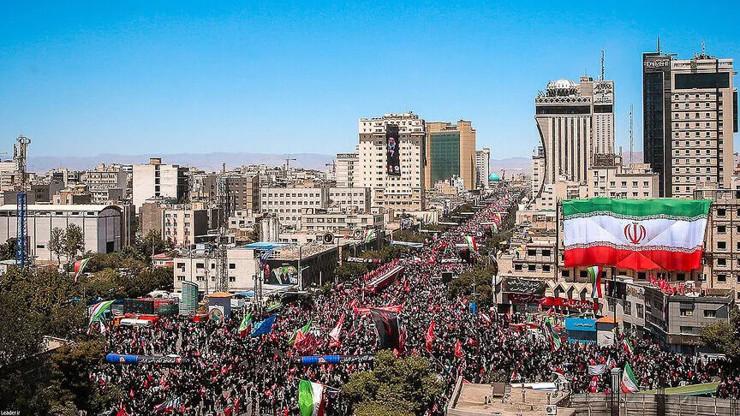
Israeli Strike Kills Ayatollah Ali Khamenei, Buried at Imam Reza Shrine in Mashhad
19 sources compared
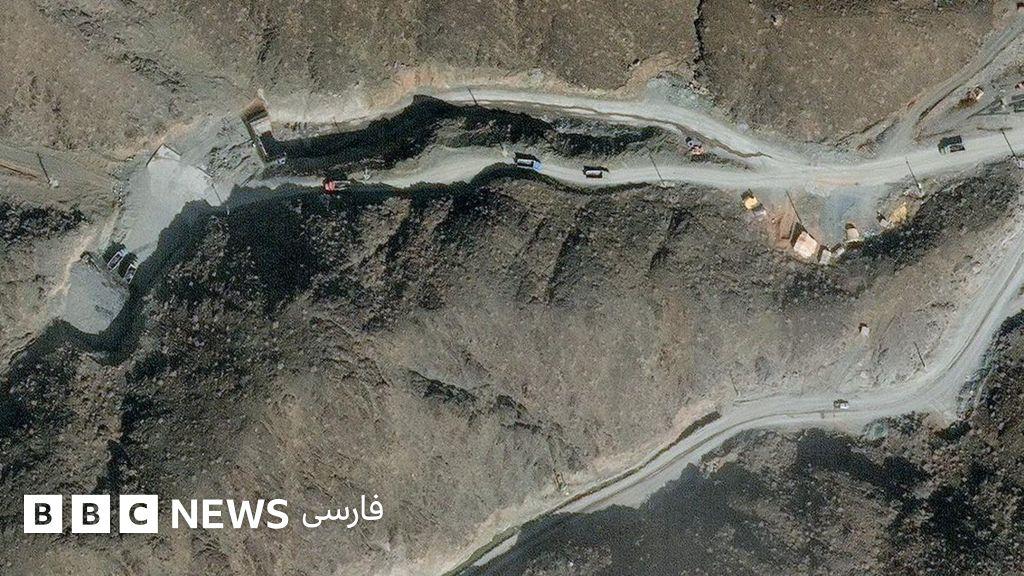
Iran Attempts To Restore Nuclear Sites Damaged In US And Israel Strikes, CNN Satellite Images Show
15 sources compared
Abbas Araghchi and Prince Faisal Bin Farhan Discuss Regional Developments After US Attacks
11 sources compared

Trump Says U.S. Agreed to Continue Iran Talks, Ceasefire Is Over
19 sources compared