
Donald Trump Threatens Iran Infrastructure Strike Over Strait Of Hormuz Ceasefire Violations
Key Takeaways
- Trump threatened to strike Iran's energy infrastructure if a deal isn't reached.
- U.S. negotiators head to Pakistan for another round of talks with Iran.
- Iran violated the Strait of Hormuz ceasefire, Trump says.
Trump’s new infrastructure threat
President Donald Trump issued Iran a new warning that the United States would target Iranian infrastructure if Tehran does not accept a deal, as the war over the Strait of Hormuz continues into its eighth week.
“Facebook Video Home Live Reels Explore More Home Live Reels Explore 0:01 / 1:44 Trump warns of direct action against Iranian infrastructure if deal rejected Like Comment Share '/%3E%3Cpath%20d='M16”
In a post on Truth Social, Trump said, “We’re offering a very fair and reasonable DEAL, and I hope they take it because, if they don’t, the United States is going to knock out every single Power Plant, and every single Bridge, in Iran. NO MORE MR. NICE GUY!”

Trump also framed the threat as tied to ceasefire compliance, posting, “Iran decided to fire bullets yesterday in the Strait of Hormuz — A Total Violation of our Ceasefire Agreement!”
U.S. Ambassador to the United Nations Mike Waltz defended the threat to ABC News, telling Jonathan Karl that “all options are on the table.”
Waltz argued that infrastructure used for dual military and civilian purposes is a lawful target, saying, “We could take that infrastructure out relatively easily. The Iranian air defenses have been absolutely decimated.”
In the same interview, Waltz compared the approach to World War II, saying, “That would be an escalatory ladder. And if you go back in the history of warfare, go all the way back to World War II, of course, we bombed and took down bridges, other infrastructure, power plants that, yes, could be used for civilian, but also are used to manufacture drones and missiles.”
Talks in Islamabad amid Hormuz closure
As Trump’s threats were issued, the diplomatic track shifted toward another round of talks in Pakistan, with multiple outlets describing a return to Islamabad for negotiations aimed at ending the U.S.-Israeli war in Iran.
The Guardian said Trump’s representatives would return to Pakistan on Monday for “another possible round of talks aimed at ending the US-Israeli war in Iran,” and it placed the delegation’s return to Islamabad alongside the claim that Iran had reimposed tight restrictions on commercial shipping in the Strait of Hormuz.

The Guardian reported that Iran’s move came after an agreement made hours before to reopen the strategic waterway, which it said was reversed over the US’s refusal to lift its naval blockade.
NBC News similarly described faltering diplomacy and said Vice President JD Vance, special envoy Steve Witkoff and Jared Kushner were expected to travel to Islamabad to continue negotiations with Iran.
The Washington Post added that the White House said Vance, special envoy to the Middle East Steve Witkoff and Trump’s son-in-law Jared Kushner would attend the talks in Pakistan, while also noting that it remained unclear whether Tehran had agreed to send representatives.
In parallel, Iranian officials pushed back on the prospect of a second round, with NBC News citing IRNA’s denial that there was “no clear prospect” for talks under current conditions.
The Guardian also quoted Iran’s chief negotiator, parliament speaker Mohammad Bagher Qalibaf, saying “there will be no retreat in the field of diplomacy,” while acknowledging “a wide gap remained between the sides.”
Blame over ship attacks and blockade
The immediate trigger for Trump’s renewed pressure was a dispute over alleged ceasefire violations in the Strait of Hormuz, with both sides trading accusations while Iran reimposed restrictions.
NBC News reported that Trump said Iran violated the ceasefire by attacking ships in the Strait of Hormuz, and it described how Iran reimposed an effective closure on Saturday, citing a continued U.S. naval blockade of Iranian ports.
NBC News also said Trump accused Iran of targeting vessels from France and the United Kingdom, without providing further details, and it described maritime authorities on Saturday reporting gunfire and a projectile strike involving Indian vessels in the strait.
Iranian state media confirmed that shots were fired near the two Indian ships to force them to turn back, and NBC News added that Iran’s semiofficial Tasnim news agency reported two more tankers sailing under the flags of Botswana and Angola were forced to turn back by Iran’s forces on Sunday.
NBC News further reported that Iran’s Islamic Revolutionary Guard Corps warned vessels against trying to cross the strait, saying it would be considered “cooperation with the enemy,” and that “any violating vessels would be targeted.”
On the other side, The Guardian described Iran’s position that the U.S. blockade of Iran’s ports or coastline violated the ceasefire and was “both unlawful and criminal,” quoting Esmaeil Baghaei saying, “By “deliberately inflicting collective punishment on the Iranian population, it amounts to war crime and crimes against humanity.””
The Guardian also said Iran held firm on its insistence that ships would not pass while the U.S. blockade remained in effect.
Iran’s response and diplomacy stance
Iran’s leadership responded to the U.S. threats and to the prospect of new talks by insisting on conditions tied to the naval blockade and by portraying diplomacy as ongoing but constrained.
The Guardian reported that in an interview aired on state television late on Saturday, Iran’s chief negotiator, parliament speaker Mohammad Bagher Qalibaf, said “there will be no retreat in the field of diplomacy,” while acknowledging “a wide gap remained between the sides.”
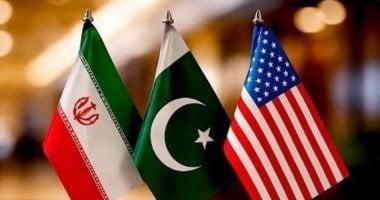
NBC News said Iranian officials pushed back on the prospect of new talks, with IRNA denying reports of a second round and citing “excessive U.S. demands, shifting positions and the continued naval blockade.”
In the same NBC News reporting, Ghalibaf warned that Iran still had a “complete distrust” of the U.S. negotiators and said, “There must be a guarantee that this cycle of war, ceasefire and negotiation will not be repeated,” while also stating that the strait had been closed because the U.S. was only “partially implementing the ceasefire.”
NBC News quoted Ghalibaf saying, “If the ceasefire is not implemented, we will not continue negotiations, and we will start the war,” and it added that he said it would remain closed if the “naval blockade against us continues.”
The Washington Post described Iranian state media reporting that Tehran had “rejected” the second round of talks, attributing the decision to “Washington’s excessive demands, unrealistic expectations, constant shifts in stance, repeated contradictions, and the ongoing naval blockade.”
Separately, Fortune and The Guardian both tied the talks to the Strait of Hormuz dispute, with The Guardian stating that Tehran had yet to decide whether it would take part and that IRNA said “there is no clear prospect of fruitful negotiations.”
Stakes, criticism, and what comes next
The stakes of the confrontation were laid out through both the U.S. rationale for escalation and the criticism it drew, as diplomacy headed toward a deadline around the ceasefire’s expiration.
ABC News reported that Democratic Congressman Ro Khanna pushed back on the threats, telling Jonathan Karl that the administration was escalating to “devestation” in Iran and saying, “They said they want to escalate to de-escalate. They’ve escalated to devastation.”

Khanna also criticized the administration for not focusing on domestic issues, saying, “Why aren’t we addressing the needs of the American people? I’m Team America. He [Trump] seems to be more obsessed with the Middle East,” while Waltz defended the approach as “diplomacy first.”
In the same ABC News interview, Waltz said the negotiations in Islamabad would be the “highest-level engagements between the United States and the Iranian regime in the 47 years, since it first came to power,” and he insisted “I don’t think anyone can say, President Trump isn’t putting diplomacy first.”
The Guardian said Trump told Fox News that talks in Islamabad would be the “last chance” for Iran to agree to a peace deal, and it quoted Trump saying, “If Iran does not sign this deal, the whole country is getting blown up.”
The Guardian also described the war’s broader economic stakes, noting that “Roughly one-fifth of the world’s oil trade normally passes through the strait,” and that “the global energy crisis threatens to deepen as the war drags on.”
NBC News and The Washington Post both emphasized that the ceasefire was set to expire Wednesday, with NBC News describing the current two-week ceasefire set to end on Wednesday and The Washington Post saying it was set to expire Wednesday as well.
More on Iran

Trump Threatens Strikes as Iran Fires on Ships in Strait of Hormuz
11 sources compared
Donald Trump Sends U.S. Delegation to Pakistan for Iran Talks, Threatens Power Plants and Bridges
47 sources compared

Iran Rejects Trump Claims It Will Transfer Enriched Uranium to the United States
21 sources compared

Iran Closes Strait of Hormuz Again, Citing U.S. Blockade of Its Ports
20 sources compared