
Asim Munir Travels To Tehran To Restart US-Iran Talks As Ceasefire Nears Expiration
Key Takeaways
- Asim Munir, Pakistan's army chief, leads delegation to Tehran to push fresh US-Iran talks.
- Mission seeks a second round of negotiations before the ceasefire expires.
- Iran hosts Pakistani talks; officials discuss expanding mediation and resuming talks.
Tehran meeting for talks
Pakistan’s army chief Asim Munir traveled to Tehran as part of a bid to restart US-Iran negotiations, with Iranian state media saying he arrived on Wednesday evening with a new message from the US and plans to coordinate a second round of US-Iran talks.
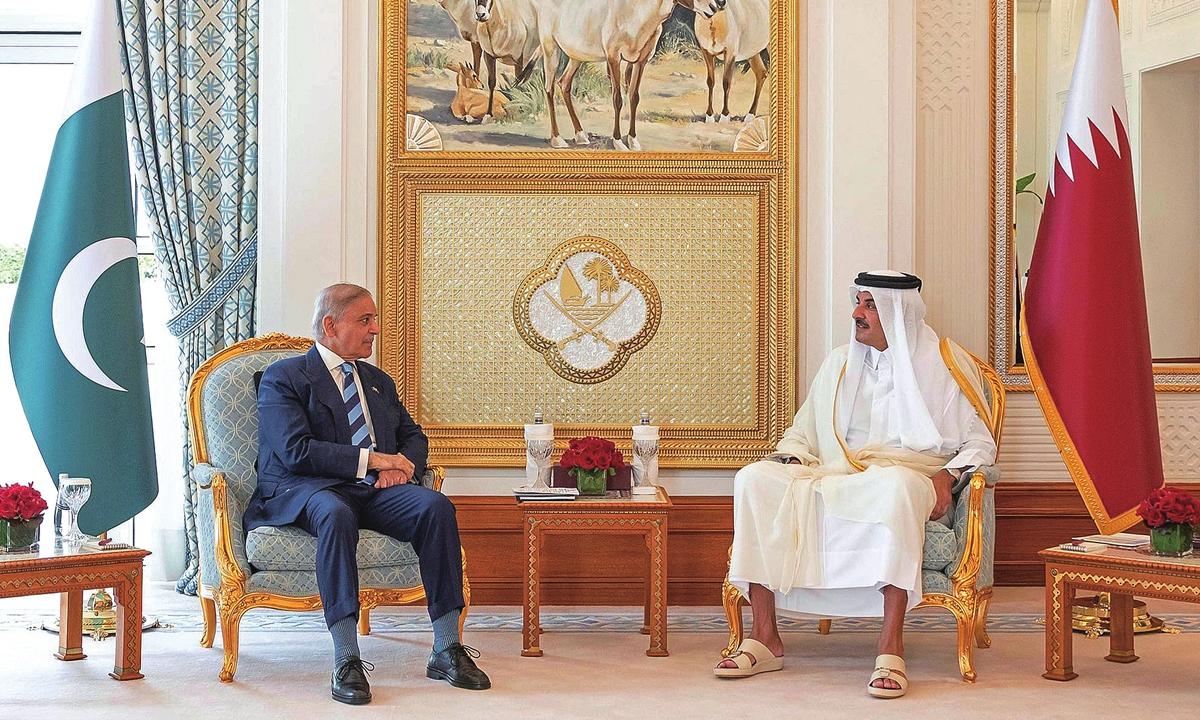
Al Jazeera reported that Pakistan’s Interior Minister Mohsin Naqvi was also joining mediation efforts in Tehran, while Pakistan’s Prime Minister Shehbaz Sharif was in Saudi Arabia for the first stop in a four-day Gulf tour.
The Associated Press, carried by PBS, said Munir met in Tehran with Iran’s foreign minister and that the White House said any further talks would likely take place in Islamabad, though no decision had been made on whether to resume negotiations.
TRT World similarly said White House Press Secretary Karoline Leavitt praised Pakistan’s mediation role and indicated the second round of US-Iran talks is expected to take place in Islamabad, without announcing a final date.
The New York Post and PBS both described the US naval blockade of Iranian ports as continuing, with the White House saying any further talks would likely be in Islamabad.
Al Jazeera added that the urgency is being driven by a ceasefire expiring on April 22, and that Pakistani officials are hoping they can get that extended.
In parallel, Al Jazeera said competing US and Iranian sea blockades strain tensions and the global economy, even as there were indications of progress toward a deal to end the war.
Ceasefire deadline and blockade
The mediation push is unfolding against a ticking ceasefire timeline, with Al Jazeera saying the urgency is being driven by the ceasefire expiring on April 22 and that Pakistani officials are hoping to extend it.
PBS reported that the White House said it had not “formally requested an extension of the ceasefire” with Iran, which is set to expire Tuesday, and it quoted White House press secretary Karoline Leavitt saying, “At this moment, we remain very much engaged in these negotiations, in these talks,” and that any further in-person talks “would very likely” return to Islamabad.
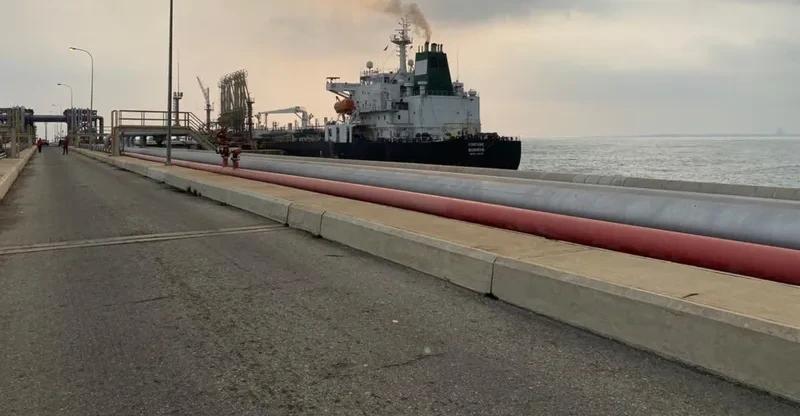
Al Jazeera also described the US naval blockade of all Iranian ports as still in effect, saying US forces were “present, vigilant and ready to ensure compliance,” and that the blockade turned nine ships away as of Wednesday, according to US Central Command.
PBS likewise said the U.S. naval blockade of Iranian ports continued and that the Trump administration warned it would ramp up economic pain on Iran with new economic sanctions on countries doing business with it, calling the move the "financial equivalent" of a bombing campaign.
TRT World and the New York Post both echoed the White House framing of economic pressure, with Bessent describing the measures as a “financial equivalent” of a bombing campaign.
On the Iranian side, Al Jazeera reported that Ali Abdollahi threatened to halt trade in the region if the US did not lift its blockade and warned Iran would retaliate by blocking trade through the Red Sea along with the Gulf and Sea of Oman.
PBS added that Ali Abdollahi threatened to halt trade in the region if the U.S. does not lift its naval blockade, and it also quoted a newly-appointed military adviser to Iranian Supreme Leader Mojtaba Khamenei saying he doesn’t support extending the ceasefire, with Iranian state media quoting Mohsen Rezaei saying, "Unlike the Americans who are afraid of continuous war, we are fully prepared and familiar with a long war."
Nuclear, Hormuz, compensation
Across the negotiations, mediators are pushing for compromise on three sticking points, with Al Jazeera saying the sticking points are Iran’s nuclear programme, control of the Strait of Hormuz, and compensation for wartime damages.
PBS similarly said mediators are pushing for a compromise on three main sticking points that derailed direct talks last weekend — Iran's nuclear program, the Strait of Hormuz and compensation for wartime damages.
Al Jazeera reported that Iran’s Foreign Minister spokesman Esmaeil Baghaei said Iran is open to discussing the type and level of its uranium enrichment, but that his country “based on its needs, must be able to continue enrichment,” according to Iranian state media.
PBS added that the negotiating team led by Vice President JD Vance urged Iran to agree to a 20-year moratorium on uranium enrichment as part of a potential deal, while the Iranians countered with an offer to suspend enrichment for five years, and it said the White House rejected that.
Israelhayom, citing Reuters, reported that mediators were focusing on three unresolved points of contention from talks held over the weekend in Islamabad, and it said US officials denied the report while insisting that reopening the Strait of Hormuz was a precondition for extending the ceasefire.
The Pittsburg Morning Sun item also carried a Chinese position, quoting Wang Yi telling Abbas Araghchi that “Working to resume normal passage of the strait is a unanimous call from the international community,” and it said Wang noted the situation had reached a critical juncture between war and peace.
In the same thread of maritime pressure, the New York Post and PBS both described the US blockade of Iranian ports as continuing, while Al Jazeera said Ali Abdollahi threatened to halt trade if the US did not lift its blockade and warned of retaliation through the Red Sea, the Gulf and Sea of Oman.
Optimism and hostile threats
Public statements around the talks mix optimism with threats, as Al Jazeera reported optimistic comments from US President Donald Trump, who said the world should brace for an “amazing two days” as the war with Iran is close to over.
Al Jazeera also quoted White House press secretary Karoline Leavitt saying, “We feel good about the prospects of a deal,” and it said Leavitt reiterated that additional talks with Iran would likely go forward in Islamabad.

TRT World carried Leavitt’s praise for Pakistan, quoting her as saying, "The Pakistanis have been incredible mediators throughout this process and we really appreciate their friendship and their efforts to bring this deal to a close," and it added that she said Pakistan is the "only mediator" in these discussions.
At the same time, Al Jazeera reported that Ali Abdollahi threatened to halt trade in the region if the US did not lift its blockade and warned Iran would retaliate by blocking trade through the Red Sea along with the Gulf and Sea of Oman.
PBS added that Ali Abdollahi threatened to halt trade in the region if the U.S. does not lift its naval blockade, and it quoted Iranian state media saying Mohsen Rezaei said, "Unlike the Americans who are afraid of continuous war, we are fully prepared and familiar with a long war."
Israelhayom, citing Reuters, reported that mediators were nearing agreement on extending the ceasefire beyond the April 22 deadline set by President Donald Trump, but it also said US officials denied the report and insisted that reopening the Strait of Hormuz was a precondition.
In the background of these competing signals, Al Jazeera said mediators were pushing for compromise on nuclear enrichment, the Strait of Hormuz, and compensation, while sources cautioned that “detractors on all sides” include elements “in Tehran, in Washington, DC” and “biggest of them all” Israel, according to Pakistani sources.
Competing accounts of progress
While multiple outlets describe a push for a second round of talks, they diverge on how close the sides are to an extension and what conditions matter most.
Al Jazeera said sources told it that Pakistani mediators were optimistic about a potential major breakthrough on the nuclear front, adding that “It looks like there is some agreement in the making,” but also warning that “we’ve been cautioned by sources [close to the mediation effort] that there are detractors on all sides.”

Israelhayom, citing Reuters, reported that mediators were nearing agreement on extending the ceasefire beyond the April 22 deadline and that the US and Iran had reached an “agreement in principle” to prolong the ceasefire, but it also said US officials denied the report and insisted that reopening the Strait of Hormuz was a precondition.
PBS, by contrast, reported that regional officials told The Associated Press the United States and Iran had an “in principle agreement” to extend it to allow for more diplomacy, while also noting that the White House said it had not formally requested an extension and that the ceasefire was set to expire Tuesday.
TRT World and the New York Post both emphasized Pakistan’s role, with Leavitt telling reporters that Islamabad is the only mediator and that communication should be streamlined through Pakistan, while PBS described Pakistan as a key mediator after it hosted direct talks in Islamabad that helped narrow differences.
Al Jazeera and PBS also differed in how they framed the ceasefire timing, with Al Jazeera pointing to April 22 and PBS quoting Leavitt saying the ceasefire is set to expire Tuesday.
Finally, Al Jazeera’s account of the mediation included a specific claim about Israel’s role, saying “biggest of them all, according to Pakistani sources, is Israel, which does not want a peace deal and wants a perpetual war in the region,” while other outlets focused more on the mechanics of talks and blockade compliance.
What comes next
The next steps described across the reporting center on arranging a second round of US-Iran talks, with multiple outlets pointing to Islamabad as the likely venue while leaving dates open.
Al Jazeera said Pakistani officials were hoping to extend the ceasefire expiring on April 22 and that they were trying to get the US to participate in new talks with Iran, while also saying Pakistani mediators were coordinating a second round after an initial round in Islamabad ended on Sunday without a deal.
PBS said the White House said any further talks would likely take place in Islamabad, though no decision had been made on whether to resume negotiations, and it reported that talks would continue Thursday after Iran’s foreign minister Abbas Araghchi took part in a preliminary meeting with Asim Munir.
TRT World said Leavitt indicated the second round is expected to take place in Islamabad but did not announce a final date or who would lead the American side.
Al-Najah News and the Arabic-language reports also emphasized that no date had been set, with Al-Najah News quoting Tahir Andrabi saying “no date has yet been set for the next round of negotiations,” and it said preparations had begun with a focus on ensuring the highest levels of security.
Meanwhile, the pressure instruments remain active: Al Jazeera said the US naval blockade on all Iranian ports was still in effect and that it turned nine ships away as of Wednesday, and PBS said the Trump administration warned it would ramp up economic pain with new sanctions.
The stakes are framed in terms of the ceasefire’s survival and the broader regional economy, with Al Jazeera saying the war has killed 3,000 people in Iran and spiralled across the Middle East, and PBS listing deaths including at least 3,000 in Iran and more than 2,100 in Lebanon.
More on Iran

Trump Announces 10-Day Israel-Lebanon Ceasefire After Talks With Netanyahu And Joseph Aoun
17 sources compared

US Naval Blockade Near Strait Of Hormuz Pushes Iran Into Broader Conflict Negotiations
11 sources compared
U.S. Navy Expands Iran Maritime Blockade to Cover Contraband Shipments Worldwide
11 sources compared

U.S. Implements Naval Blockade on Iran, Halting 13 Ships in Strait of Hormuz
10 sources compared