Full Analysis Summary
Iran-US Conflict Overview
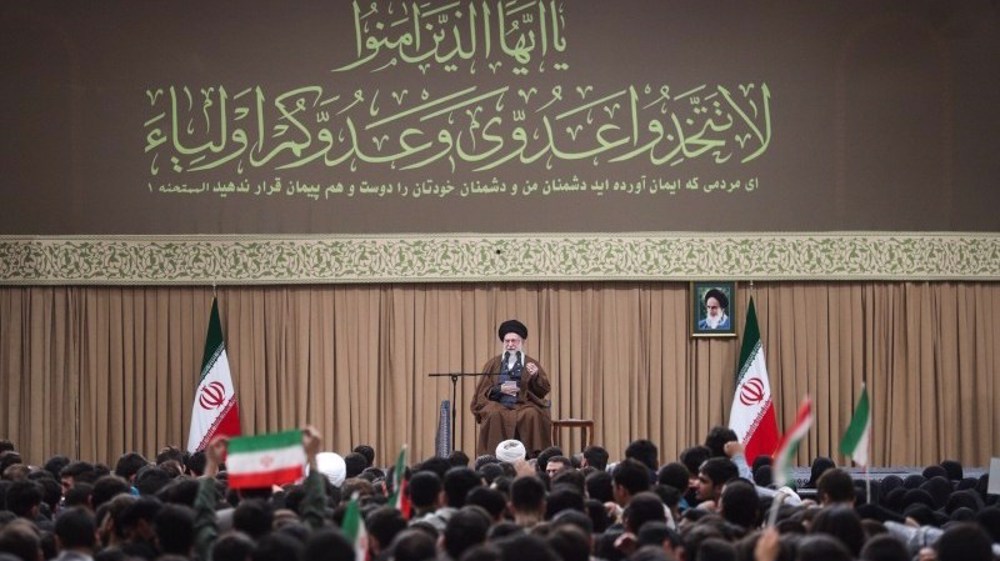
Ayatollah Seyyed Ali Khamenei declared that Iran’s conflict with the United States is intrinsic, rooted in fundamentally opposing interests rather than rhetoric, and thus not readily resolvable.
Speaking on the anniversary of the 1979 US Embassy takeover in Tehran, he framed that event as a defining moment that exposed, in his view, the true nature of both the US government and the Islamic Revolution.
He tied the present confrontation to historical grievances, highlighting that the rift extends back decades and is not a product of slogans but of structural clashes.
This framing positions the Iran–US struggle as enduring and systemic rather than contingent or negotiable.
Coverage Differences
missed information
Only PressTV (West Asian) is provided, so cross-source comparison with Western Mainstream or Western Alternative outlets cannot be performed. PressTV emphasizes Khamenei’s characterization of the conflict as fundamental and rooted in opposing interests and situates his remarks during the embassy takeover anniversary; without additional sources, we cannot assess how other media frame the same remarks or whether they contest the characterization.
tone
PressTV (West Asian) presents a confrontational, ideological tone by highlighting terms such as “fundamental,” “opposing interests,” and portraying the 1979 event as revealing the ‘true nature’ of the US government; without other source types, we cannot compare whether Western Mainstream sources would use more diplomatic or critical language, or whether Western Alternative outlets would adopt a different framing.
Historical Context of Iranian Tensions
Khamenei situated today’s tensions in a longer historical arc that includes the 1953 US–British-backed coup against Prime Minister Mohammad Mossadegh.
He cited the coup as an early marker of interference and conflict.
By linking the embassy takeover anniversary with the 1953 coup, his narrative underscores continuity.
In this telling, Iranian grievances stem from decades of perceived external intervention and power politics rather than episodic disputes.
This historical anchoring supports his claim that the conflict is structural and predates the Islamic Republic’s slogans or contemporary policy disagreements.
Coverage Differences
missed information
Because only a West Asian source (PressTV) is available, we cannot contrast how Western Mainstream or Western Alternative sources recount the 1953 coup or weigh its relevance to present-day Iran–US relations. PressTV highlights the coup as foundational to the conflict; without other sources, comparative emphasis or contestation is unknown.
narrative
PressTV’s narrative (West Asian) foregrounds a through-line from 1953 to 1979 and to the present, framing the conflict as a response to long-term interference. Without Western Mainstream or Alternative accounts, we cannot assess competing narratives that might, for instance, stress regional security dynamics, nuclear issues, or domestic Iranian politics instead of historical intervention.
Khamenei's Conditions for US Engagement
On the question of engagement with Washington, Khamenei set stringent preconditions that render near-term reconciliation unlikely.
He stated that cooperation could only occur if the United States ends support for Israel, withdraws its military bases from the region, and ceases interference in Iran’s internal affairs—conditions he said are unlikely to be met soon.
By articulating these requirements, he cast the conflict as anchored in non-negotiable principles, reinforcing his claim that it is intrinsic rather than a dispute ripe for transactional compromise.
Coverage Differences
missed information
With only PressTV (West Asian) available, there is no way to verify how Western Mainstream or Western Alternative outlets report or contextualize Khamenei’s conditions for cooperation, including whether they challenge their feasibility or highlight regional security implications.
tone
PressTV (West Asian) conveys a firm, maximalist tone by listing conditions—ending support for Israel, removing US bases, and stopping interference—and explicitly calling them unlikely in the near term. Without other source types, we cannot contrast whether Western outlets would frame these as bargaining positions, ideological red lines, or propaganda.
Khamenei on National Strength
Khamenei linked foreign confrontation to a domestic agenda, urging Iranian students to invest in historical understanding, scientific progress, and military strength as pillars of national independence.
By tying education and defense capability to sovereignty, he framed internal development as both a response to external pressure and a requirement for enduring security.
This domestic mobilization message complements his external stance: a long-term, principled struggle that requires sustained societal and technological resilience.
Coverage Differences
missed information
Only a West Asian account (PressTV) is available; thus we cannot compare how Western Mainstream or Western Alternative coverage would balance or critique the emphasis on student mobilization, science, and military capability, or whether they would highlight different domestic priorities or controversies.
narrative
PressTV (West Asian) integrates domestic capacity-building into the geopolitical narrative, presenting education, science, and military strength as necessary to withstand US hostility. Without other source types, we cannot evaluate whether Western outlets would depict this as ideological indoctrination, technonationalism, or pragmatic statecraft.