Full Analysis Summary
Security measures ahead of verdict
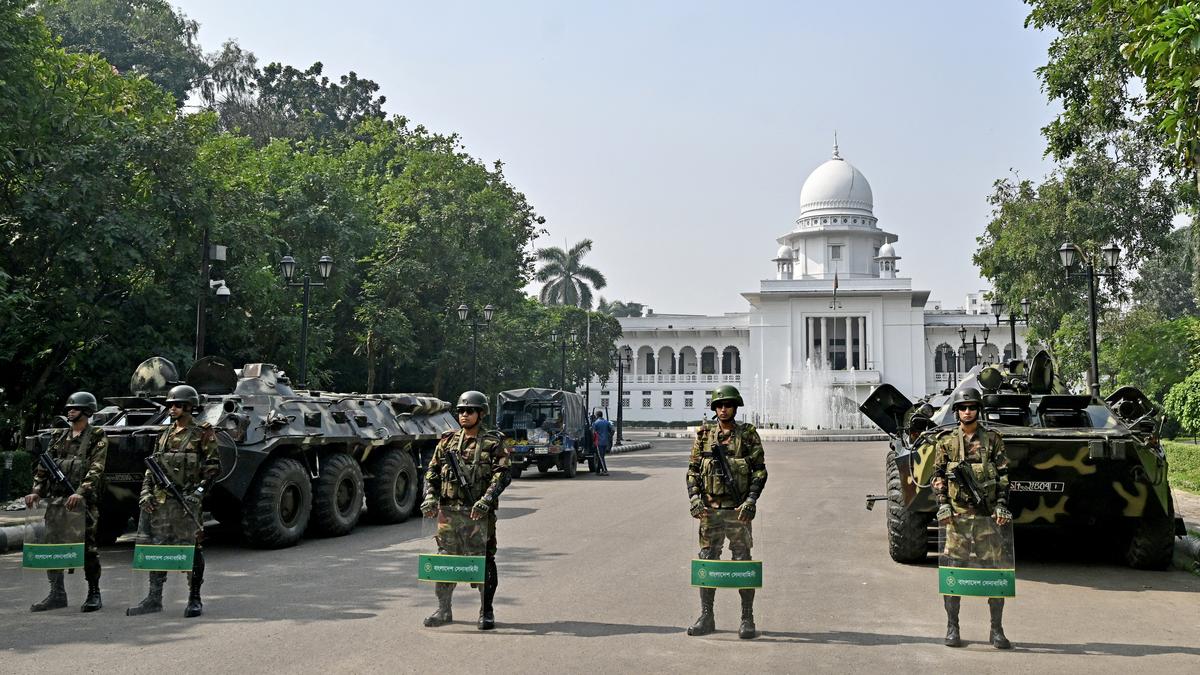
Bangladesh deployed heavy security forces in Dhaka and in key Awami League strongholds on and before November 16, 2025, as authorities sought to contain unrest ahead of a verdict related to former Prime Minister Sheikh Hasina.
Reports described tightened security across the capital and in districts such as Gopalganj, Faridpur and Madaripur.
Authorities moved to restrict movement and public gatherings as a planned nationwide shutdown approached.
Officials linked these measures to the expected decision from the Bangladesh International Crime Tribunal and to a parallel call for a lockdown by Sheikh Hasina's Awami League, heightening tension in the run-up to the verdict.
Coverage Differences
Narrative focus / emphasis
The two sources emphasize different proximate causes for the security deployment: The Hindu frames the situation around an Awami League-called nationwide “lockdown” and localized enforcement actions in party strongholds, while Babushahi connects security measures directly to the impending verdict from the Bangladesh International Crime Tribunal and the criminal accusations against Sheikh Hasina. Each source is reporting on overlapping events but foregrounds different triggers and context.
Dhaka violence and police response
Incidents of violence and strong police orders were reported in central Dhaka on November 16.
The Hindu reported multiple cocktail (firebomb) explosions, the arrest of at least 18 Awami League activists, and an order from Dhaka Metropolitan Police Commissioner Mohammad Sajjat Ali for 'shoot-at-sight' action against arsonists using firebombs.
Those immediate security incidents prompted a heightened police posture across the city and were cited by authorities as justification for heavy deployments and tighter controls on movement.
Coverage Differences
Detail vs. omission
The Hindu provides incident-level details — explosions, arrests and a reported shoot‑at‑sight order — while Babushahi does not report those same operational details, instead focusing on the broader security posture and the link to the tribunal hearing. Thus The Hindu contributes specific accounts of unrest that Babushahi omits.
Reports' political context
The political and legal backdrop differs across the two reports.
Babushahi emphasizes that tightened security coincided with the Bangladesh International Crime Tribunal preparing to deliver a verdict in a case accusing her of crimes against humanity linked to the student-led protests of July–August 2024, framing the security moves as a high-stakes judicial moment.
The Hindu notes tribunal-related tensions indirectly through the lockdown and enforcement but foregrounds the Awami League’s call for a shutdown and localized enforcement actions, highlighting grassroots mobilization and confrontation rather than the legal charges themselves.
Coverage Differences
Framing (legal vs. political mobilization)
Babushahi frames the story around a legal process and the gravity of charges — it reports the tribunal case 'accuses her of crimes against humanity' — whereas The Hindu frames the immediate cause as Awami League-organized shutdown orders and ensuing ground-level clashes. One source foregrounds judicial stakes; the other foregrounds party-led mobilization and public-order incidents.
Unrest reporting and uncertainties
Combined reporting indicates an atmosphere of uncertainty and rising tension.
Security forces were visibly reinforced, authorities cited concerns about arson and public disruption, and political actors called shutdowns that supporters attempted to enforce.
The sources leave some questions open: Babushahi concentrates on the tribunal timetable and charges, while The Hindu supplies operational details of unrest.
Neither outlet provides full clarity on who was responsible for specific explosions or how judicial and extrajudicial dynamics will interact once the verdict is handed down.
Coverage Differences
Ambiguity and gaps
Both sources report heightened security and link it to the shutdown/tribunal, but they leave ambiguous key causal links (who carried out explosions, details of arrests' legal basis, and the tribunal’s immediate implications). This creates information gaps: The Hindu gives incident specifics but not full legal context, while Babushahi gives legal framing but omits the on-the-ground incident details.