Full Analysis Summary
Bank of England Interest Rates
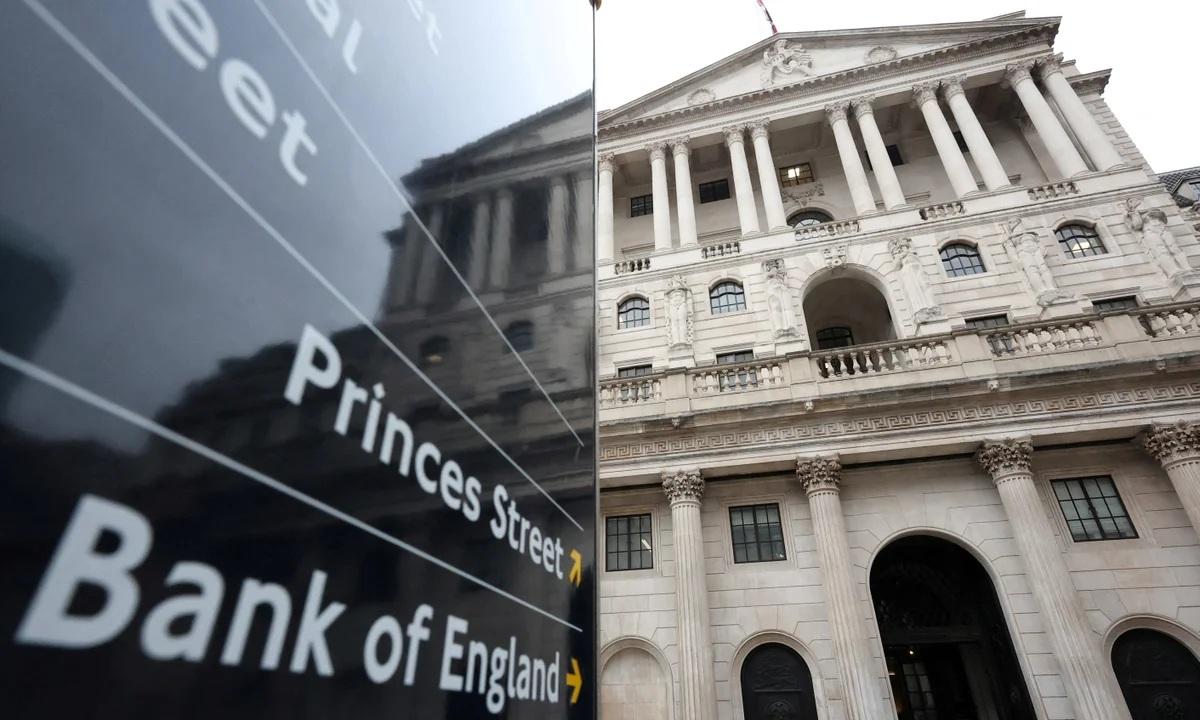
The Bank of England kept interest rates at 4% in a narrow 5-4 decision, holding off on cuts despite signals that inflation has likely peaked and could drift toward the 2% target over the next few years.
Western mainstream coverage stresses both the knife-edge vote and markets now pricing earlier easing.
One outlet notes a 65% chance of a December cut and potential further reductions in early 2025.
Other outlets emphasize the central bank’s wait-and-see stance.
Some highlight that policymakers want more evidence on persistent inflation and growth risks.
Others underscore the message that rates may only gradually fall once inflation is clearly on track.
Several sources also frame the inflation backdrop similarly, citing a peak around 3.8% in September and a path toward 2% by 2027.
Coverage Differences
tone
The Guardian (Western Mainstream) highlights market odds and an imminent pivot, stating markets "now expect a rate cut as soon as December, with a 65% chance priced in" and that the vote was "a 5-4" hold. By contrast, business-live.co.uk (Other) focuses on formal guidance that easing would be gradual "once inflation is confirmed to be on track." EDP24 (Western Mainstream) stresses caution, that the Bank kept rates at 4% "citing the need for more evidence on persistent inflation and economic growth risks." Tribune Online (Western Alternative) similarly reports the MPC "emphasized the need for more evidence before cutting rates," but also folds in a stronger labor-market risk narrative.
narrative
On inflation trajectory, business-live.co.uk (Other) and Tribune Online (Western Alternative) explicitly frame a recent peak and a long glidepath to target—"inflation has likely peaked at 3.8% in September" and is expected to reach "the 2% target by 2027"—whereas EDP24 (Western Mainstream) frames stabilization via components and wages, saying inflation has "stabilized... due to slower food price increases and weaker wage growth." The Guardian (Western Mainstream) does not foreground the 3.8% figure in its summary of the decision, focusing instead on the vote split and market pricing.
missed information
Some sources stress the coming fiscal backdrop more than others. The Guardian (Western Mainstream) notes the BoE will wait for the Autumn Budget and that fiscal choices could influence demand and inflation from 2026. EDP24 (Western Mainstream) references uncertainty ahead of the autumn budget weighing on business decisions. In this opening framing, business-live.co.uk (Other) and Tribune Online (Western Alternative) focus more on the rate decision and inflation outlook, with less detail on market pricing nuance or fiscal‑policy channels.
unique/off-topic
Only The Guardian (Western Mainstream) brings in a US lens in its early framing, citing sharp US job cuts and AI adoption as context, while the UK-focused outlets center squarely on the BoE and domestic indicators.
Labor Market Risk Outlook
Labor-market risks are a key reason for caution, but sources differ on the timing and scale of these risks.
Some Western Mainstream and Western Alternative reports predict unemployment will peak at 5.1% by mid-2026.
Another outlet warns of a sharper rise in unemployment as soon as spring next year.
One Western Mainstream source reports that nearly half of firms have already cut jobs due to higher employer National Insurance Contributions.
Adding a broader macro perspective, another Western Mainstream piece notes a surge in US job cuts partly linked to AI and post-pandemic recalibration.
This background highlights the hesitation among policymakers.
Coverage Differences
contradiction
business-live.co.uk (Other) warns unemployment could reach 5.1% "by spring next year," while EDP24 (Western Mainstream) and Tribune Online (Western Alternative) project the 5.1% peak in "mid-2026." These timelines conflict on when the labor market deteriorates most sharply.
narrative
EDP24 (Western Mainstream) emphasizes policy-driven cost pressures on employment—"Nearly half of companies" cutting staff due to higher employer NICs—while business-live.co.uk (Other) frames labor softness through vacancies and hiring trends without mentioning NICs in its summary.
unique/off-topic
Only The Guardian (Western Mainstream) connects the rate hold to global labor signals, reporting US job cuts up 175% year over year in October, partly linked to AI adoption—content not present in the UK‑centric summaries.
Inflation and Wage Trends
Inflation drivers and wage dynamics are framed differently across outlets.
One Western mainstream source attributes recent stability to slower food price rises and weaker wage growth.
Another Western mainstream outlet, however, underscores that pay settlements have been higher than expected, a factor that could keep inflation stickier.
Meanwhile, other and Western alternative outlets highlight that inflation likely peaked near 3.8% in September and is expected to glide to 2% by 2027.
Across sources, Bank leadership is portrayed as cautious, either emphasizing the need for more evidence before cuts or indicating rates may gradually fall once inflation is confirmed on track.
Political commentary from the Chancellor strikes a more optimistic tone about easing costs and faster-than-expected disinflation.
Coverage Differences
contradiction
EDP24 (Western Mainstream) links inflation stabilization to "weaker wage growth," while The Guardian (Western Mainstream) says Bailey highlighted that "pay settlements have been higher than expected." These wage narratives pull in opposite directions regarding underlying inflation pressure.
tone
Chancellor framing differs from the Bank’s caution. EDP24 (Western Mainstream) says Rachel Reeves "highlighted recent interest rate cuts" and was optimistic about inflation falling faster than expected, whereas multiple outlets present the Bank as determined to wait for clear evidence before cutting.
narrative
business-live.co.uk (Other) and Tribune Online (Western Alternative) frame the path to target with long-dated guidance—peak near 3.8% and 2% by 2027—while The Guardian (Western Mainstream) centers more on market pricing and timing of cuts rather than the exact inflation path.
Business Confidence and Budget Impact
Business confidence and investment plans remain fragile across accounts, but the stress points differ by source type.
One ‘Other’ outlet centers on SMEs and housing finance, noting mortgage rates have dropped and approvals remain resilient.
This outlet urges the Budget to support investment through rate reforms, improved access to finance, and incentives.
It also warns that the looming 26 November Budget could include tax rises that break pledges, adding to market anxiety.
Western Mainstream and Western Alternative outlets emphasize delayed investment and weak confidence ahead of the Autumn Budget.
Another Western Mainstream source highlights market worries that potential tax increases could dampen demand and inflation from 2026 onward.
Together, the fiscal backdrop is portrayed as a major swing factor for the timing and depth of any future cuts.
Coverage Differences
narrative
The Intermediary (Other) focuses on borrower support and the mortgage channel—brokers’ role, lower mortgage rates, and resilient approvals—whereas EDP24 (Western Mainstream) and Tribune Online (Western Alternative) emphasize broad business caution and delayed investment linked to the autumn Budget.
tone
The Intermediary (Other) uses sharper language about the fiscal risk—tax rises that could "break government pledges"—and even provides a specific date (26 November), while The Guardian (Western Mainstream) describes market concern that tax increases could restrain demand and inflation from 2026 without the pledges framing.
missed information
The Intermediary (Other) uniquely details SME disappointment and homebuyer caution, elements not foregrounded in the mainstream or alternative overviews that focus more on macro signals and policy timing.
Market Expectations on Interest Rates
Markets and guidance indicate potential easing, but there is uncertainty over the timing.
Western Mainstream coverage notes that sterling firmed and gilt yields fell on expectations of rate cuts.
Experts generally anticipate reductions later this year or early next year.
Other and Western Alternative outlets also suggest that rates may gradually decline once inflation is clearly on track.
These outlets report growth upgrades for 2025.
However, there is disagreement among outlets about the streak of unchanged decisions; one says it is the second consecutive meeting with no change, while another says it is the third consecutive month.
This highlights how summaries can vary.
Forecast details also differ by outlet: one Western Mainstream source maintains 1.2% growth for 2024 with modest improvements for 2027.
An Other outlet maintains 1.2% growth for 2026 and highlights a 2025 upgrade to 1.5%.
A Western Alternative piece also reports a 2025 growth upgrade to 1.5%.
Coverage Differences
contradiction
On the policy pause streak, business-live.co.uk (Other) says this is the "second consecutive meeting with no rate change," while The Intermediary (Other) says rates were held for the "third consecutive month."
narrative
The Guardian (Western Mainstream) stresses market reactions and timing—sterling up, gilt yields down, and a 65% chance of a December cut—while business-live.co.uk (Other) and Tribune Online (Western Alternative) emphasize the Bank’s own guidance that cuts would be gradual when inflation is on track.
missed information
Growth-forecast specifics vary by outlet and year: EDP24 (Western Mainstream) says 2025 was raised to 1.5% while maintaining 1.2% for 2024 and noting modest improvements for 2027; business-live.co.uk (Other) says 2025 was raised to 1.5% while maintaining 1.2% for 2026; Tribune Online (Western Alternative) also reports the 2025 upgrade but doesn’t detail 2024/2026 in its summary.
unique/off-topic
Only The Guardian (Western Mainstream) lists named analyst houses (HSBC, RBC Brewin Dolphin, Capital Economics, XTB, ING, EY ITEM Club) and notes a specific probability for a December cut, details absent from the Other and Western Alternative summaries.