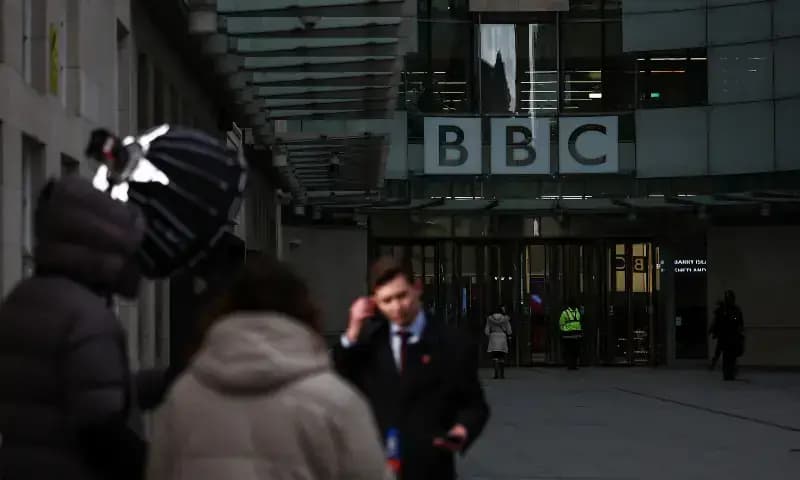
BBC Seeks Dismissal of Trump's $10 Billion Defamation Suit Over Documentary Edit
Key Takeaways
- BBC seeks dismissal of Trump's $10bn defamation suit over edited speech.
- BBC argues no reputational harm, citing Trump's re-election.
- BBC case involves edited Trump speech used in a documentary.
Lawsuit Overview
The British Broadcasting Corporation (BBC) has launched a legal defense against former US President Donald Trump's $10 billion defamation lawsuit.
“The British Broadcasting Corporation (BBC) has asked a court in Florida in the US to dismiss a $10bn defamation lawsuit brought by United States President Donald Trump over the editing of one of his speeches, warning that the case could have a “chilling effect” on reporting”
The broadcaster argues the case should be dismissed on jurisdictional and factual grounds.

The BBC warns that allowing such expensive litigation to proceed could create a 'chilling effect' on press freedom and editorial independence worldwide.
The lawsuit stems from a documentary edit that Trump claims misrepresented his speech during the January 6, 2021 Capitol attack.
The BBC maintains that the legal action is both 'groundless' and potentially damaging to journalistic protections.
This case has significant implications for media organizations covering polarizing figures and raises questions about defamation law boundaries.
BBC Legal Arguments
BBC's legal team has mounted a sophisticated defense challenging both jurisdictional authority and factual basis of Trump's claims.
In a 34-page court filing, the broadcaster argues that the Southern District of Florida lacks jurisdiction.

The BBC contends the documentary 'Trump: A Second Chance?' never aired in Florida or anywhere in the United States.
The broadcaster argues that Trump's subsequent re-election demonstrates conclusively that any alleged defamation could not have caused reputational harm.
This undermines the fundamental premise of the lawsuit according to the BBC's legal team.
The broadcaster maintains that Trump 'could not plausibly claim' the documentary harmed his reputation given his successful political comeback.
Editing Controversy
Trump's $10 billion lawsuit centers on a specific editing controversy in the BBC documentary.
“March 17, 2026 The BBC has asked a US judge to dismiss Donald Trump’s $10bn defamation lawsuit over a documentary edit, arguing Trump’s re-election shows no reputational harm”
The lawsuit alleges segments of his January 6, 2021 speech were manipulated to suggest he directed supporters to storm the US Capitol.
Trump's legal team claims the documentary edited together different parts of his speech.
The edit sequence showed him telling supporters to 'march on the Capitol' followed nearly an hour later by 'fight like hell'.
This allegedly created a misleading narrative that he incited the violent attack.
Trump asserts this violated Florida's law against deceptive and unfair trade practices.
The former President argues the edit constituted defamation that significantly damaged his reputation.
Despite the BBC issuing an apology, Trump maintains the lawsuit is warranted for journalistic misconduct.
Broader Implications
The outcome of this legal battle carries profound implications for media freedom and journalistic practices worldwide.
If the BBC succeeds in having the lawsuit dismissed, it would reinforce press protections and editorial freedom.
This would set an important precedent for media organizations covering controversial political figures.
However, if Trump wins the case, it could encourage similar lawsuits against media outlets.
This might lead to more cautious reporting and self-censorship when covering polarizing topics and individuals.
The BBC itself has experienced governance challenges recently, with a board member resigning over governance concerns.
This adds another layer of complexity to the organization's current legal and institutional difficulties.
This case represents a critical test of defamation law's application in documentary editing and political speech.
The outcome has potential repercussions for how media organizations handle potentially inflammatory material.
More on USA
FBI investigates Joe Kent, former National Counterterrorism Center director, for allegedly leaking classified information.
81 sources compared

Lt. Gov. Juliana Stratton Wins Illinois Democratic Senate Primary to Replace Durbin
171 sources compared

Senators Grill Mullin Over DHS Nomination as Intel Officials Testify on Top Threats
91 sources compared

César Chávez Faces Sexual Abuse Allegations, Including Rape of Dolores Huerta and Other Survivors
34 sources compared