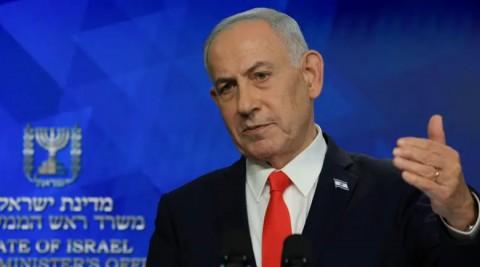
Benjamin Netanyahu Says Israel Will Keep Forces in Gaza, Lebanon, and Syria as Long as Necessary
Key Takeaways
- Netanyahu vows to keep Israeli forces in Gaza, Lebanon, and Syria indefinitely.
- Defense Minister Katz confirms policy of staying in security zones with no time limit.
- Move follows US-Iran deal context shaping regional security calculations.
Netanyahu keeps forces
Israeli Prime Minister Benjamin Netanyahu said on Monday that Israel would keep forces in Gaza, Lebanon and Syria “for as long as necessary,” describing them as “security zones” during a televised press conference in which he said, “We established deep security zones around the State of Israel. We did this in Gaza, in Lebanon, and in Syria,”.
“Israel will not make compromises on issues of ensuring its security on the borders, so the Israel Defense Forces (IDF) will retain control over the security zones in Lebanon, Syria and Gaza, said Defense Minister Israel Katz”
The remarks came hours after a breakthrough agreement was announced between the United States and Iran to end months of military confrontation in the Middle East, mediated by Pakistan, with Washington and Tehran agreeing to an “immediate and permanent termination” of military operations.

The full text of the deal had not yet been made public, and further technical negotiations were expected ahead of a formal signing ceremony in Switzerland on Friday, while US President Donald Trump said oil tankers had resumed transiting the Strait of Hormuz.
Kurdistan24 also reported that the Strait of Hormuz carries roughly one-fifth of global oil and gas exports and had been effectively closed after US-Israeli strikes on Iran triggered a regional escalation, with the disruption causing a sharp rise in global energy prices.
Even as diplomatic efforts gained momentum, Netanyahu’s comments signaled that Israel intended to maintain its military posture across several fronts, according to Kurdistan24’s account of his televised remarks.
Opposition and binding dispute
In a separate press conference reported by Rediff, Netanyahu defended his stance on Iran amid domestic criticism and said, “Iran will never have nuclear weapons, not today and not tomorrow,” while also asserting, “We removed the immediate threat of annihilation from ourselves.”
Rediff reported that opposition leader Naftali Bennett criticized Netanyahu’s leadership, calling the Iran situation a “historic failure,” and said the term of the Netanyahu government began with a civil war, continued with the October 7 massacre, and was now ending with a historic failure against Iran.

National Security Minister Itamar Ben Gvir said the emerging US-Iran agreement was “not binding” on Israel, and Rediff also quoted Netanyahu saying, “There are times when President Trump and I don't see eye to eye.”
The dispute over how far Israel would align with the US-backed regional deal ran alongside Netanyahu’s insistence that he would not withdraw from the security zones in Lebanon, Gaza and Syria, as Rediff described his repeated references to maintaining those buffers.
Rediff further reported that Netanyahu ruled out withdrawing from South Lebanon, a matter many feel could derail the proposed deal, which calls for a total cessation of hostilities.
Buffer zones and what’s next
Israel’s defense minister Israel Katz said in a statement reported by ARAB NEWS that Netanyahu and Katz were pursuing a policy under which the IDF would remain in Gaza, Lebanon and Syria “for an unlimited period of time,” to protect the border and Israeli communities from “jihadist elements.”
ARAB NEWS also reported that Katz warned Iran that if Iran attacked Israel in response to its campaign in Lebanon, Israel would retaliate with “full force,” linking the threat to the posture Katz said Israel would maintain in the security zones.
The Guardian described Netanyahu as ruling out any immediate withdrawal from Lebanon and said Israel’s forces would remain there “for as long as necessary,” while also reporting that US officials sought to reassure Israel that withdrawal from Lebanon was not a condition of a pact between the US and Iran.
In Haaretz, Netanyahu was described as saying Israel would not withdraw its military from southern Lebanon and parts of Syria and the Gaza Strip, 19 hours after Donald Trump announced a memorandum of understanding would be signed with Iran.
With the interim agreement’s exact details still unclear in the sources, the immediate consequence described across the reporting was that Israel’s stated security-zone posture would continue even after the US-Iran breakthrough was announced.
More on Gaza Genocide

Gideon Sa’ar Cuts All Contact With EU Foreign Policy Chief Kaja Kallas Over Apartheid Remarks
15 sources compared
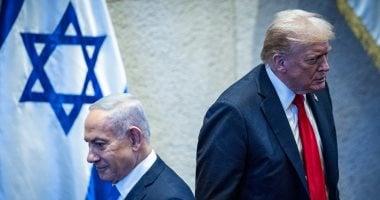
Trump, Iran Sign MOU To Reopen Strait of Hormuz, End Blockade and Sanctions
13 sources compared
Moshe Feiglin Says He Will Build a New Jewish Temple at Al-Aqsa
11 sources compared

Naël Barghouti Says Hamas-Israel Prisoner Exchange Sent Him Into Exile in Egypt
10 sources compared