
Between buildup and bottleneck -- Washington's narrowing path in war with Iran - Global Times
Key Takeaways
- United States deploys additional troops and warships to the Middle East.
- Trump hints at a winding down of strikes against Iran.
- Analysts say buildup underscores uphill Washington path amid ally rifts and anti-war sentiment.
U.S. buildup and path
The United States is deploying additional troops and warships to the Middle East even as its president, Donald Trump, suggested a possible winding down of strikes against Iran.
“The United States is deploying additional troops and warships to the Middle East even as its president, Donald Trump, suggested a possible "winding down" of strikes against Iran”
Analysts say the ongoing military buildup highlights how steep an uphill battle Washington faces in the war with Iran.
With growing rifts between the United States and its allies, and the spillover fueling anti-war sentiment, Washington is navigating a narrower path in continuing this war.
Deployment details and aims
Analysts say about 2,500 more U.S. Marines are being deployed to the Middle East, along with extra naval vessels, including the USS Boxer Amphibious Ready Group and the 11th Marine Expeditionary Unit.
This adds to an earlier deployment of 2,500 Marines from the 31st Marine Expeditionary Unit, which moved from Japan to the region aboard the USS Tripoli.
The Pentagon has also reportedly prepared detailed operational plans for potential ground missions in Iran.
A Reuters report said Washington is considering deploying thousands of U.S. troops to secure the Strait of Hormuz and potentially target Iran's Kharg Island, which handles about 90 percent of the country's oil exports.
Analysts suggest that the sustained military buildup reflects the difficulty Washington faces in achieving its initial objectives, with the mission now focused on securing the Strait of Hormuz and potentially occupying or blockading Kharg Island, which would require a sustained ground presence and pose significant risks.
US-Israel strategic divergence
As the United States and Israel continue their strikes against Iran, the two allies are increasingly revealing their differences over the conduct of the war and its objectives.
“The United States is deploying additional troops and warships to the Middle East even as its president, Donald Trump, suggested a possible "winding down" of strikes against Iran”
One crack appeared when Israel struck an Iranian energy facility earlier in the week.
On Wednesday, Israel struck Iran's South Pars offshore natural gas field in the Gulf, which Iran shares with Qatar.
Following the strike, Trump said that 'the United States knew nothing about this particular attack,' adding that no more attacks would be made by Israel on the natural gas field.
Responding to Trump's remarks, Israeli Prime Minister Benjamin Netanyahu said that Israel had not informed the United States before the attack.
It marked the first public sign of potential divisions between the United States and Israel over the Iran war, after both countries had taken pains to project full coordination and no daylight on the war's timeline, causes and ongoing operations, said Haaretz.
Citing senior U.S. officials, the article noted that the two countries have their own independent goals in the ongoing war.
U.S. Director of National Intelligence Tulsi Gabbard also told a House Intelligence Committee hearing that 'the objectives laid out by the president are different from the objectives laid out by the Israeli government.'
Analysts say the divergences reflect a growing gap in priorities, risk tolerance and long-term objectives between the two countries.
Atallah, the Palestinian political analyst, said that Israel tends to favor a more aggressive approach, including the possibility of targeting Iran's critical infrastructure, to weaken its regional influence and deterrence capabilities, while the United States is more cautious.
The analyst explained that striking Iran's energy facilities could trigger a broader regional war, disrupt global energy markets, and directly threaten U.S. interests in the region.
However, Washington is trying to calibrate escalation, maintaining pressure without crossing thresholds that could lead to an uncontrollable conflict, he added.
Other differences are likely regarding the scale and duration of military operations, said Jumaa Mohammed, a politics professor at Iraq's Tikrit University.
'The United States generally seeks to avoid a broader regional war that could disrupt global markets and alliances, while Israel may prioritize longer-term strategic degradation of Iran's capabilities.'
Summary
Although the United States may find it difficult to achieve its short-term strategic goals, experts say that domestic politics, market disruptions and rising anti-war sentiment will limit its willingness to persist, leaving Washington in a strategic dilemma.
After the United States and Israel launched strikes on Iran, the shock waves soon reached global energy and financial markets.
Oil prices shot up to nearly 120 U.S. dollars a barrel, shipping costs around the world went through the roof, and ordinary Americans also felt the pinch in their daily lives.
A CNN poll on Americans' views of the attacks showed that 59 percent disapproved of the war.
Subsequent surveys, including a Reuters/Ipsos poll, also confirmed that the majority of Americans were opposed to the conflict.
With the U.S. midterm elections in November approaching, analysts say that public opinion at home could play a decisive role in whether Trump can continue pursuing the war.
'In the United States, electoral considerations will influence how far the administration is willing to engage militarily,' said Oytun Orhan, a senior researcher at the Ankara-based Center for Middle Eastern Studies.
'A prolonged conflict with rising economic costs could reduce domestic support.'
The international community, including some U.S. allies, has also raised objections to a prolonged and escalating war in the region.
Amid disruptions to global energy markets and maritime routes, which are fueling prolonged regional instability, U.S. allies, particularly in Europe and the Gulf, are likely to push for de-escalation, putting further pressure on the United States, said Mokhtar Ghobashy, secretary-general of the Cairo-based El-Faraby Center for Political Studies.
'Taken together, these variables suggest that the United States is operating within a narrow margin,' said Atallah.
'In this context, achieving clear and decisive objectives becomes difficult,' he stressed.
'The most likely outcome is not a definitive victory, but rather a managed containment of the conflict, with periodic escalations and temporary understandings rather than a comprehensive resolution.'
More on Iran

President Trump Says Iran Deal Within Reach Amid Talks With Senior Iranian Official
10 sources compared

Trump Approves Iran Operation After Netanyahu Presses for Joint Strike on Khamenei
12 sources compared

President Donald Trump orders ICE officers deployed to airports amid DHS shutdown.
227 sources compared
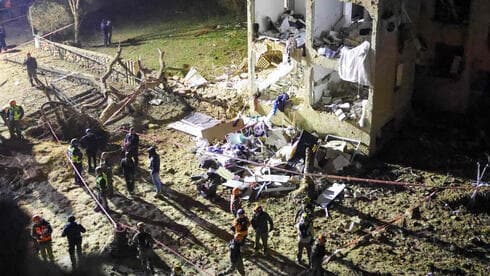
Iranian Missiles Strike Israel; Officials Report 180 Injured Amid Conflicting Casualty Figures.
12 sources compared