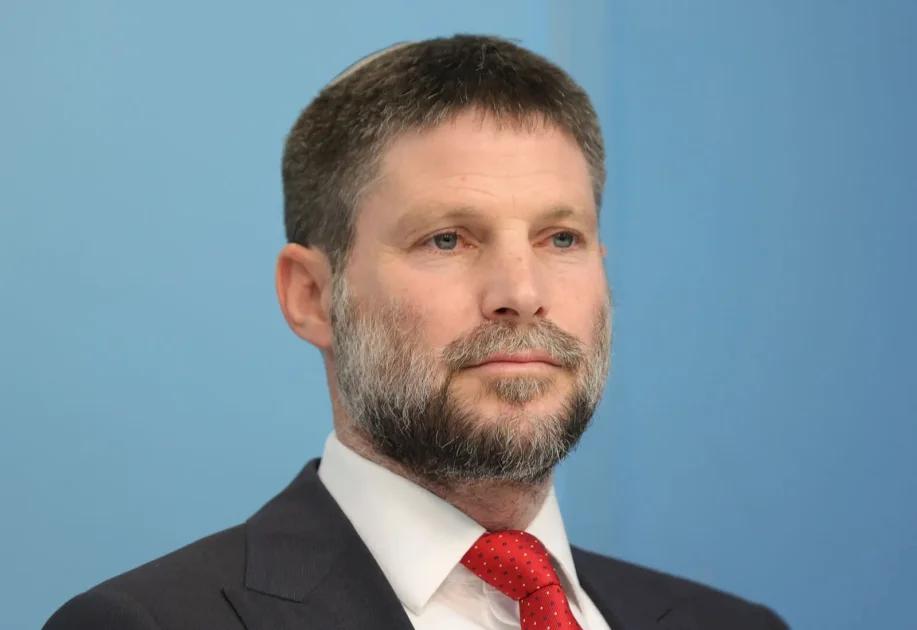
Bezalel Smotrich Sparks Backlash After Saying His Injured Son Wants Him To Leave Lebanon To Destroy
Key Takeaways
- Smotrich said his injured son asked him to 'leave something to do in Lebanon'.
- He predicts border changes in Gaza, Lebanon, Syria, and the West Bank.
- The remarks sparked broad social media reaction and controversy.
Smotrich’s Lebanon remark
Israeli Finance Minister Bezalel Smotrich sparked a wave of reaction after he discussed his injured son in Lebanon during an appearance on a podcast affiliated with Channel 7 in Israel.
“Bezalel Smotrich's statements sparked a wide wave of reaction on social media after he revealed that a discussion had been relayed about his son, who was injured in Lebanon, in which he indicated his desire to 'leave something for him to do in Lebanon,' in a context followers described as having escalatory implications”
Multiple outlets describe Smotrich saying his son asked him “not to finish the work and to leave him something to do in Lebanon,” adding, “don’t worry, there will be enough for everyone.”

Al Jazeera Net reported that Smotrich said, “He is now in the rehabilitation phase, and his condition is improving very quickly,” and that his son “keeps asking me not to end the work and to leave him something to do in Lebanon.”
The National Newspaper likewise quoted Smotrich’s framing that his son “has been ‘asking me not to finish the work and leave him more to do’” and that “there will be enough for everyone.”
L’Orient Today also carried the same core exchange, quoting Smotrich: “not to finish the job in Lebanon, so there would be something left for him to do,” and “don’t worry, there will be enough for everyone.”
In the same reporting, L’Orient-Le Jour described the remarks as coming from an interview on Channel 7 in which Smotrich said his son had asked him not to “finish the job, so there will still be something to do in Lebanon.”
The controversy, as presented by the sources, centered on how the personal conversation was interpreted as tied to ongoing military operations and destruction in southern Lebanon.
Injuries and the March context
The sources tie Smotrich’s remarks to his son’s injury during clashes on the Lebanese border in March, when the son served in the “Givati” brigade.
وكالة صدى نيوز said Smotrich’s son was injured during his military service in the “Givati” brigade amidst clashes on the Lebanese border last March, and that his injuries were described as more serious than initially disclosed, including “a shrapnel wound to the liver,” which necessitated “his air evacuation for treatment.”
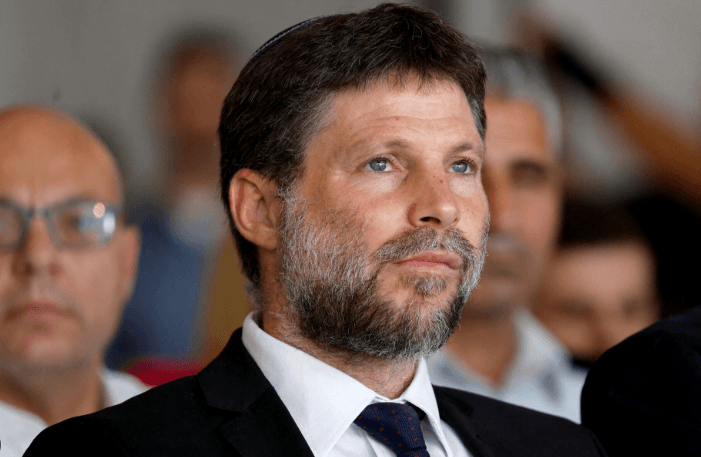
Al Jazeera Net similarly stated that Smotrich’s son, who “fights in the occupying army,” sustained a “serious liver injury,” and that Smotrich described his survival as “a ‘miracle.’”
The National Newspaper reported that Smotrich’s son was injured in March during retaliatory strikes from Hezbollah, and said the injuries were “shrapnel wounds to his back and abdomen,” with recovery described as quick.
عين ليبيا reported that Smotrich posted a photo of himself with his son, stating his condition was stable, and said IDF Radio noted that the young man, a member of the Givati Brigade, was wounded during field activity in the border area.
L’Orient Today described the son as “seriously wounded in southern Lebanon at the start of the war between Israel and Hezbollah,” and said the Israeli army was attempting to establish a buffer zone in southern Lebanon.
L’Orient-Le Jour also said the son was “seriously wounded in South Lebanon at the start of the resumed war between Israel and Hezbollah.”
Ceasefire, strikes, and escalation
The remarks were placed by the sources against a backdrop of continuing hostilities along the Israel-Lebanon border despite a ceasefire.
“Middle East - War in Lebanon 2026 Smotrich: My son is asking me not to finish the job so that there will still be something to do in Lebanon The Israeli Finance Minister says he is convinced that the current war 'will end with border changes in Gaza, Lebanon, Syria, and in Judea and Samaria'”
وكالة صدى نيوز said that despite a ceasefire between Israel and Hezbollah since April 17, which was then extended after direct negotiations involving the ambassadors of Lebanon and Israel in Washington, “the occupying army continues its attacks on Lebanon, especially in the south.”
It also described Israel and Hezbollah exchanging accusations of violating the ceasefire, while Hezbollah announced operations targeting Israeli forces in southern Lebanon and launching rockets and drones toward occupied territories.
The National Newspaper added specific casualty reporting tied to Israeli strikes, saying “On Monday 17 people in Lebanon were killed by Israeli strikes,” and that the number killed had reached “110 since a ceasefire was brokered on Thursday 16 April.”
It also stated that Israel “has continued to bomb southern Lebanon despite the ceasefire agreement which was intended to pause the fighting while negotiations could take place,” and that it was “extended by three weeks after negotiations in Washington.”
L’Orient Today described the Israeli army as attempting to establish a buffer zone in southern Lebanon and said it “has razed entire villages in the South since the start of the war.”
Al-Jazeera Net likewise said that the remarks referred to “ongoing military operations and destruction in southern Lebanon.”
Condemnation and Gaza-linked record
The sources connect Smotrich’s Lebanon comments to his prior statements about Gaza and to condemnation from European and UK officials.
The National Newspaper says Smotrich had “previously suggested the starvation of two million Gazans could be ‘justified and moral’,” and it quotes him: “No one in the world will allow us to starve 2 million people, even though it might be justified and moral in order to free the hostages.”

It also says his remarks were met with condemnation from the EU and UK, quoting an EU spokesperson: “the deliberate starvation of civilians was a ‘war crime’” and that the EU “expected the Israeli government to ‘unequivocally distance itself’” from Smotrich’s words.
The National Newspaper further quotes David Lammy calling for retraction and condemnation, saying “International law could not be more clear – the deliberate starvation of civilians is a war crime,” and “There can be no justification for Minister Smotrich’s remarks.”
The same outlet also reports that Smotrich called for “the full occupation of the Gaza strip” and threatened to “overthrow the government if this did not happen,” and it says he reportedly called the 2025 ceasefire agreement between Hamas and Israel a “very serious mistake.”
L’Orient Today and L’Orient-Le Jour instead focus on Smotrich’s broader border-expansion views, with L’Orient Today quoting him as believing the war “will end with changes to the borders in Gaza, Lebanon, Syria, and the West Bank,” and L’Orient-Le Jour saying he was convinced the war “will end with border changes in Gaza, Lebanon, Syria, and in Judea and Samaria.”
L’Orient Today also reports that Smotrich accused Netanyahu of “a campaign of capitulation” by calling for a hostage deal with Hamas during the war.
Reactions and competing frames
The sources diverge in how they characterize the meaning of Smotrich’s Lebanon remark and how they describe the surrounding conflict.
“A SENIOR Israeli minister who previously suggested the starvation of two million Gazans could be "justified and moral" has said his son has asked him "not to finish the work" in Lebanon so he has more to do”
وكالة صدى نيوز says activists and observers considered Smotrich’s remarks as implying a continuation of military escalation, describing the rhetoric as “open terrorism and crime” practiced by the Israeli government, and it also says Twitter users felt the statements reflect a mindset based on a rhetoric of destruction.
Al-Jazeera Net similarly reports that activists described the remarks as “terrorism and public crime” and that followers saw them as implying continued escalation and adopting rhetoric beyond “the traditional political tone.”
L’Orient Today, while noting that the remarks circulated widely on X and drew criticism, frames Smotrich’s position as tied to his belief that the war would end with “changes to the borders in Gaza, Lebanon, Syria, and of course in Judea and Samaria,” and it adds that he said Netanyahu is wrong not to pursue that objective.
L’Orient-Le Jour presents the remarks as part of Smotrich’s conviction that the war will end with border changes and describes the Israeli army’s buffer-zone actions, saying it “has razed many buildings, even entire villages.”
The National Newspaper, by contrast, emphasizes the connection to Smotrich’s earlier Gaza comments and the EU and UK condemnation, quoting the EU spokesperson and David Lammy, and it also provides the Lebanon strike casualty figures.
عين ليبيا focuses less on the political reaction and more on the injury status and medical context, reporting Smotrich urged followers to pray for his son at “Beit Rivital Children’s Hospital in Hebron,” and it cites claims about his condition being stable and not life-threatening.
More on Gaza Genocide

Isaac Herzog Pushes Netanyahu Plea Deal as Attorney-General Bars Preconditions
11 sources compared

Hamas Calls Israel’s Jerusalem Demolition Notices a War Crime Targeting Palestinian Presence
10 sources compared

Israel’s Boeing KC-46 Pegasus “Gideon” Completes Maiden Test Flight in the United States
16 sources compared
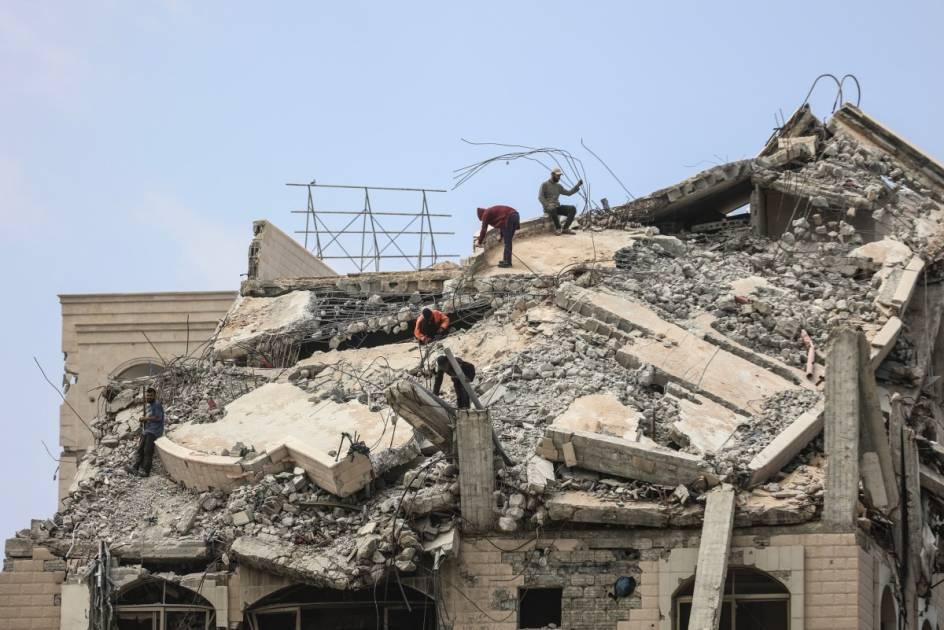
Israeli Attacks Kill Three Palestinians in Gaza, Death Toll Reaches 72,615
19 sources compared