
Gaza Genocide · 04 May, 2026 · 7 min read
Israel’s Boeing KC-46 Pegasus “Gideon” Completes Maiden Test Flight in the United States
Israel's KC-46 tanker, named Gideon, completed its maiden flight in the United States. First of six KC-46 tankers Israel has contracted; delivery expected in about a month.
8 of 9 outlets skipped it: a specific technical uncertainty is highlighted: outfitting/avionics such as the Remote Vision System (RVS) being challenging to perfect..
16outlets compared
Same story, two versions
tap a side to read it in full
Daily Excelsior
““It will allow Israeli jets… to stay airborne longer, strike deeper and operate with greater independence, even without direct US support.””Read the original ↗
The Jerusalem Post
““This delivery could be a game-changer in providing Israel greater independence regarding whether it may decide to strike the Islamic regime, the Yemen Houthis, and other distant adversaries in the future.””Read the original ↗
One framing is a direct tactical/technical claim (aircraft enables independence ‘even without direct US support’), while another frames the same concept as political decision-making (‘whether it may decide to strike’). This affects how readers interpret whether the key driver is capability alone or also future-strategy choices under changing US support.
Gaza War, Wider Reach
The war around Gaza is being fought alongside a broader regional contest over long-range strike and the ability to sustain air operations, and multiple outlets tie that capability to Israel’s new aerial refueling aircraft program.
“has completed its first flight in the United States, with delivery expected soon”
Israel’s Defence Ministry says its Boeing KC-46 Pegasus tanker—designated “Gideon” in Hebrew—has completed its maiden test flight in the United States and is expected to be delivered in “approximately one month,” with the first flight announced on May 4, 2026.
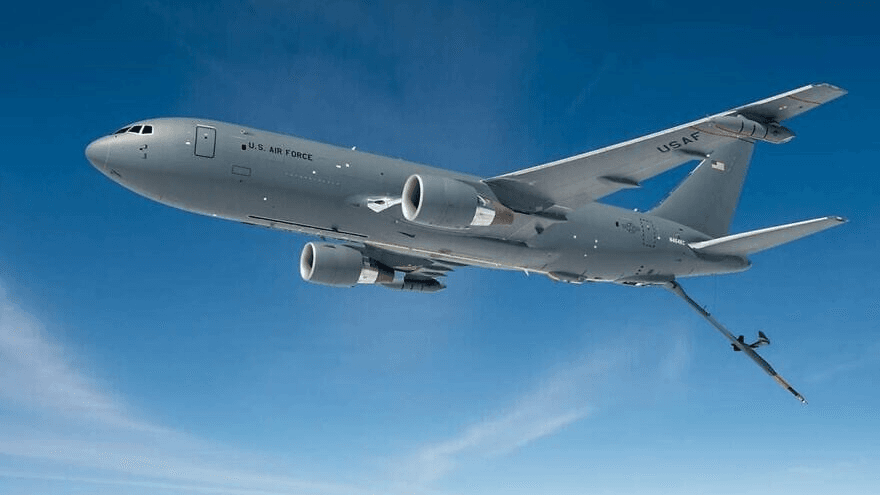
The Aviationist reports that the tanker will be “equipped with Israeli systems and adapted to the operational requirements of the Israeli Air Force,” and that it is the first of six KC-46s procured through Israel’s U.S. procurement mission.
The War Zone adds that Israel’s first KC-46A Pegasus tanker “has completed its first flight in the United States,” and that the Israeli Ministry of Defense said delivery is “approximately one month,” while also describing the program as part of a “wide-scale force buildup program.”
In parallel, the War Zone frames the KC-46 as a solution to constraints on long-range operations, noting that Israel’s targets such as Iran and Yemen sit “1,500 – 2,000km away” and that aerial refueling has been a limiting factor.
The same reporting links the tanker’s arrival to the Air Force’s modernization timeline, including the expected ability to extend operational range and maintain air superiority “across all theaters.”
From Test Flight to Delivery
Israel’s KC-46 “Gideon” program is described across outlets as moving from a U.S. test milestone toward delivery to the Israeli Air Force, with the same core timeline repeated in different ways.
The Aviationist says the Israeli Ministry of Defense announced on May 4, 2026, the maiden flight in the U.S., and that the tanker is “set to be delivered in approximately a month.”
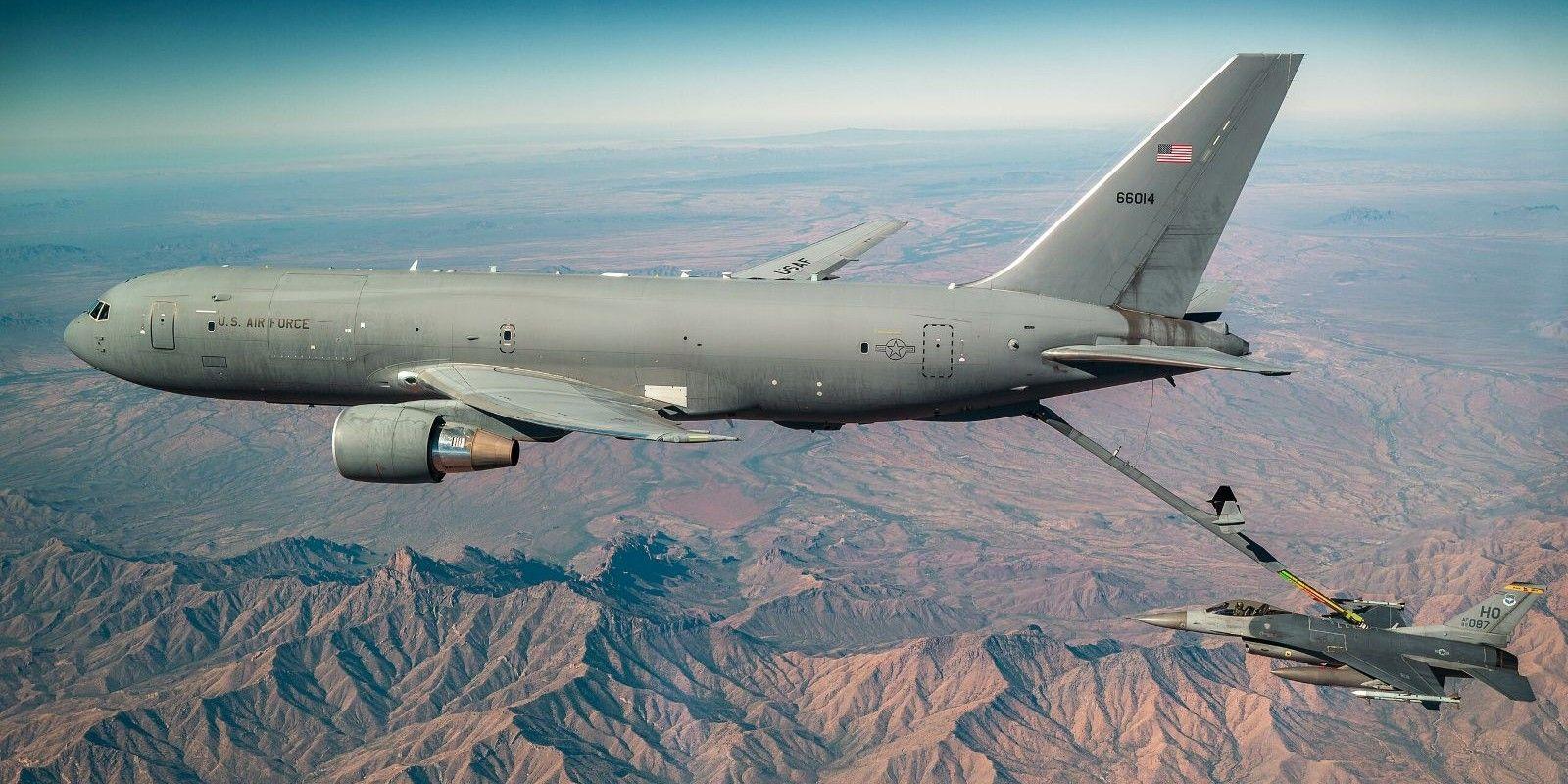
Azərtac likewise reports that Israel’s Defense Ministry announced the Boeing KC-46 tanker aircraft “designated “Gideon” in Hebrew” completed its maiden flight in U.S. skies ahead of expected delivery to the Israeli Air Force in “approximately one month.”
The Jerusalem Post states that “the first KC-46 aircraft conducted a maiden test flight in the US and is expected to be delivered to the Jewish state in around a month,” and it frames the delivery as relevant to “future potential attacks on Iran and other distant targets.”T
The War Zone adds that new imagery of the first flight of an Israeli KC-46 appeared “just one day after Israeli Prime Minister Benjamin Netanyahu hinted at plans to develop “groundbreaking Israeli-made aircraft,” as well as referencing the approval for two additional fighter squadrons.”
In the same set of reporting, ynetnews says the KC-46 aircraft will be fitted with “systems from Israel and adapted to the Air Force’s operational requirements,” and that they will allow the Air Force to “extend its flight range and maintain air superiority across all arenas.”
Why Refueling Matters
Several outlets connect the KC-46’s arrival to the operational problem of sustaining long-range missions, and they do so with specific distances and time-on-station claims.
“such as Iran and Yemen sitting 1,500 – 2,000km away”
Daily Excelsior says targets “such as Iran and Yemen sitting 1,500 – 2,000km away” have made aerial refuelling a limiting factor, and it adds that “Until now, Israel has had refuelling capability, but only on a relatively small scale.”D
It describes the KC-46 as changing “that calculation,” saying it will allow Israeli jets “including F-35s, F-15s and F-16s” to stay airborne longer, strike deeper and operate with greater independence.
The Jerusalem Post similarly states that “Most of Iran is at least 1,500 kilometers away, with some parts as far as 2,000 kilometers away,” and that the Yemen Houthis are “mostly at least 1,800 kilometers away, with some parts beyond 2,000 kilometers.”
It also quotes a Boeing KC-46 briefing in which U.S. pilot Capt. Cody Nelson says the KC-46 is “like a mobile gas tank” and carries “207,000 pounds of fuel,” while also saying it can fly “16 hours straight and up to 24 hours if it receives midair refueling from another aircraft.”
The War Zone adds that the KC-46 “with a range of up to 16 hours of flight time – extendable to 24 hours with additional refuelling” offers a way around constraints, and it emphasizes that independence is a “key concern for Israeli planners.”
Force Buildup and Integration
The KC-46 delivery is repeatedly described as part of a wider force buildup that includes additional fighter squadrons and a budget framework, linking the tanker’s role to the broader trajectory of Israel’s air power.
The War Zone says Netanyahu hinted at plans for “groundbreaking Israeli-made aircraft” and referenced “the approval for two additional fighter squadrons,” which it says will be made up of “F-15IA and F-35I Adir jets,” providing an eventual total of “four squadrons of F-35Is and two of F-15IAs.”
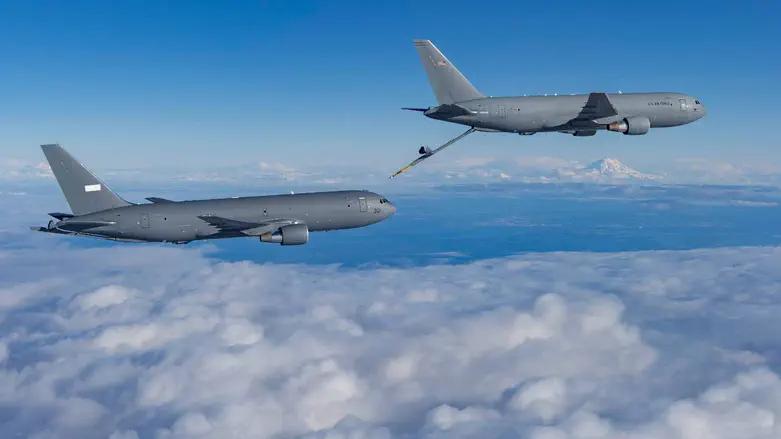
The Aviationist reports that the Ministerial Committee on Procurement approved the acquisition of two additional fighter squadrons and quotes a statement that the deals are “valued at tens of billions of NIS,” adding that they are “the first step in executing the IDF’s decade-long force buildup plan, approved by the Prime Minister and Defense Minister under a dedicated 350-billion-NIS budget.”
The Jerusalem Post similarly describes the tanker as part of a “wide-scale force buildup program” and says it is managed by the ministry on behalf of the IDF, including purchasing additional F-35s and new F-15IAs as part of a “new NIS 350 billion decade-long budget.”T
Azərtac states that the Gideon “will be fitted with Israeli systems and adapted to IAF operational requirements,” echoing the same integration theme.
ynetnews adds that the KC-46 will replace “the aging Re’em refueling planes, based on the Boeing 707,” and it says Israel signed a deal in 2022 to purchase four KC-46 aircraft and later bought two more, making the order six.
Escalation, Endurance, and Risk
While the KC-46 reporting focuses on hardware and delivery timelines, another source in the set frames the wider war dynamic as one of escalation and endurance, describing a conflict that broadens beyond a single battlefield.
“has broadened into a regional war”
In an article by اندبندنت عربية, the author discusses an American–Israeli strike described as the opening of a regional war, writing that the “American–Israeli strike that targeted Iran's leadership has broadened into a regional war” after Tehran responded with “horizontal escalation.”
The piece says the opening hours of the operation “Saga of Fury,” the joint military strike carried out by the United States and Israel against Iran on February 28, demonstrated “the extraordinary capabilities reached by modern precision warfare,” and it states that the strikes killed Iran’s Supreme Leader, Ayatollah Ali Khamenei.
It then says that “within hours” the hope that leadership-targeting strikes would contain the war “dissipated,” and it reports that Iran retaliated by launching “hundreds of ballistic missiles and drones, not only at Israel but across the Gulf region as well.”
The article argues that escalation is shaped by incentives created when leadership-clearing strikes occur, stating that “Leadership-clearing strikes create strong incentives for horizontal escalation.”
Le Point describes a U.S. deployment that includes “more than 31 U.S. Air Force refueling aircraft, including KC-135s and KC-46s,” leaving the United States bound for Europe, and it frames that deployment as revealing possible American engagement.
Aerial Refueling as the Mechanism
A separate West Asian explainer in the set uses the KC-135 crash as a starting point to describe how aerial refueling works and why it is operationally demanding, providing technical context that helps explain why the KC-46 program is treated as strategically significant.
The الشرق article says the crash of the American KC-135 “highlighted aerial refueling operations, which are highly complex and require extreme precision,” and it describes how air-to-air refueling extends the range of aircraft.
It recounts early experiments in which “two slow airplanes would fly in close formation, one above the other, and a fuel hose would be dropped to the lower aircraft,” and it says that once a crew member grabs the swinging hose and secures it, “gravity does the rest, with the fuel flowing from the tanker to the receiver.”
The piece traces the evolution of refueling systems, saying Alan Cobham invented the “ring hose” system in the 1930s and that by the late 1940s the U.S. Air Force adopted the ringed hose system.
It then describes the KC-135 as the solution in the 1950s when piston- and propeller-powered aircraft struggled to fly fast enough, and it states that “More than 800 Stratotankers were delivered to the U.S. Air Force starting in 1957.”
The article also describes modern refueling procedures, saying the fighter aircraft approaches “from behind to within about 20 meters,” and that once connected, refueling “lasts roughly ten minutes.”